
About Duncan Livingstone
Lived 1877 – 1964 (aged 87). Duncan Livingstone was a British writer, poet and clerk of works.
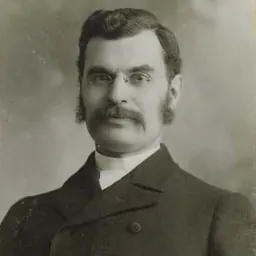
Duncan Livingstone (Donnchadh MacDhunlèibhe) (Torloisk, Isle of Mull, 30 March 1877 – Pretoria, Republic of South Africa, 25 May 1964) was a Scottish Gaelic poet from the Isle of Mull, who lived most of his life in South Africa.
Family origins Livingstone's grandfather, Alexander Livingstone, was the uncle of the explorer of Africa and missionary David Livingstone.
Life Early life Duncan Livingstone was born in his grandfather's croft at Reudle, near Torloisk House on the Isle of Mull. His father, Donald Livingstone (Dòmhnall Mac Alasdair 'ic Iain 'ic Dhòmhnall 'ic Dhonnchaidh) (1843–1924) was a joiner and stone-mason. Duncan's mother was Jane MacIntyre (Sine nighean Donnchaidh mhic Iain) (1845-1938), a native of Ballachulish who was said to be the grandniece of the Gaelic poet Duncan Ban MacIntyre (1724-1812). Duncan was the third of seven children and the outlines of the house where he was born may still be seen today.
When Livingstone was 16, his family moved to 126 Talisman Road in Glasgow. Duncan first became a clerk and then a stonemason's apprentice. When the Second Boer War broke out, he learned that the Laird of Torloisk was raising a cavalry regiment and immediately enlisted.
War and Peace During combat against the Boer Commandos, Livingstone was shot through the ankle and returned, lamed, to Glasgow. At this time, he carved the inscription Tigh Mo Chridhe, Tigh Mo Gràidh ("House of My Heart, House of My Love") on the lintel of the main door of Saint Columba Church of Scotland on St. Vincent Street in Glasgow. also emigrated to South Africa to become Livingstone's wife. Duncan and Katie Livingstone were never to have children.
He spent his retirement both writing and playing bowls.
The rise of the National Party and its policy of Apartheid troubled Livingstone deeply. Livingstone's nephew, Prof. Ian Livingstone, recalls, "I visited Duncan (from Uganda) at his hotel (the Union Hotel, Pretoria) in 1959. He was resident there. Later, when I was back in Uganda, he sent me a long poem, in English (10 pages) on Sharpeville, where some 77 Africans had been shot dead by police (mostly in the back). This had obviously affected him greatly. Unfortunately, I don't have the copy anymore."
The Sharpeville massacre also inspired Livingstone to write the poem Bean Dubha' Caoidh a Fir a Chaidh a Marbhadh leis a' Phoiles ("A Black Woman Mourns her Husband Killed by the Police"), in a mixture of the Scottish Gaelic and Zulu languages.
Death He died in Pretoria on 25 May 1964 and lies buried in Rosetta Street Cemetery.
Legacy In a paper about The Gaelic Literature of Argyll, Donald E. Meek describes Livingstone as a, "very fine modern Gaelic poet", who, "wrote some splendidly prophetic verse on the twentieth-century challenges which were to confront white rule in South Africa. He thus has a claim to be included in any forthcoming survey of the Gaelic literature of Africa!"
In an essay, Scottish professor Wilson MacLeod described Duncan Livingstone as a "poet of significance", who became a perceptive critic of the British Empire, which was best illustrated by his attitude towards its collapse in Feasgar an Duine Ghil. MacLeod notes, however, that Livingstone's anti-colonialist attitude was rare among post-Culloden Gaelic poets, the vast majority of whom were "Pro-British and Pro-Empire", including Aonghas Moireasdan and Dòmhnall MacAoidh, who considered the expansion of the British Empire, "a civilizing mission rather than a process of conquest and expropriation". According to Wilson MacLeod, poetry composed by the Scottish Gaels did not until very recently draw the connections and parallels between their own experiences and those of other Colonized peoples throughout the world.
Don’t just read it —
keep it.
Full-length biographies made to live with: read them, listen on the way to work, watch them tonight.
- E-book
- Audio
- Video
Instant download · yours to keep · every purchase keeps this site free
Important facts
People in Duncan Livingstone's life
Named in this biography and alive at the same time



Related people
Same field, nearest in time


Contemporaries
People whose lives overlapped Duncan Livingstone's




Frequently asked questions
Who was Duncan Livingstone?
Scottish poet
When was Duncan Livingstone born?
Duncan Livingstone was born on 30 March 1877 in Isle of Mull.
When did Duncan Livingstone die?
Duncan Livingstone died on 25 May 1964 in Pretoria.
What was Duncan Livingstone's occupation?
Duncan Livingstone was a writer, poet and clerk of works.
What nationality was Duncan Livingstone?
Duncan Livingstone was British.
Sources & further reading
· Wikipedia: Duncan Livingstone
Cite this page
APA: Biography.guide. (2026). Duncan Livingstone. https://biography.guide/duncan-livingstone/
MLA: "Duncan Livingstone." Biography.guide, https://biography.guide/duncan-livingstone/.
Chicago: "Duncan Livingstone." Biography.guide. https://biography.guide/duncan-livingstone/.
Data last updated: 2026-09-20 · Spot an error? Report a correction.
Page generated 2026-09-27 04:59 UTC