
Dulce of Aragon
Portuguese queen consort
About Dulce of Aragon
Lived 1160 – 1198 (aged 37–38).
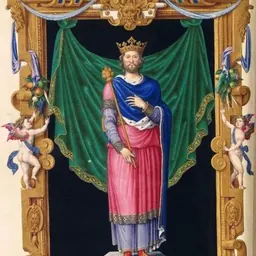
Dulce of Aragon also called Dulce of Barcelona, (1160–1198) was Queen of Portugal as the wife of King Sancho I of Portugal.
Life Dulce (also known as Doce or Aldonça) was the eldest daughter of Queen Petronila of Aragon and Count Ramon Berenguer IV of Barcelona and her mother died in 1172.
Dulce's bethrothal to infante Sancho, son of Afonso Henriques, the first king of Portugal, was celebrated when she was eleven years old and the marriage in 1174. The political reason behind this marriage was to stabilize Portugal as an independent country. There were many enemies of the crown, starting with the Kingdom of León that had controlled Portugal as a vassal state until 1128. In addition, the Catholic church was slow to consecrate Portugal's independence with its blessing. (This would not happen until 1179.)
Portugal therefore sought allies within the Iberian Peninsula, in particular with the kingdom of Aragon, a traditional enemy of Castile, which became the first country to recognize Portugal. At the same time, the marriage compensated for the broken engagement of her husband's sister, Infanta Mafalda with her brother, the future King Alfonso II of Aragon.
Not much is known about her life prior to her arrival in Portugal or of the wedding tokens she received upon her marriage. Dulce gave birth to her first daughter in 1176,
With the death of King Afonso Henriques in 1185, her husband ascended the throne and she became Queen consort of Portugal. In his first will, executed in 1188, her husband gave her the income from Alenquer, of the lands along the banks of the Vouga River, of Santa Maria da Feira and of Porto.
Sancho was not faithful to her and kept several mistresses; such as Maria Pais Ribeira, Maria Aires Fornelos, and from this and relationships he had several illegitemate children.
Dulce´s involvement in political activities as queen was probably not of a significant nature but she is known to have signed royal charters and being active in patronage . "A beautiful and excellent lady, quiet and modest, her personality coinciding with her name," Dulce was used as a commodity to seal an alliance which aimed to "strengthen Portugal and to contain the expansionism of Castile and León" and she played the role that was expected of her as a wife and as the mother of numerous children.
Death Dulce did not live long after the birth of her last two daughters, Branca and Berengaria, probably twins, and died in 1198 probably succumbing to the plague and weakened by the successive childbirths. She was buried in the Monastery of Santa Cruz in Coimbra.
Issue Eleven children were born from her marriage to King Sancho, eight of whom reached adulthood: Theresa (1175/1176 – 18 June 1250), she became the wife of King Alfonso IX of León and was beatified in 1705; Sancha (1180 – 13 March 1229), founded the Monastery of Celas near Coimbra where she lived until her death. Her sister Theresa arranged for her burial at the Monastery of Lorvão. She was beatified by Pope Clement XI in 1705, the same year as Theresa; Constanza (May 1182 – 3 August 1202). She must have died before 1186 since her name is not registered in any of the documents of the chancellery of Sancho I which begins in that year"; Afonso (23 April 1186 – 25 March 1223), succeeded his father as the third king of Portugal; Raymond (1187/88 – 9 March bef. 1188/89), who died in infancy; Peter (23 February 1187 – 2 June 1258), spouse of Aurembiaix, Countess of Urgell; Ferdinand (24 March 1188 – 27 July 1233), spouse of Joan, Countess of Flanders; Henry (aft. March 1189 – 8 Dec aft. 1189), who died in infancy; Mafalda (1195/1196 – 1 May 1256), the wife of Henry I of Castile, was beatified in 1793; Branca (1198 – 17 November 1240), probably the twin sister of Berengaria, was raised in the court with her father and his mistress "a Ribeirinha" and, when she was eight or ten years old, was sent to live with her sisters at the Monastery of Lorvão. She was a nun at a convent in Guadalajara and was buried at the same monastery as her mother; Berengaria (1198 – 27 March 1221), probably the twin sister of Branca, married Valdemar II of Denmark in 1214.
Don’t just read it —
keep it.
Full-length biographies made to live with: read them, listen on the way to work, watch them tonight.
- E-book
- Audio
- Video
Instant download · yours to keep · every purchase keeps this site free
Important facts
Family & relationships
Contemporaries
People whose lives overlapped Dulce of Aragon's





Frequently asked questions
Who was Dulce of Aragon?
Portuguese queen consort
When was Dulce of Aragon born?
Dulce of Aragon was born in 1160 in Barcelona.
When did Dulce of Aragon die?
Dulce of Aragon died on 1 September 1198 in Coimbra.
What nationality was Dulce of Aragon?
Dulce of Aragon's recorded nationality: Kingdom of Portugal.
Sources & further reading
Cite this page
APA: Biography.guide. (2026). Dulce of Aragon. https://biography.guide/dulce-of-aragon/
MLA: "Dulce of Aragon." Biography.guide, https://biography.guide/dulce-of-aragon/.
Chicago: "Dulce of Aragon." Biography.guide. https://biography.guide/dulce-of-aragon/.
Data last updated: 2026-09-20 · Spot an error? Report a correction.
Page generated 2026-09-27 05:28 UTC