
About Driss Basri
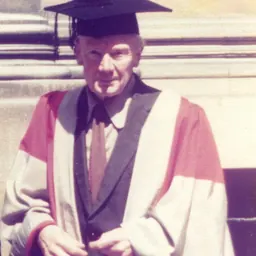
Lived 1938 – 2007 (aged 68). Driss Basri was a Moroccan politician, jurist and statesperson.
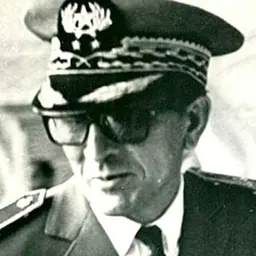
Driss Basri (, 8 November 1938 – 27 August 2007) was a Moroccan politician who served as interior minister from 1979 to 1999. His name has been associated with the Years of Lead in Morocco. During this time, he was known as the "King's Policeman".
Early life and career Basri was born on 8 November 1938 in Taounate. He moved to Settat with his father, who worked in the city's prison.
Thanks to a relative from Casablanca who was the friend and director of the cabinet of General Mohamed Oufkir, he was promoted in the early 1960s, as the director of the cabinet of Ahmed Dlimi, who supervised the Moroccan secret police (DST, then named CAB1). This was during an era which saw the "disappearance" of Socialist opponent Mehdi Ben Barka in Paris in 1965. Aged 24, he was following in parallel law studies, Dlimi advised Basri that if he was to be further promoted he needed a degree, he then enrolled in university and obtained a bachelor in law.
In 1973, he censored Mohamed Choukri's autobiography, For Bread Alone.
Basri was then appointed as Secretary of State for Interior Affairs in 1974, becoming Ahmed Dlimi's right-hand man. Basri became the iron fist of Hassan II during the Years of Lead. In 1979, Driss Basri was promoted to the post of interior minister in the government of Ahmed Osman, a post he held in all successive governments until 1999. Beginning in 1985, he held the post of minister of information as well. Basri went on to earn the confidence of King Hassan II, and during his time in office, the Ministry of Interior came to be known as the "mother of all ministries".
He was considered by his detractors as a hindrance to the democratisation of Morocco in the 1980s and 1990s. He was accused of creating "administrative" parties to counter the traditional nationalist and popular parties, and of rigging elections in favour of loyalists. Under his term some demonstrations were harshly repressed by police, such as in 1981 in Casablanca and 1990 in Fez.
Exile Three months after Hassan II's death in 1999, Basri was dismissed by the newly-enthroned king Mohammed VI on 9 November 1999. This decision briefly fueled hopes for the democratisation of Morocco.
After being dismissed, Basri went into self-exile in Paris. In March 2004, his Moroccan passport was withdrawn, effectively making him an illegal alien in France.
Death Basri died in Paris on 27 August 2007. He was buried in Rabat on 29 August; then-interior minister Chakib Benmoussa was the only representative of the government at the funeral.
Don’t just read it —
keep it.
Full-length biographies made to live with: read them, listen on the way to work, watch them tonight.
- E-book
- Audio
- Video
Instant download · yours to keep · every purchase keeps this site free
Important facts
People in Driss Basri's life
Named in this biography and alive at the same time


Related people
Same field, nearest in time




Contemporaries
People whose lives overlapped Driss Basri's



Frequently asked questions
Who was Driss Basri?
Moroccan politician (1938-2007)
When was Driss Basri born?
Driss Basri was born on 8 November 1938 in Settat.
When did Driss Basri die?
Driss Basri died on 27 August 2007 in Villejuif.
What was Driss Basri's occupation?
Driss Basri was a politician, jurist and statesperson.
What nationality was Driss Basri?
Driss Basri was Moroccan.
Sources & further reading
Cite this page
APA: Biography.guide. (2026). Driss Basri. https://biography.guide/driss-basri/
MLA: "Driss Basri." Biography.guide, https://biography.guide/driss-basri/.
Chicago: "Driss Basri." Biography.guide. https://biography.guide/driss-basri/.
Data last updated: 2026-09-20 · Spot an error? Report a correction.
Page generated 2026-09-27 05:33 UTC