
About Dragan Obrenović
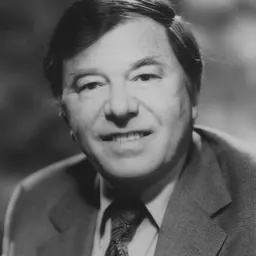
Born 1963. Dragan Obrenović is a Bosnian military personnel.
Dragan Obrenović (born 12 April 1963) is a former Bosnian Serb senior officer and commander in the Yugoslav People's Army (JNA) and the Bosnian Serb Army (VRS).
In 2001, Obrenović was indicted for war crimes and crimes against humanity by the International Criminal Tribunal for the former Yugoslavia (ICTY) in The Hague for his involvement in implementation of the VRS leadership's plan to kill the mostly Bosniak civilians and prisoners of war in the Srebrenica genocide during the Bosnian War in July 1995.
In 2003, Obrenović pleaded guilty to one of the counts of persecution and in exchange agreed to allocute to his crime and witness for the prosecution he was sentenced to 17 years in prison. He served out his sentence in Norway and would be eligible for release in April 2018. He was released by orders from the ICTY in 2012 for good behaviour. The decision to release him was made in September 2011 but was kept a secret until May 2012. He was deported from Norway in 2012, after his release from prison.
Early life and education Obrenović was born on 12 April 1963 in the village of Rogatica on Matino Brdo, in the Rogatica municipality in eastern Bosnia and Herzegovina. He attended primary school in Rogatica and secondary school at a military gymnasium in Belgrade. Upon graduation at age of 18, Obrenović attended the military academy for ground forces of the JNA, specializing in armored and mechanized units. He graduated in 1986 at the age of 23, receiving a commission as an officer. Captain Dragan Obrenović appeared on public radio to assure the citizens of that area that the JNA's only mandate was to protect all citizens of Yugoslavia: "There is no reason for panic. The JNA, as a legal military force, is here disable those that would eventually try to threaten the security of all citizens and the entire nation."
Five days later the JNA, including Obrenović's battalion, launched a massive simultaneous assault, starting with the attack by the Serb Volunteer Guard paramilitary forces on Bijeljina. The attacks soon spread to Foča, Zvornik, Bosanski Šamac, Vlasenica, Prijedor, Brčko, and was punctuated by the blockading of the Bosnian capital of Sarajevo to the southwest.
Non-Serbs had their property confiscated, were deported en masse, and many men of military age or of political, community, religious or cultural importance were murdered on sight or in mass executions in villages such as Kozarac, Gornja Grapska in Doboj, the Hotel Posavina in Brčko, the Crkvina warehouse in Bosanski Šamac, and detention centers such as the Brčko Partizan sports hall. Many other non-Serb men were interred at infamous concentration camps such as Omarska and Keraterm, while the women, children and elderly fled south toward the towns of Srebrenica and Žepa.
Transfer to the VRS On 19 May 1992, two weeks after the JNA established a total blockade of the Bosnian capital and began the now-infamous Siege of Sarajevo, the JNA began withdrawing from Bosnia while personnel and equipment from the second military district remained behind to be absorbed into the forming Bosnian Serb rebel army. Obrenović's unit was relocated the following day to the garrison in the Vršac municipality in Serbia. On 1 December 1992 he was given orders to report to the newly formed Army of Republika Srpska (VRS). In April 1993 Obrenović was promoted to the post of permanent Chief of Staff of 1st Zvornik Infantry Brigade.
On 16 April 1995 Obrenović was wounded in his left leg during combat operations. He was evacuated and underwent surgery as well as extensive post-operative treatment. A few months later, a commander and another officer visited him at his house while he was still on sick leave, asking him to interrupt his leave and return to brigade command, as preparations were under way to attack the besieged Srebrenica enclave, then designated a United Nations-protected "safe area". Srebrenica was a base of operations for largely ethnic Bosniak Army of the Republic of Bosnia and Herzegovina (ARBiH) 28th Mountain Division - an undisciplined, untrained, poorly armed and totally isolated Bosnian government force, now leaderless after Naser Orić and most of his staff left Srebrenica on the orders from Sarajevo. Obrenović returned to duty at Zvornik Brigade command on 1 July.
VRS attack on Srebrenica Believing that the UN-protected enclaves of Srebrenica and Žepa were never demilitarized, and that they hid what amounted to "five or six brigades" of ARBiH troops and weapons, the VRS Main Staff ordered the Drina Corps command to undertake an operation codenamed Krivaja '95.
On 2 July 1995 Obrenović's brigade was given operational orders related to the operation. Detailed orders from Drina Corps regarding his brigade's involvement arrived later that same day. Obrenović drafted Zvornik Brigade deployment details, and a combat group of command and two battalions were set up. The 1st Battalion comprised the Podrinje attachment and the mobile combat group called Drina Wolves. The 2nd Battalion comprised one intervention platoon from all battalions except the fifth, then split into two companies. Captain Vinko Pandurević was in command of the whole brigade involvement. His deputy, Captain First Class Milan "Legenda" Jolović, commanded the Wolves.
Ambushes on the ARBiH/civilian exodus column
From 4 to 15 July 1995 Obrenović acted as deputy commander of the Zvornik Brigade while the commander was gone to Srebrenica during the assault. Obrenović later testified that he heard about fall of Srebrenica on 11 July. At 05:00 on 12 July Obrenović's Gucovo group reported communication intercepts indicating large foot column of Bosniaks had formed, comprising parts of the ARBiH 28th Division as well as thousands of desperate refugees, and was heading northeast toward the city of Tuzla in the Bosnian government-held territory.
At 07:00 Obrenović had a conversation with duty officer of Captain First Class Radika Petrović, commander of the 4th Battalion of the Bratunac Brigade who briefed him on the details of the column passing between his area near Buljin and the Milići Brigade. Obrenović had concerns that the customary travel vector might bring the column close to engaging with Zvornik Brigade forces just north of the village of Jaglići. Obrenović went to the 7th Battalion headquarters in Memići to deal with an impending attack by the ARBiH 2nd Corps from Tuzla.
Needing more information on this column, Obrenović sent his assistant commander for intelligence affairs, one Captain Vukotić, to the 4th Battalion command in the Kajica village in Šekovići, and asked him to seek direct details on this column. Two VRS units in the area meanwhile blockaded the column; one battalion of the Protection Regiment in Kasaba and part of the units of the 55th Engineering Battalion in Konjević Polje. One company from Zvornik MUP were also present with one more preparing to head there. Obrenović received orders from Drina Corps to assist traffic regulation in Konjević Polje, he sent a detachment of a half squad of traffic police to assist.
Later on he began receiving requests for trucks and buses for transport in Potočari, where thousands of unarmed Bosnians were captured by the Serb forces at the base of UN Dutchbat peacekeepers. He received more intel reports regarding the disposition of prisoners to be interrogated as well as predictions on movement of the column. Early on the evening of 12 April he got word from Vukotić that units of the 28th Division were carrying out a penetration and evacuation through this space and that practically the entire area was overwhelmed by people from this column. There was also a second VRS blockade in front of the column between Kravica, Konjević Polje and near an asphalt road in Nova Kasaba. Small groups (about 150 men) from column broke through and were reaching Glogova and Cerska, so Obrenović was tasked to take all necessary measures in order to protect the elements of combat deployment of the brigade as well as populated Serb villages in the territory of Zvornik.
At midnight on 12 July Obrenović set out with some units north of Liplje to organize an ambush of forward components of 28th Division. The ambush was laid, but no ARBiH units arrived. Leaving some troops at Snagovo, Obrenović and the rest returned to Zvornik. When he arrived at brigade headquarters, he was informed that the column had been stopped on the road from Kravica, Konjević Polje, to Milići, and that there were no troops in their area. Shortly thereafter he received word from intercept groups that chatter was picking up in the area stretching from Cerska toward Kamenica, despite Drina Corps' reassurance that there was no troop presence there. 28th Division radio intercepts showed that their security slipped up and the Serbs were able to learn that their numbers were 1,000-1,500 in that area. Later on 13 July Obrenović strengthened the units that had stayed up there providing the ambush, and he decided to organise a provisional unit, grouping squad and platoon from the units at his disposal: 15 soldiers from the engineers company, five or six soldiers from the staff command, and about 15 to 20 soldiers from the logistics battalion, a remaining platoon from the 5th Battalion, and an intervention platoon; this formed a unit with the strength of a company.
Captain Milan Marić from the operations sector was made commander. Obrenović sent the military police platoon to perform reconnaissance of the Drinjača River canyon by the village of Glodi, concluding that the column would likely use the two bridges there. An ambush team was assembled from military police platoon at Široki Put and the other at Džafin Kamen, another military platoon, and the rest of the ambush team from above the village of Liplje. The column, which also went through a mine field and artillery shelling, would be ambushed by the Drina Wolves near Nova Kasaba on 13 July and then again by the VRS near Snagovo the next day.
Mass executions Around 19:00 on 13 July Obrenović was contacted by Lieutenant Drago Nikolić, security officer of the Zvornik Brigade, regarding prisoners being transported to Zvornik. Obrenović suggested the use of the Batković concentration camp to the north, and was told that the Red Cross and UNPROFOR knew about Batković, and these prisoners were to be shot and buried in the Zvornik area.
At 14:00 on 14 July Obrenović was at Snagovo when Major Zoran Jovanović brought in a reinforcement company, along with the information that Colonel Ljubiša Beara, officer in charge of the VRS security service, had transported an abnormally large number of prisoners in buses to Zvornik. That same day Obrenović overheard a call for two engineers to be released from battle lines to build a road; suspicious of someone doing the engineers a favor, Obrenović checked on the message and was told that the engineers were needed in Zvornik because of a task being carried out by Beara, Popović, and Nikolić. Obrenović knew that this must involve mass burials; he released the two engineers and ordered his aides to refrain from discussing the issue. Throughout the next days, Obrenović spent most of his time trying to find a solution for the column problem, but he also released further military police and infantry personnel from battle lines to assist with the execution of prisoners, and supplied earth moving machinery from his engineering battalions to dig mass graves.
Throughout the day on 14 July members of the Military Police Company of Obrenović's Zvornik Brigade guarded and blindfolded approximately 1,000 non-Serb men and boys detained at the school in Grbavci. In the early afternoon of 14 July 1995 VRS personnel transported these prisoners from the school at Grbavci to a nearby field, where personnel including members of the 4th Battalion of the Zvornik Brigade ordered the prisoners off the trucks and summarily executed them with automatic weapons. That night, members of the Zvornik Brigade Engineering Company used heavy equipment to bury the victims in mass graves at the execution site, while the executions continued. On the evening of 14 July lights from the engineering machinery illuminated the execution and burial sites during the executions.
Wounded prisoners at "Standard" On 20 July Obrenović was ordered to inspect the clinic at "Standard" (converted Novi Standard shoe factory) in Karakaj, and brief the hospital staff regarding the prisoners being treated there on the orders of a colonel in the Medical Corps. He discovered that the Serb wounded were being housed in close proximity to the enemy wounded, and instructed the staff not to allow anyone into the room. He informed them that prisoners would be transported to Bijeljina as they recovered.
On 23 July, at 08:00, Pandurević called the Drina Corps to resolve the issue of prisoners at the clinic. Obrenović received word from the Drina Corps that Colonel Popović would be coming to deal with the prisoners which suggested that they would likely not live to see Bijeljina. Military policemen took the prisoners away early one morning and shot the prisoners dead at an established execution site. Obrenović was later told that Popović had passed an order from General Ratko Mladić to Drago Nikolić that these patients had to be executed and that Popović had acted as a courier.
On 15 April 2001, at 14:30, three armed men and one woman abducted Obrenović in the town of Kozluk. He was bundled into a vehicle that quickly sped away from the scene before shocked witnesses. Town police units caught up with the vehicle in short order, only to learn that the abductors were SFOR personnel with UN investigators. Obrenovic was transferred that same day to the Hague, he entered not-guilty pleas across the board at his arraignment on the 18th. He initially pleaded not guilty.
On 20 May 2003 Obrenović entered a plea agreement with the ICTY prosecutor's office. He pleaded guilty to one count of persecution, and in exchange for truthful allocution to his role in the massacre and his testimony against his co-accused (his indictment was to be joined with that of four others on 27 May) he was promised a reduced sentence. On 10 December 2003 Obrenović was sentenced to 17 years in prison, with 969 days credit for time served.
In 2003, Obrenović said:
I find it very hard to say this truth. I am to blame for everything I did at that time. I am trying to erase all this and to be what I was not at that time. I am also to blame for what I did not do, for not trying to protect those prisoners. Regardless of the temporary nature of my then-post. I ask myself again and again, what could I have done that I didn't do? Thousands of innocent victims perished. Graves remain behind, refugees, destruction and misfortune and misery. I bear general part of the responsibility for this. There is misfortune on all sides that stays behind as a warning that this should never happen again. My testimony and admission of guilt will also remove blame from my nation because it is individual guilt, the guilt of a man named Dragan Obrenović. I stand by this. I am responsible for this. The guilt for which I feel remorse and for which I apologise to the victims and to their shadows. I will be happy if this contributed to reconciliation in Bosnia, if neighbours can again shake hands, if our children can again play games together, and if they have the right to a chance. I will be happy if my testimony helps the families of victims, if I can spare them having to testify again and thus relive the horrors and the pain during their testimony. It is my wish that my testimony should help prevent this ever happening again, not just in Bosnia, but anywhere in the world. It is too late for me now, but for the children living in Bosnia now, it's not too late and I hope that this will be a good warning to them.
On 7 May 2012 Aftenposten reported that Obrenović had at some point been released from jail, having served nine years. Obrenović served his time at Kongsvinger minimum-security jail Publicly redacted court orders explain why the early release order was issued.
Personal life Obrenović is married to an economist with whom he had a son in 1997.
Don’t just read it —
keep it.
Full-length biographies made to live with: read them, listen on the way to work, watch them tonight.
- E-book
- Audio
- Video
Instant download · yours to keep · every purchase keeps this site free
Important facts
People in Dragan Obrenović's life
Named in this biography and alive at the same time






Related people
Same field, nearest in time


Contemporaries
People whose lives overlapped Dragan Obrenović's


Frequently asked questions
Who is Dragan Obrenović?
Serb convicted of crimes against humanity
When was Dragan Obrenović born?
Dragan Obrenović was born on 12 April 1963 in Rogatica.
What is Dragan Obrenović's occupation?
Dragan Obrenović is a military personnel.
What nationality is Dragan Obrenović?
Dragan Obrenović is Bosnian.
Sources & further reading
Cite this page
APA: Biography.guide. (2026). Dragan Obrenović. https://biography.guide/dragan-obrenovic/
MLA: "Dragan Obrenović." Biography.guide, https://biography.guide/dragan-obrenovic/.
Chicago: "Dragan Obrenović." Biography.guide. https://biography.guide/dragan-obrenovic/.
Data last updated: 2026-09-20 · Spot an error? Report a correction.
Page generated 2026-09-27 05:09 UTC