
About Dovid Shmidel
Lived 1934 – 2026 (aged 92). Dovid Shmidel was an Israeli rabbi and community organizer.
Dovid Shmidel (also spelled Dovid Schmidel; ; April 2, 1934 – May 11, 2026) was an Austrian-born Israeli rabbi in Bnei Brak who was the Chairman of Asra Kadisha (the Committee for the Preservation of Gravesites). He was involved in struggles against excavations at various locations including at the Tomb of Maimonides in Tiberias in 1956 and at Israel's Highway 6; as well as at the disputed tomb of Antigonus II Mattathias in East Jerusalem.
Biography Shmidel was born in Vienna, Austria, on April 2, 1934.
Public disputes and controversies Shmidel's tenure as chairman of Asra Kadisha included several high-profile public disputes that received extensive coverage in Israeli media.
Stone-throwing at Rabbi Yosef Shalom Elyashiv's home (1997–1998) In 1997–1998, during preparatory excavations for the Uzi Narkiss road near Pisgat Ze'ev in Jerusalem, dozens of graves were discovered. Rabbi Yosef Shalom Elyashiv, then the leading Lithuanian Haredi posek, ruled that the bones could be preserved in place by deep drilling and reinterment in clay vessels. Shmidel and Asra Kadisha rejected the compromise. Activists associated with the organization demonstrated outside Elyashiv's home in Jerusalem and threw stones at the building. The Lithuanian Haredi daily Yated Ne'eman published a sharp article condemning Asra Kadisha, and several prominent activists left the organization in protest to form a rival group, HaAguda LeMeniyat Chilul Kvarim, under Rabbi Micha Rothschild, an Elyashiv associate. Shmidel and Asra Kadisha rejected the ruling and launched a multi-year campaign against the developers and against Sternbuch personally.
On the night of 2 Elul 5773 (August 7, 2013), eight men identifying themselves as members of Asra Kadisha entered the Bayit Vegan home of developer Aryeh Goloventzitz by impersonating charity collectors. According to the developer's testimony, after he invited them in to make a donation, they beat him in front of his wife and daughter with a blunt object, fracturing his skull, and warned him: "This is only a first visit — the next will be worse." Goloventzitz was hospitalized for 14 hours at Hadassah Medical Center. Goloventzitz later told Bechadrei Chareidim that the attackers shouted at him that he was a rasha merusha ("wicked and evil") specifically for following Sternbuch's ruling rather than Shmidel's.
The Israel Police subsequently raided several homes in Mea Shearim to arrest the attackers. Asra Kadisha-aligned protesters smashed the windows of police vehicles entering the neighborhood and shouted "Nazis, get out of here" at officers. Wider riots tied to the Asra Kadisha protests in Beit Shemesh led to 29 arrests, the torching of garbage containers, the setting of a forest fire adjacent to the construction site, and attacks on firefighters who arrived to extinguish it. Rabbis from the neighborhood of Har Nof, where Sternbuch lived — including representatives of Ger, Vizhnitz, the Bostoner Rebbe, and the roshei yeshiva of Hebron Yeshiva and Pachad Yitzchak — signed a parallel letter of condemnation. Asra Kadisha also organized propaganda posters in Jerusalem and Beit Shemesh labeling buyers in the project shaknak — a Hebrew acronym for "dwellers of graves" — and Asra Kadisha-aligned figures called for buyers to be placed under a cherem (formal ban). A 2024 arbitration ruling reported by Globes ordered the developer Nof Tzurim to pay the Goloventzitz family 68.5 million shekels in compensation tied to delayed payments stemming from the project.
Allegations of "protection money": the 2013 Walla! investigation On 2 September 2013, Walla! news published an undercover investigation by Yaki Adamker and Yehoshua Breiner titled "Haredi Protection: Pay and You Can Build on Graves". Using hidden cameras, the report alleged that Haredi workers operating in coordination with Asra Kadisha at a quarry near Ramla were quietly exhuming bones believed by some to be Jewish for paying developers, even as Asra Kadisha was publicly leading violent riots against similar work in Beit Shemesh where developers refused to pay. The reporters wrote that the workers fled the site when they saw cameras and returned only after the cameras were turned off.
The report named Mendel Eckstein as the operator on site, and identified Chezki Kalmanovich — Asra Kadisha's deputy chairman and presumed successor to Shmidel — as supervising the work. Asked to respond, Shmidel told Walla!: "Our people have no connection to the excavations at the quarry in Ramla", while conceding that Eckstein "operates from time to time under our direction". Shalom Frid, a Ministry of Religious Affairs adviser on grave matters who had previously worked with Asra Kadisha for 28 years, said: "It's an organization without rules. Whoever decides is Rabbi Shmidel himself, and when he needs to, he permits himself."
Yedioth Ahronoth investigation: infrastructure capture (2011) A separate investigation by Guy Lieberman in the Yedioth Ahronoth weekend supplement 7 Yamim, summarized in Bechadrei Chareidim, alleged that Asra Kadisha under Shmidel had captured significant influence over Israeli infrastructure planning. The report documented Asra Kadisha's role in delaying construction of Israel's Highway 6, the doubling of the Tel Aviv–Be'er Sheva railway near Ramla, an industrial expansion in Shoham, and infrastructure projects in Yehud, Akko, and Kibbutz Parod. Then-chairman of Israel Railways Yaakov Efrati told the paper: "[Asra Kadisha] is not a public body, but it decides... Until we reached agreements with them last year, it was impossible to continue work, and that caused, in my estimation, a six-month delay." Ramla mayor Yoel Lavi was quoted: "It cannot be that Asra Kadisha will dictate to an entire city to be stuck in a traffic jam." A construction manager described being summoned to the office of the Israel Railways chairman to find Shmidel and former Knesset member Meir Porush waiting there: "The feeling was of a kangaroo court."
The same report alleged that Asra Kadisha maintained an internal intelligence network of informants inside the Israel Antiquities Authority, enabling its activists to arrive at sensitive sites with unusual speed. The report also alleged that, several months after Shalom Frid was hired by the Ministry of Religious Affairs as an external consultant on grave issues, the mobile phone he used was paid for by Asra Kadisha — raising the question of whether the regulator had been captured by the organization he was meant to regulate. Ashkelon mayor Benny Vaknin publicly criticized Shmidel and Litzman, saying Litzman was "sanctifying the dead at the expense of the living". Opposition leader Tzipi Livni framed the affair as "a struggle over Judaism", and Haaretz columnist Yossi Sarid wrote that "in the eyes of the Israeli government, the dead take precedence over the living". The cabinet ultimately reversed course, and the graves were exhumed under heavy police protection; 47 Asra Kadisha activists were arrested attempting to trespass at the site, some of whom police suspected of setting fire to nearby fields. During the Mamilla excavations in Jerusalem in November 1992, after the archaeologists Ronny Reich and Eli Shukron returned to a disputed burial cave to collect remaining finds, they discovered that all eight tires on their two vehicles had been slashed.
Jaffa Andromeda Hill and the "pig bones" denial (2011) In 2010 and 2011, Asra Kadisha led extended protests at the Andromeda Hill hotel and residential complex in Jaffa. After the IAA found that the burials at the site included pig bones — definitive evidence that the burials were not Jewish — Shmidel rejected the findings in an interview with Haaretz: "We assume that the people buried here were Jews, and so we are going to continue the struggle... We heard the story about the pigs. Not long ago a private archaeologist hired to appear in court told an unlikely story about pigs. Who is buried with pig bones in a burial cave? Not Jews and not non-Jews." A separate Haaretz analysis described the Andromeda Hill riots as part of a wider internal Haredi struggle and noted that Rabbis Ovadia Yosef, Aharon Leib Shteinman, and Elyashiv had all refused to sign a proposed boycott against the Electra real estate firm despite voicing support for halting the project, with moderate members of the Edah HaChareidis rabbinical court opposing Asra Kadisha's tactics.
Bank Leumi boycott (1984) During an earlier Tiberias dispute concerning a hotel project undertaken by a subsidiary of Bank Leumi, Shmidel was involved in a coordinated rabbinic call for a public boycott of the bank. Haredi depositors withdrew funds from Bank Leumi en masse, and Haredi businessmen closed commercial accounts. The economic pressure forced the bank's management to require the hotel operator to find a compromise acceptable to Asra Kadisha.
Calcalist reported that approximately 100 Haredi protesters arrived at Atrakchi's Tel Aviv home by bus, broke through his gate, smashed his intercom, damaged his garden, and threw bags of human excrement at the property and at members of his family, before moving on to attack the home of Aura's deputy CEO in Elkana in a similar manner. Atrakchi described the events to Calcalist and Ynet as "a pogrom" and said that the protesters had each been paid 1,000 shekels and bused to the site, an allegation Kalmanovich denied. Atrakchi further alleged that Asra Kadisha-affiliated activists set fire to a tractor at the Yehud construction site shortly afterward. Police later arrested Kalmanovich for organizing illegal protests; the Edah HaChareidis warned of further demonstrations if he was not released, and protests in Jerusalem followed.
Death of Avraham Walles (2014) On 4 August 2014 (Tisha B'Av eve), Avraham Walles, a 29-year-old Toldos Aharon Hasid and father of five, was killed in a tractor attack in the Shmuel HaNavi neighborhood of Jerusalem. Walles was working as a site inspector for Asra Kadisha when he was struck and killed by a tractor driven by Mohammed Naif Ja'abis, who was subsequently shot and killed by security forces. Walles had not originally been scheduled to be at the site that day, but had agreed to substitute for another inspector. Shmidel delivered one of the eulogies at the funeral. In an essay published in Charedim 10, commentator Daniel Goldman wrote that the presence of Shmidel and Asra Kadisha on the funeral stage was disturbing given the organization's "involvement in not a few violent incidents", and implicitly questioned whether the practice of stationing untrained Haredi inspectors at active construction sites had contributed to Walles's death.
Don’t just read it —
keep it.
Full-length biographies made to live with: read them, listen on the way to work, watch them tonight.
- E-book
- Audio
- Video
Instant download · yours to keep · every purchase keeps this site free
Important facts
People in Dovid Shmidel's life
Named in this biography and alive at the same time




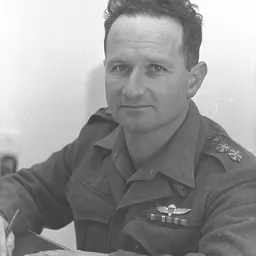
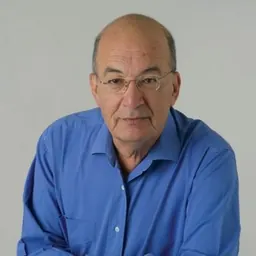


Related people
Same field, nearest in time

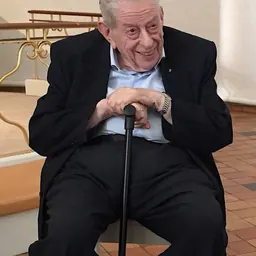
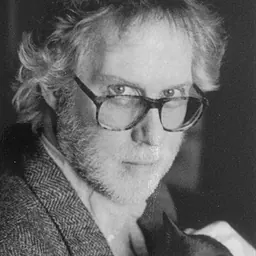
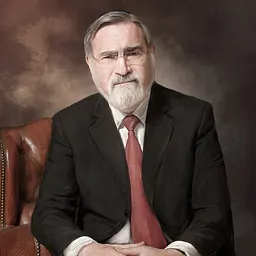
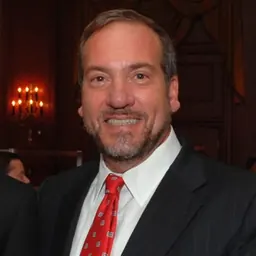
Contemporaries
People whose lives overlapped Dovid Shmidel's





Frequently asked questions
Who was Dovid Shmidel?
rabbi
When was Dovid Shmidel born?
Dovid Shmidel was born on 2 April 1934 in Vienna.
When did Dovid Shmidel die?
Dovid Shmidel died on 11 May 2026 in Bnei Brak.
What was Dovid Shmidel's occupation?
Dovid Shmidel was a rabbi and community organizer.
What nationality was Dovid Shmidel?
Dovid Shmidel was Israeli.
Sources & further reading
Cite this page
APA: Biography.guide. (2026). Dovid Shmidel. https://biography.guide/dovid-shmidel/
MLA: "Dovid Shmidel." Biography.guide, https://biography.guide/dovid-shmidel/.
Chicago: "Dovid Shmidel." Biography.guide. https://biography.guide/dovid-shmidel/.
Data last updated: 2026-09-20 · Spot an error? Report a correction.
Page generated 2026-09-27 05:17 UTC