
About Douglas Wilson
Lived 1898 – 1950 (aged 51). Douglas Wilson was an aircraft pilot.
Group Captain Douglas Ernest Lancelot "Del" Wilson (1 December 1898 – 2 August 1950) was a senior officer of the Royal Australian Air Force (RAAF) during World War II.
During early 1942, as an acting Air Commodore, Wilson was part of the short-lived Allied supreme command for South East Asia and the South West Pacific, the American-British-Dutch-Australian Command (ABDACOM). Afterwards, he was attached to the Royal Air Force (RAF) in North West Europe, and spent more than a year as a prisoner of war (POW) in Nazi Germany.
Early life and career
Wilson was the son of Ellen and Henry E. Wilson. Wilson was born on 1 December 1898 at Lithgow, New South Wales. Wilson grew up at Lithgow.
Shortly after graduating from Sydney Boys High School in 1916, Wilson passed the examination for entrance to the Australian Army college, Duntroon. an ambitious, but short-lived and shambolic supreme command, encompassing Allied forces throughout South East Asia and the South West Pacific. As a result, Wilson nominally headed an ABDACOM subcommand, AUSGROUP (sometimes "Darwin Command"): in addition to NWA, AUSGROUP nominally controlled Allied military aviation in Dutch New Guinea, the Molucca Sea and the northern part of RAAF Western Area. Wilson's immediate superior was the commander of Allied air forces (ABDAIR), Air Marshal Sir Richard Peirse (RAF), who reported directly to General Sir Archibald Wavell (British Army), supreme commander of ABDACOM whose headquarters were at Bandung (Bandoeng), in Java.
Observing that any concentration of military aviation facilities, aircraft and personnel, at a relatively small airfield, made it vulnerable and attractive to enemy attack, Wilson began to consider dispersal and decentralisation. Following reports, on 27 January, that the formidable Japanese combined carrier fleet had entered the Flores Sea, Wilson ordered the dispersal of assets at RAAF Darwin. Repair and maintenance equipment and staff were moved to Daly Waters, almost further south. However, when Wilson also ordered the transfer of obsolete aircraft (five CAC Wirraway armed trainers belonging to No. 12 Squadron RAAF) to Daly Waters, he was overruled by the Deputy Chief of Air Staff, Air Vice Marshal William Bostock. (Three of the Wirraways were damaged and written-off following the first air raid on Darwin – see below.) During early February, NWA was inspected by Air Commodore George Jones (soon to be appointed Chief of the Air Staff), who reported deficiencies in morale and aircraft serviceability amongst its combat units: 2, 12 and 13 squadrons. thumb The "ABDA Area" in January–February 1942, including RAAF North-Western Area.
On 19 February, while Wilson was attending to ABDACOM duties in Java, Darwin suffered a massive air raid. The Allies suffered significant losses: at least 236 civilians and military personnel were killed, 11 vessels were sunk in Darwin Harbour and 31 aircraft were destroyed. The only fighter aircraft present, a squadron of P-40E Warhawks of the United States Army Air Force, were overwhelmed and/or destroyed on the ground. By the end of March Allied resistance in the Dutch East Indies had collapsed by the end of March, and ABDA was dissolved, along with its sub-commands.
Criticised regarding their preparations for and responses to the first air raids, Wilson, his deputy, Group Captain Frederick Scherger, and the station commander of RAAF Darwin, Wing Commander Sturt Griffith, were later posted out of NWA.
Europe Wilson was attached on exchange to the RAF in January 1943 and posted as a substantive Group Captain (Gp Capt.) to the UK, where he served as Officer Commanding at three RAF Bomber Command stations in rapid succession: RAF Wyton, RAF Linton-on-Ouse, and RAF Holme-on-Spalding Moor. Some senior aircrew suggested to Wilson that perhaps he should fly on an operation himself. According to Ron Read, they believed that Wilson might not be "so critical" or "we slyly thought ... might go for the chop himself" (i.e. be shot down).
Wilson flew operationally, for the first and only time, on the night of 22/23 June 1943. On the return leg, at about 0158 hours, the bomber came under attack over the Netherlands, by a Luftwaffe night-fighter, piloted by the ace Oberleutnant Werner Baake (1./NJG1). After the Halifax was severely damaged by Baake and the controls became unresponsive, Carrie ordered the crew to bale out. The flight engineer, Sgt Richard Huke (RAF), was killed by a parachute malfunction; the other members landed safely, close to Zuylen Castle.
While several crew members were captured soon afterwards, Wilson, Carrie and wireless operator Sgt Elliott McVitie (RAF) made contact with a Dutch resistance "escape line" known as Luctor et Emergo (later Fiat Libertas), which had been organised to smuggle Allied aircrews out of occupied Europe. They travelled undercover into Belgium, where they were handed over to the "Comet Line", an escape network run by the French and Belgian resistance. However, during the first week of August, Wilson, Carrie and McVitie were apprehended in Paris, by either the Gestapo or GFP, and became prisoners of war (POW). It was later established that 50 Allied POWs were shot on the personal orders of Adolf Hitler. (Wilson would later give statements to war crimes prosecutors regarding these and other events.)
After the camp was liberated, two former POWs who had been convicted of collaborating with German authorities made similar accusations against Wilson. He was not charged after the British Judge Advocate General found that no offence had been committed.
Post-war In October 1945, after returning to Australia, Wilson was appointed commander of Western Area RAAF in Perth. He tendered his resignation from the RAAF on 1 February 1946 and was placed on the Retired List on 20 March. for interceding on behalf of Free Czechoslovak POWs at Stalag Luft III.
He retired to a property at Glen Alvie, near Ebor in northern New South Wales. Wilson died, following an illness, at Concord Hospital, Sydney on 2 August 1950. Wilson was buried near his parents, in the Anglican section of Lithgow cemetery. For instance, "Ramsay" is shown to be, like Wilson, a talented classical violinist.
Footnotes
Don’t just read it —
keep it.
Full-length biographies made to live with: read them, listen on the way to work, watch them tonight.
- E-book
- Audio
- Video
Instant download · yours to keep · every purchase keeps this site free
Important facts
People in Douglas Wilson's life
Named in this biography and alive at the same time
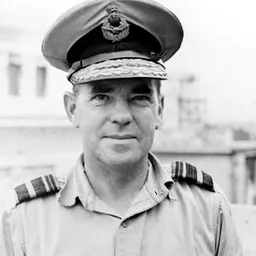
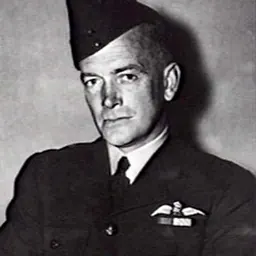
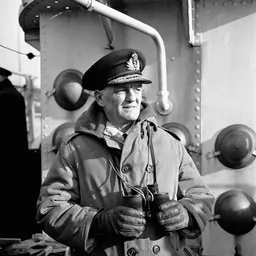


Related people
Same field, nearest in time

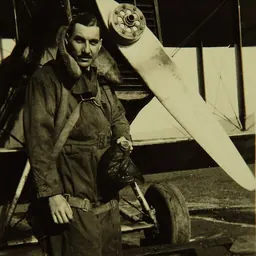

Contemporaries
People whose lives overlapped Douglas Wilson's



Frequently asked questions
Who was Douglas Wilson?
(1898-1950)
When was Douglas Wilson born?
Douglas Wilson was born on 1 December 1898 in Berowra.
When did Douglas Wilson die?
Douglas Wilson died on 2 August 1950 in Concord Repatriation General Hospital.
What was Douglas Wilson's occupation?
Douglas Wilson was an aircraft pilot.
Sources & further reading
· DBpedia: Douglas Wilson (RAAF officer)
Cite this page
APA: Biography.guide. (2026). Douglas Wilson. https://biography.guide/douglas-wilson-aircraft-pilot/
MLA: "Douglas Wilson." Biography.guide, https://biography.guide/douglas-wilson-aircraft-pilot/.
Chicago: "Douglas Wilson." Biography.guide. https://biography.guide/douglas-wilson-aircraft-pilot/.
Data last updated: 2026-09-20 · Spot an error? Report a correction.
Page generated 2026-09-27 05:06 UTC