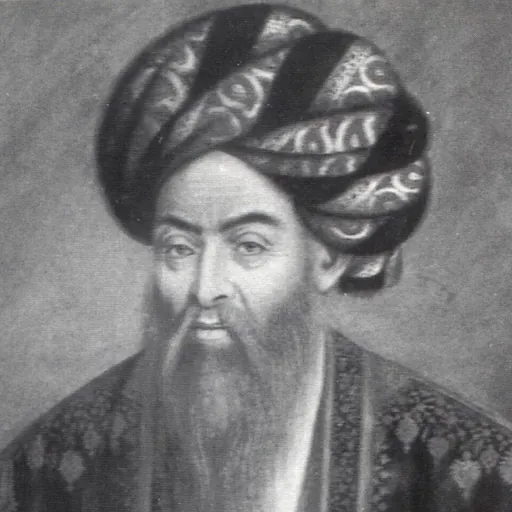
Dost Mohammad Khan, Nawab of Bhopal
Founder of the Bhopal State
About Dost Mohammad Khan, Nawab of Bhopal
Lived 1672 – 1728 (aged 55–56).
Dost Mohammad Khan (c. 1657–1728) was the founder of Bhopal State in central India. He founded the modern city of Bhopal, the capital of the modern day Madhya Pradesh state.
An Afghan from Tirah, Dost Mohammad Khan joined the Mughal Army at Delhi in 1703. He rapidly rose through the ranks, and was assigned to the Malwa province in Central India. After the death of the Emperor Aurangzeb, Khan started providing mercenary services to several local chieftains in the politically unstable Malwa region. In 1709, he took on the lease of Berasia estate, while serving the small Rajput principality of Mangalgarh as a mercenary. He invited his Pashtun kinsmen to Malwa to create a group of loyal associates. Khan successfully protected Mangalgarh from its other Rajput neighbors, married into its royal family, and took over the state after the death of its heirless dowager Rani.
Khan sided with the local Rajput chiefs of Malwa in a rebellion against the Mughal Empire. Defeated and wounded in the ensuing battle, he ended up helping an injured Sayyid Hussain Ali Khan Barha, one of the Sayyid brothers. This helped him gain the friendship of the Sayyid brothers, who had become highly influential king-makers in the Mughal court. Subsequently, Khan annexed several territories in Malwa to his state. Khan also provided mercenary services to the Rani Kamlapati, the ruler of a small Gond kingdom, and received the territory of Bhopal (then a small village) in lieu of payment. After the Rani's death, he killed her son and annexed the Gond kingdom. During the early 1720s, he transformed the village of Bhopal into a fortified city, and claimed the title of Nawab, which was used by the Muslim rulers of princely states in India.
Khan's support to the Sayyid Brothers earned him the enmity of the rival Mughal nobleman Nizam-ul-Mulk. The Nizam invaded Bhopal in March 1724, forcing Khan to cede much of his territory, give away his son as hostage and accept the Nizam's suzerainty. Nearly a century after Khan's death, the state became a British protectorate in 1818, and was ruled by the descendants of Dost Mohammad Khan till 1949, when it was merged with the Dominion of India.
Early life Dost Mohammad Khan was born in 1657 at the Tirah region in the Subah of Kabul situated on the North-western frontiers of the Mughal Empire (now corresponding to the Khyber Pakhtunkhwa Province of Pakistan). His father Nur Mohammad Khan was an Afghan nobleman belonging to the Mirazikhel clan of the Orakzai tribe. This tribe lived in & continues to lives in Tirah and the Peshawar region.
In his mid-20s, Dost Mohammad Khan was engaged to Mehraj Bibi, an attractive girl from a neighboring Orakzai clan. However, Mehraj was later betrothed to his cousin, because Khan's character was seen as too aggressive and rough. An angry Khan killed his cousin, leading to his ostracism from his family. He arrived in Jalalabad sometime between 1696 and 1703, and spent some time with Jalal Khan's family. During a birthday celebration, a fight broke out between Dost and one of Jalal Khan's sons, over one of the young housemaids. Jalal Khan's son attacked Dost with a bow and arrow, and Dost killed him with a dagger in retaliation. While waiting in front of a bakery to steal some food, he was recognized by the old clergyman Mullah Jamali of Kashgar, who had taught him Koran in Tirah. Mullah Jamali had left Pashtunistan, and had founded a madrasa (Muslim school) in Delhi. Khan spent around a year in Delhi under Mullah Jamali's shelter, after which he decided to join the Mughal army. The Mullah helped him financially by giving him a horse and five asharfis (gold coins).
Mangalgarh was a small Rajput principality in Malwa, ruled by Raja Anand Singh Solanki. The dowager mother of the Raja had taken a great liking to Dost Mohammad Khan. After the Rajas's death at Delhi, she appointed him the kamdar or mukhtar ("guardian") of Mangalgarh, around 1708. Khan was tasked with protecting the dowager Rani (queen) and her estate. During his service at Mangalgarh, he married Kunwar Sardar Bai, the daughter of Anand Singh, who later converted to Islam and adopted the name Fatah Bibi (also spelled Fateh Bibi). Khan married several other women, but Fatah Bibi remained his favorite wife. The lease involved an annual payment of 30,000 rupees, which he was able to pay with help of his wife Fatah Bibi, who belonged to the Mangalgarh royal family. Khan appointed Maulvi Mohammad Saleh as the qazi (judge), built a mosque and a fort, and installed his loyal Afghan lieutenants in various administrative capacities.
In 1715, Khan ran into conflict with another neighboring Rajput chief, Narsingh Rao Chauhan (also known as Narsingh Deora), who owned the fortified village of Jagdishpur near Berasia. Narsingh Deora demanded tribute from the Patel of Barkhera in Dillod, who had earlier given shelter to Dost after he fled away from the Mughal camp. Khan agreed to negotiate a treaty with Narsingh, and the two parties met at Jagdishpur, with 16 men on each side. Khan pitched a tent on the banks of Thal river (also known as Banganga) for the meeting. After a lunch arranged by him for both the parties, he stepped outside on the pretext of ordering ittar (perfume) and paan (betel leaf), which was actually a signal for Khan's hiding men to kill the Rajputs. In 1713, Jahandar's nephew Farrukhsiyar was installed as a puppet king by the Brothers, who conspired to send Nizam-ul-Mulk to the Deccan, away from the Mughal Court. Disillusioned with the Mughal court, Nizam-ul-Mulk also intended set up his own independent state, and left for the South as the Governor of Malwa and Deccan.
When the Mughals sent a force from Delhi to curb the rebellion by the Rajput chiefs of Malwa, Dost Mohammad Khan sided with the Rajputs. In the resulting battle, his men fled from the battlefield, leaving him badly wounded and unconscious. In his diary, Khan wrote that he regained consciousness only when jackals began nibbling his limbs. Khan offered the little water remaining in his mushuk (water carrier) to an injured and thirsty Mughal soldier, who was moaning to ward off the jackals. This man was Sayyid Hussain Ali Khan Barha, the younger of the Sayyid Brothers. Supported by his loyal "Barru-kat" Pathan associates, Khan set to carve out a fiefdom of his own. He waged battles to annex several territories, losing two of his brothers in the fights. Several local chieftains (jagirdars and zamindars) accepted his suzerainty without putting up a fight.
While Khan was away from Mangalgarh, Mohammad Farooq Hakim, the Governor of Bhilsa, imprisoned his men and confiscated his personal property. When Khan returned and confronted him, he said that he believed that Khan had died in the battle with the Mughals. He released the imprisoned men, but returned only half of the Khan's belongings. The resulting hostility eventually led to a battle near Bhilsa. Farooq's army included 40,000 Maratha and Rajput soldiers, while Khan commanded just 5000 Afghans, supported by some Rajput soldiers. In a one-sided battle, Khan lost his brother Sher Mohammed Khan, and his men fled from the battlefield. Dost Mohammad Khan, with some of his most loyal men, had to hide in a thicket near the battlefield.
Khan also seized control of several territories in Ashta, Debipura, Doraha, Gulgaon, Gyaraspur, Ichhawar, Sehore and Shujalpur.
Rani Kamlapati
In the 1710s, the area around the upper lake of Bhopal was mainly populated by the Bhil and the Gond tribals. Nizam Shah, the strongest of the local Gond warlords, ruled his territory from the Ginnor fort (Ginnorgarh in the present-day Sehore district). Ginnor was considered an impregnable fort, located at the summit of a steep 2000-foot-high rock, and surrounded by thick forest. Rani Kamlapati (or Kamlavati), the daughter of Chaudhari Kirpa-Ramchandra, was one of the seven wives of Nizam Shah. She was famous for her beauty and talents: the local legends describe her as more beautiful than a pari (fairy).
In 1723, Rani Kamlapati committed suicide near her palace (present-day Kamla Park in Bhopal). Dost initially feigned allegiance to the Rani's son Nawal Shah, who controlled the Ginnor fort, and was invited to live in the fort. Khan disguised 100 of his soldiers as women and sent them to Ginnor in dolis that were supposed to contain his wife and family. The unsuspecting guards of Nawal Shah let the dolis inside the fort without examination. At night, Khan's soldiers killed Nawal Shah and his guards.
In 1719, the Sayyid Brothers murdered Emperor Farrukhsiyar, who had been plotting against them. Subsequently, they placed Rafi Ul-Darjat and Rafi ud-Daulah as the emperors, both of whom died of sickness in 1719. Muhammad Shah then ascended the Mughal throne with the help of the Sayyid Brothers, who acted as his regents till 1722. The hostility between Sayyid Brothers and the rival nobleman Nizam-ul-Mulk had been growing in the recent years. Dost Mohammad Khan was well-aware of the power of Nizam-ul-Mulk, who was the Subahdar (Governor) of Malwa; he had seen his strong force passing through Bhopal on its way to the Deccan in the south. However, he allied himself with the Mughal Court controlled by the Sayyid Brothers, with whom he had developed a close friendship. Thus, Dost earned the wrath of both the Nizam and the Maratha Peshwa for opposing them.
Subsequently, Nizam-ul-Mulk helped the emperor Muhammad Shah in getting the Sayyid Brothers killed. After having established control over the Deccan, he decided to get even with Dost Mohammad Khan for supporting the Sayyid Brothers. After a brief siege, Khan agreed to a truce the next day. He arranged an expensive welcome banquet for the Nizam, presented him with an elephant and stationed his forces on a hillock renamed to Nizam tekri (Nizam's hillock) in the Nizam's honor. He agreed to cede part of his territory, including the Islamnagar fort. He also paid a tribute of ten lakh (one million) rupees with a promise to pay a second installment later. He was also forced to send his 14-year-old son and heir Yar Mohammad Khan to Nizam's capital Hyderabad, as a hostage.
Death and legacy In his final years, which saw his humiliation at the hands of the Nizam, Khan's aggression had mellowed down considerably. He sought inspiration from Sufi mystics and saints, and veered towards spiritualism. He admonished his brother Aqil for desecrating a Buddhist statue in Sanchi. He encouraged several scholars, hakeems (doctors) and artists to settle in Bhopal. Several Pashtuns, including those of Yusufzai, Rohilla and Feroze clans, settled in Bhopal during his reign due to relatively peaceful environment of the area.
Dost Mohammad Khan died of an illness in March 1728. It is said that he had 30 wounds on his body from the various fights and battles he had participated in. He was buried in the Fatehgarh Fort beside his wife Fatah Bibi.
Dost Mohammad Khan was survived by 5 daughters and 6 sons (Yar, Sultan, Sadar, Fazil, Wasil and Khan Bahadur). He married several times, but only few of his wives have been chronicled. Four of his children were from his first wife Mehraj Bibi. Kunwar Sardar Bai (later Fatah Bibi), his favorite wife of Rajput descent, was childless, but had an adopted son called Ibrahmin Khan. Khan had three children from Jai Kunwar (later Taj Bibi), who had been presented to him by the zamindar (landowning chieftain) of Kaliakheri.
The court of Bhopal appointed Khan's younger son, Sultan Mohammad, as his successor. Sultan Mohammad Khan was 7 or 8-year-old at the time. The Nizam overruled the appointment, and sent the Dost's hostage teenage son Yar Mohammad Khan to Bhopal with a thousand horsemen. Yar Mohammad Khan was the eldest son of Dost, but he was not his first wife Mehraj Bibi's son; he could have been born of a consort soon after Dost came to Malwa. The court of Bhopal refused to grant him the title of Nawab on the grounds that he was an illegitimate son. Yar Mohammad was, however, allowed to execute the royal functions as the regent.
The Bhopal State later became a protectorate of British India, and was ruled by the descendants of Dost Mohammad Khan until 1949, when it was merged into independent India. Most of Dost Mohammad Khan's descendants along with the bulk of the Muslim Nobility would later migrate to Pakistan, some returned to their native Tirah region while the majority settled in the port city of Karachi.
Don’t just read it —
keep it.
Full-length biographies made to live with: read them, listen on the way to work, watch them tonight.
- E-book
- Audio
- Video
Instant download · yours to keep · every purchase keeps this site free
Important facts
People in Dost Mohammad Khan, Nawab of Bhopal's life
Named in this biography and alive at the same time
Contemporaries
People whose lives overlapped Dost Mohammad Khan, Nawab of Bhopal's




Frequently asked questions
Who was Dost Mohammad Khan, Nawab of Bhopal?
Founder of the Bhopal State
When was Dost Mohammad Khan, Nawab of Bhopal born?
Dost Mohammad Khan, Nawab of Bhopal was born in 1672 in Tirah.
When did Dost Mohammad Khan, Nawab of Bhopal die?
Dost Mohammad Khan, Nawab of Bhopal died in 1728 in Bhopal.
Sources & further reading
· Wikipedia: Dost Mohammad Khan, Nawab of Bhopal
· DBpedia: Dost Mohammad of Bhopal
Cite this page
APA: Biography.guide. (2026). Dost Mohammad Khan, Nawab of Bhopal. https://biography.guide/dost-mohammad-khan-nawab-of-bhopal/
MLA: "Dost Mohammad Khan, Nawab of Bhopal." Biography.guide, https://biography.guide/dost-mohammad-khan-nawab-of-bhopal/.
Chicago: "Dost Mohammad Khan, Nawab of Bhopal." Biography.guide. https://biography.guide/dost-mohammad-khan-nawab-of-bhopal/.
Data last updated: 2026-09-30 · Spot an error? Report a correction.
Portrait: Wikimedia Commons · author & licence
Page generated 2026-10-04 14:29 UTC