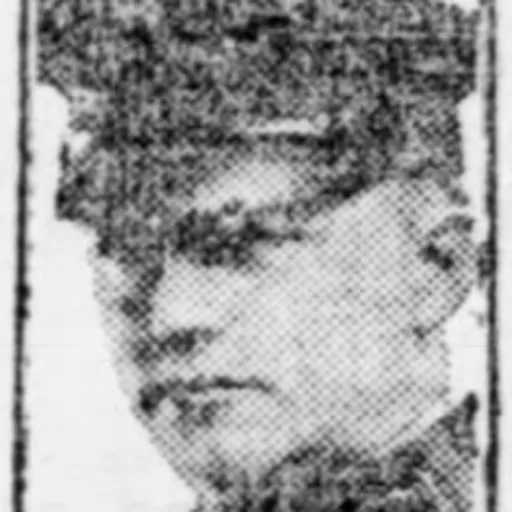
About Dorsey Crowe
Lived 1891 – 1962 (aged 70). Dorsey Crowe was an American politician and real estate broker.
Dorsey Ryan Crowe (August 21, 1891 – July 1, 1962) was an American politician who served as alderman of Chicago's 21st ward from 1919 to 1923 and upon its redistricting into the 42nd ward from 1923 to his death. A Democrat serving most of the Near North Side, he represented such affluent constituencies as the Gold Coast and Streeterville as well as such poor areas as Cabrini–Green and Goose Island. At the time of his death he was the Dean of the Chicago City Council, as well as the last alderman from the era of partisan aldermanic elections and when wards elected two aldermen each. An alderman for 43 years, and the last to have served under a Republican mayor, he is as of 2018 the third-longest serving alderman in Chicago history, behind Ed Burke of the 14th ward and John Coughlin of the 1st.
A corrupt and mob-linked yet popular and effective alderman, Crowe kept his affiliation with the machine in a changing climate and was able to maintain and entrench his power within the 42nd ward as the decades wore on. His long tenure witnessed many political changes in Chicago and his ward. When he assumed office, the Democratic Party of the area was bitterly fractured and his fellow aldermen were Republicans; in the years since his death the Democratic Party has been the dominant force of the 42nd ward, which has yet to have a Republican alderman as of 2018.
Early life
Crowe was born on August 21, 1891, in Omaha, Nebraska, to Kathryn Josephine (née Ryan) and Stephen Augustus Crowe, who had been respectively born in Illinois and Iowa, both to parents born in Ireland. across Kinzie Avenue from what was then Wells Street Station and would later become Merchandise Mart in a hotel owned and operated by his father. By 1910 the family moved up north to 753 North Dearborn Avenue, in another hotel owned by the elder Crowe known as the Dearborn Hotel. and would work in the same building one address to the north at 755 North Dearborn at the start of his aldermanic tenure.
Political career For the entirety of his term of office Crowe was closely affiliated with the machine, and would gain a reputation as Boss of the 42nd ward. In addition to his work as alderman, Crowe was an Illinois delegate to the 1936 Democratic National Convention, as well as an alternate delegate to the 1944 and 1952 conventions.
Entry into politics As early as 1918 or the general election. He did run in 1916, winning the Democratic primary against John Prendergast but falling in the general election to Republican candidate Earl J. Walker, who was aided in part by society women who learned oratory for the purpose. Then, as in 1919, his family history was used against him, although the women also asserted that he had been floor manager for a hotel employees' ball that had turned into a drunken orgy. or 1918.
Crowe ran again in 1919. At that time he was serving as an Army aviator and had been injured the previous autumn while distributing propaganda for war bonds when his plane crashed and he fell , and defeating Republican incumbent Robert Hall McCormick (not to be confused with Robert R. McCormick, who had been Republican alderman of the same ward from 1904 to 1906 ), who was further perceived to have a very poor attendance record at the Council, 8,735 votes to 6,287.
Crowe was condemned during his campaign by the reform-focused Municipal Voters' League, who noted his relation to Pat Crowe, stated that "his place of residence and business, the Dearborn hotel, is operated by his father, and has been the scene of police raids," and did not mention Crowe's military service. Embittered by such attacks, he would after his victory proclaim that "I never want to know any of the Municipal Voters' league people. I never want them to support me, and I think I shall make a record they could support if they were honest. They vilified my family so terribly that I wish never to have anything to do with them."
At the time Crowe declared zoning to be his main passion, planning to stop factories from coming up on Lake Shore Drive and giving his zealous support for the Chicago Plan Commission. He also proposed to electrify all of the railway terminals in the city to reduce smoke and noise, and supported giving jobs to veterans returning from France.
Early years and 1920s In his first year as alderman, Crowe was a member of the Judiciary, Streets and Alleys, and Building and City Hall committees of the Council. By 1920 he chaired the committee on Small Parks, Playgrounds, and Beaches. In 1921 he went on record to oppose a proposed blue law, quipping that "The proposed Sunday law is against all laws of common sense," a sentiment shared by many such fellow aldermen as 29th ward alderman and City Council Leader Thomas F. Byrne. On May 23, 1922, he was one of seven aldermen to call a special meeting of the Council to consider adding 1,000 patrolmen to the police force, which was ultimately approved. In 1920 aldermanic elections became nominally nonpartisan and Crowe's colleague and erstwhile rival Earl J. Walker was defeated in a runoff election by fellow Republican Charles J. Agnew.
From its incorporation in 1837, the City of Chicago had always been divided into wards which elected two aldermen each and which had numbered 35 by 1923. Both of Crowe's colleagues of the 21st Ward had been Republicans.
Despite coming from a greatly anti-Prohibition area, in 1923 he voted against a resolution proposed by fellow Democratic alderman John Coughlin of the 1st ward that New York Governor Al Smith be commended for signing a prohibition enforcement repeal act and that Illinois to do the same. He claimed that the vote was because he didn't have enough time to consider the resolution, although prominent wet and Cook County Board of Commissioners President Anton Cermak insisted it was because Crowe wasn't allowed to introduce it, and criticized him and 43rd ward alderman Arthur F. Albert for voting against the resolution when their respective U.S. Representative Frederick A. Britten was leading the fight against the Volstead Act in Congress.
Throughout much of the 1920s, Republican "Big Bill" Thompson, who had connections to notorious mobster Al Capone, was the mayor of Chicago. Crowe was generally against Thompson; in 1923, he was supported by the Municipal Voters' League and several of the leading citizens of the area in the first election of the new one-alderman 42nd ward against his former colleague Charles J. Agnew, who was seen as a consistent supporter of Thompson. His opposition to Thompson notwithstanding, Crowe had his own connections to the mob. In 1920 he was one of many politicians present at mobster Big Jim Colosimo's funeral. He was also one of many officials implicated in receiving mafia kickbacks in the aftermath of a hit made on mob accountant Jack Zuta, his erstwhile law firm Crowe & Kolb having received and via a rubber stamp endorsed a check of $500 on September 4, 1925. Crowe denied knowing Zuta or anything about the check.
Despite such mob links, he endorsed, and his ward voted for, incumbent anti-mob and Prohibition-enforcing mayor William Emmett Dever in the 1927 election. In retaliation for such support, on April 4, the day before the election, his downtown office at the Burnham Building (currently known as the Bilandic Building, not to be confused with the current Burnham Center) was ransacked, allegedly by North Side Gang member Vincent "The Schemer" Drucci, among others. Invading the office while Crowe was himself absent, the attackers kicked out a window, knocked over file cabinets, and either scared Upon his arrest Drucci created a scuffle with the police and was killed in the resulting shootout.
Crowe was not universally popular within the 42nd ward at this time. In particular, the reform-minded Chicago Tribune, whose headquarters were located within the ward, and his old enemy the Municipal Voters' League, despite its 1921 and 1923 reviews, continued to endorse his opponents throughout the decade. He was not particularly popular in the areas east of State Street, comprising the Republican-dominated Gold Coast and Streeterville. The importance of this opposition varied throughout the decade. In 1925, he crushed League-endorsed candidate Philip Farina 8,549 votes to 814. In 1929, however, he received 144 fewer votes than wealthy stockbroker and Deneen-backed reform Republican candidate Richard Prendergast (of unknown relation to John Prendergast from 1916) and was forced into a runoff, where he nonetheless defeated Prendergast with a comfortable 1,622-vote majority. The campaign was active and violent, involving such violence as fistfights and shootings, and Crowe's precinct captain Charles S. Brown would be found dead in September.
On June 2, 1929, Crowe was involved in an automobile accident in Lake Forest in which his vehicle was crowded into a ditch and he was thrown through the roof of the car and pinned in the wreckage before being saved by a passerby as it began to catch fire, suffering a concussion and being rendered unconscious for six hours. The injuries forced him to miss most Council business for the remainder of 1929. However, even the Municipal Voters' League endorsed him, if weakly, over the inexperienced Henry. He would ultimately defeat all of his rivals in the first round with a 3,871-vote majority.
In 1939 the Municipal Voters' League disbanded and merged with the Citizens' Association of Chicago. By 1945 Crowe was the second-longest serving member of the Council (behind only future congressman James Bowler of the 25th ward, who had been serving since 1906), as well as the alderman with the longest continuous term of service (Bowler had been out of office between 1923 and 1927 and between 1934 and 1935
Later years Crowe continued to have dubious connections and engage in dubious practices throughout his tenure. As of 1947 he owned the Olympic Hotel operated by Harry Rubenstein, who was definitively linked to killing a man and suspected of killing two more. When accused of beating out two independent candidates in 1959 by paying each voter 50 cents, he is reported to have retorted "Madame, you can't get that done for 50 cents. It costs $5."
Don’t just read it —
keep it.
Full-length biographies made to live with: read them, listen on the way to work, watch them tonight.
- E-book
- Audio
- Video
Instant download · yours to keep · every purchase keeps this site free
Important facts
People in Dorsey Crowe's life
Named in this biography and alive at the same time



Related people
Same field, nearest in time





Contemporaries
People whose lives overlapped Dorsey Crowe's


Frequently asked questions
Who was Dorsey Crowe?
American politician (1891-1962)
When was Dorsey Crowe born?
Dorsey Crowe was born on 21 August 1891 in Omaha.
When did Dorsey Crowe die?
Dorsey Crowe died on 1 July 1962 in Chicago, Illinois.
What was Dorsey Crowe's occupation?
Dorsey Crowe was a politician and real estate broker.
What nationality was Dorsey Crowe?
Dorsey Crowe was American.
Sources & further reading
Cite this page
APA: Biography.guide. (2026). Dorsey Crowe. https://biography.guide/dorsey-crowe/
MLA: "Dorsey Crowe." Biography.guide, https://biography.guide/dorsey-crowe/.
Chicago: "Dorsey Crowe." Biography.guide. https://biography.guide/dorsey-crowe/.
Data last updated: 2026-09-21 · Spot an error? Report a correction.
Portrait: Wikimedia Commons · author & licence
Page generated 2026-09-27 05:00 UTC