
Dorothy Vaughan
African-American mathematician
About Dorothy Vaughan
Lived 1910 – 2008 (aged 98). Dorothy Vaughan was an American computer scientist, programmer and mathematician.
Dorothy Jean Johnson Vaughan (September 20, 1910 – November 10, 2008) was an American mathematician, human computer, computer programmer and schoolteacher who worked for the National Advisory Committee for Aeronautics (NACA), and NASA, at Langley Research Center in Hampton, Virginia. In 1949, she became acting supervisor of the West Area Computers, the first African-American woman to receive a promotion and supervise a group of staff at the center.
She later was promoted officially to the position of supervisor. During her 28-year career, Vaughan prepared for the introduction of computers in the early 1960s by teaching herself and her staff the Fortran programming language. She later headed the programming section of the Analysis and Computation Division (ACD) at Langley.
Vaughan is one of the women featured in Margot Lee Shetterly's history Hidden Figures: The Story of the African-American Women Who Helped Win the Space Race (2016). It was adapted as a biographical film of the same name, also released in 2016.
In 2019, Vaughan was honored with the Congressional Gold Medal posthumously.
Career Vaughan graduated from Wilberforce University in 1929. Although encouraged by professors to do graduate study at Howard University,
In 1935, Langley Research Center in Hampton, Virginia, established its first female computing pool. Two years following the issuance of Executive Orders 8802 and 9346, the Langley Memorial Aeronautical Laboratory (Langley Research Center), a facility of the NACA, began hiring more Black women to meet the drastic increase in demand for processing aeronautical research data. The US believed that the war was going to be won in the air. It had already ramped up airplane production, creating a great demand for engineers, mathematicians, craftsmen and skilled tradesmen.
In 1943, Vaughan began a 28-year-career as a human computer and computer programmer at Langley Research Center where she came to perform calculations for flight paths, the Scout Project, and computer programming. Her career in this field kicked off during the height of World War II. She came to the Langley Memorial Aeronautical Laboratory thinking that it would be a temporary war job. One of her children later worked at NACA. Vaughan was assigned to the West Area Computing, a segregated unit, which consisted of only African Americans. This was due to prevailing Jim Crow laws that required newly hired African American women to work separately from their white women counterparts.
Their work expanded in the postwar years to support research and design for the United States' space program, which was emphasized under President John F. Kennedy. In 1949, Vaughan was assigned as the acting head of the West Area Computers, taking over from a woman who had died. She was the first Black supervisor at NACA and one of few female supervisors, leading a group composed entirely of African-American women. She served for years in an acting role before being promoted officially to the position as supervisor.
Vaughan moved into the area of electronic computing in 1961, after NACA introduced the first digital computers to the center. Vaughan became proficient in computer programming, teaching herself FORTRAN and teaching it to her coworkers to prepare them for the transition. She contributed to the space program through her work on the Scout Launch Vehicle Program. She retired from NASA in 1971, at the age of 61. In her final decade of her career, she alongside Katherine G. Johnson and Mary Jackson helped calculate astronauts John Glenn's launch into orbit, She died on November 10, 2008, aged 98 and was buried at Hampton Memorial Gardens. Vaughan was a member of Alpha Kappa Alpha, an African-American sorority. She was also an active member of the African Methodist Episcopal Church where she participated in music and missionary activities.
At the time of her death, she was survived by four of her six children, ten grandchildren and fourteen great-grandchildren.
Legacy Vaughan was the first Black female manager at NASA. As one of the first female FORTRAN programmers, she instructed her peers and paved a way for female programmers at NASA.
In 2005, a scholarship fund with the Salem Community Foundation was created under Dorothy Vaughan’s name to further music training by the Salem Music Study Club.
Vaughan is one of the women featured in Margot Lee Shetterly's 2016 non-fiction book Hidden Figures, and the feature film of the same name. She was portrayed by the Academy Award winning actress Octavia Spencer.
The Dorothy J. Vaughan Academy of Technology opened in Charlotte, NC, in August 2017. This school is inspired by Vaughan’s “leadership, innovation, creativity, curiosity, and love of learning.” The school is a member of the Magnet Schools of America Association.
In 2019, Vaughan was awarded the Congressional Gold Medal.
Vaughan’s personal Bible and NASA retirement identification card are displayed in the Museum of the Bible’s exhibition Scripture and Science: Our Universe, Ourselves, Our Place. The African Methodist Episcopal Church also gave her a service award.
Awards and honors 1925: Beechurst High School – Class Valedictorian 1925: West Virginia Conference of the A.M.E. Sunday School Convention – Full Tuition Scholarship 1929: Wilberforce University – Mathematician Graduate Cum Laude 1949–1958: Head of National Advisory Committee of Aeronautics' Segregated West Computing Unit (NACA) October 16, 2019: a lunar crater is named after her. This name was chosen by planetary scientist Ryan N. Watkins and her student, and submitted on what would have been Dorothy Vaughan's 109th birthday. November 8, 2019: Congressional Gold Medal On November 6, 2020, a satellite named after her was launched into space On July 19, 2024, NASA Johnson Space Center's central data office, known as Building 12, was renamed as the "Dorothy Vaughan Center in Honor of the Women of Apollo" as a "tribute to the people who made humanity's first steps on the Moon possible." §
Don’t just read it —
keep it.
Full-length biographies made to live with: read them, listen on the way to work, watch them tonight.
- E-book
- Audio
- Video
Instant download · yours to keep · every purchase keeps this site free
Important facts
People in Dorothy Vaughan's life
Named in this biography and alive at the same time



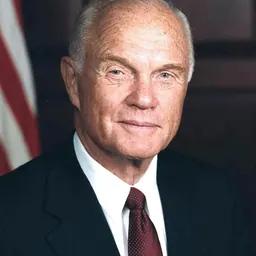
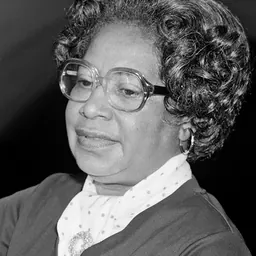


Related people
Same field, nearest in time

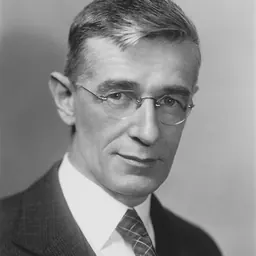


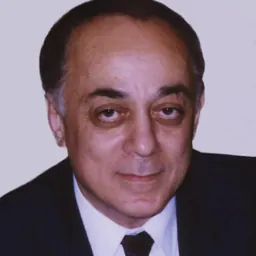
Contemporaries
People whose lives overlapped Dorothy Vaughan's






Frequently asked questions
Who was Dorothy Vaughan?
African-American mathematician
When was Dorothy Vaughan born?
Dorothy Vaughan was born on 20 September 1910 in Kansas City.
When did Dorothy Vaughan die?
Dorothy Vaughan died on 10 November 2008 in Hampton.
What was Dorothy Vaughan's occupation?
Dorothy Vaughan was a computer scientist, programmer and mathematician.
What nationality was Dorothy Vaughan?
Dorothy Vaughan was American.
Sources & further reading
Cite this page
APA: Biography.guide. (2026). Dorothy Vaughan. https://biography.guide/dorothy-vaughan-computer-scientist/
MLA: "Dorothy Vaughan." Biography.guide, https://biography.guide/dorothy-vaughan-computer-scientist/.
Chicago: "Dorothy Vaughan." Biography.guide. https://biography.guide/dorothy-vaughan-computer-scientist/.
Data last updated: 2026-09-20 · Spot an error? Report a correction.
Page generated 2026-09-27 05:22 UTC