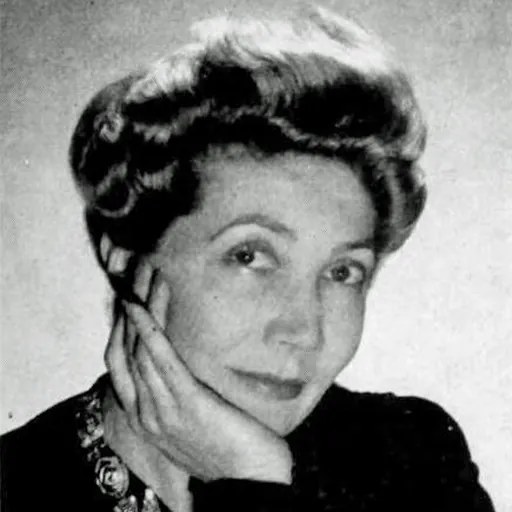
Dorothy Liebes
American textile designer and weaver
About Dorothy Liebes
Lived 1897 – 1972 (aged 74). Dorothy Liebes was an American textile designer, interior designer, weaver, designer and textile design.
Dorothy Wright Liebes (14 October 1897 – 20 September 1972) was an American textile designer and weaver renowned for her innovative, custom-designed modern fabrics for architects, interior designers, and fashion designers. She was known as "the mother of modern weaving".
Early life
Born Dorothy Wright on October 14, 1897, in Santa Rosa, California, she was the daughter of Frederick L. Wright, a chemistry professor, and Bessie Calderwood Wright, a teacher. While studying anthropology, art, and teaching at the State Teachers College at San Jose (now San Jose State University) and at the University of California, Berkeley, she was a student of Anne Swainson and advised to experiment with textile design. Her first studio, opened at 526 Powell Street in San Francisco in 1930, specialized in custom handwoven pieces for architects and interior designers. In 1935, Liebes met architect Frank Lloyd Wright at Taliesin in Spring Green, Wisconsin. Wright had an influence in her design philosophy. By 1938 she had seventeen men and women working in her studio. They were commissioned by architects, including Frank Lloyd Wright, Edward Durell Stone, Miller and Pflueger and Samuel Marx. Other clients included King Ibn Saud of Saudi Arabia, the Ahwahnee Hotel in Yosemite, and the Paramount Theatre in Oakland, California. Her textiles were also used in airplanes, ocean liners, theatres and hotels. Many pioneers of the "American Look" (Claire McCardell, Clare Potter, Pauline Trigère, Lilly Daché, Louella Ballerino, Adele Simpson, and Nettie Rosenstein) used fabrics designed by Liebes. Her close, personal relationships with costume designers Gilbert Adrian and Bonnie Cashin were forged in Hollywood, and thrived as each developed their own fashion lines. Her Hollywood connections, especially with Art Director Cedric Gibbons led to her distinctive modernist fabrics appearing in dozens of motion pictures. Most notably, her (uncredited) work appears in Adam's Rib (Metro-Goldwyn-Mayer, 1949) and East Side, West Side (Metro-Goldwyn-Mayer, 1949).
Writing for the Cooper Hewitt, Smithsonian Design Museum at the time of a 2023 exhibit of her work, writer Matthew J. Kennedy observed: "Liebes textiles excel materially through the motion picture; despite being devoid of color, they still read as Liebes’s designs. They also contribute to the use of modern design in film set decoration to characterize that which is anti-traditional, transgressive, and—in the case of East Side, West Side—glamorous and sexy."
The end of WWII was a pivotal moment for Liebes and her company. Synthetic materials that were created for and utilized in the war effort were then made available for domestic use. Aluminum, in particular, was of great interest to textile manufacturers. Liebes was excited and inspired by these possibilities, especially the innovative ways in which they could be worked and manipulated. She once remarked in a lecture to design students in Chicago, “Consider the shining cellophanes, dull acetates, lacquered plastics, treated leathers, artificial horsehair, non-tarnishable materials and glass threads!” Dorothy Liebes is often credited as a vital part of the California Modernist movement, and in the 1940s and 50s she was one of the most well-known textile designers in the United States. In contrast to the neutral palette of many of her modernist contemporaries, Liebes is well known for her unexpected use of materials, vibrant color and pattern. She had a penchant for combining seemingly mismatched colors in a cohesive, visually pleasing manner. Liebes famously called color a “magic elixir” and her textiles were characterized by their rich vibrant hues. She coined this the “California Look”, which quickly was referred to as the “Liebes Look”.
Liebes is recognized for introducing therapeutic craft programs for World War II veterans across America. In 1942, she was appointed as National Director, Division of Arts & Skills, American Red Cross. The following year, 1947, she received the Craftsmanship Medal from the American Institute of Architects. In 1970 Liebes received the American Craft Council Gold Medal for Consummate Craftsmanship.
Death Due to a heart condition, Dorothy Liebes semi-retired in 1971. the Victoria and Albert Museum, the Art Institute of Chicago, Smithsonian Institution's Archives of American Art, and the Phoebe A. Hearst Museum of Anthropology at University of California, Berkeley.
In 2023 the Cooper Hewitt held a retrospective of Liebes' work entitled A Dark, A Light, A Bright: The Designs of Dorothy Liebes. The exhibition earned the 2022 Prize for Excellence and Innovation from the Decorative Arts Trust.
Don’t just read it —
keep it.
Full-length biographies made to live with: read them, listen on the way to work, watch them tonight.
- E-book
- Audio
- Video
Instant download · yours to keep · every purchase keeps this site free
Important facts
Family & relationships
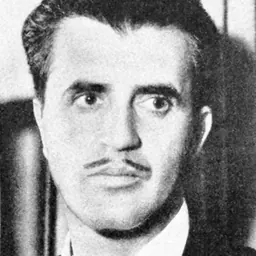
People in Dorothy Liebes's life
Named in this biography and alive at the same time




Related people
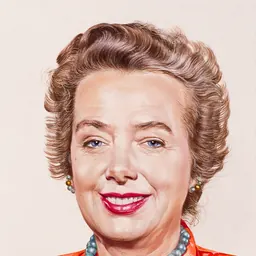
Same field, nearest in time


Contemporaries
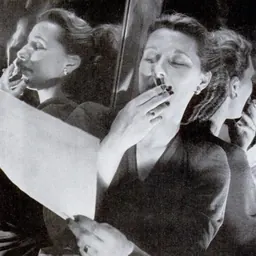
People whose lives overlapped Dorothy Liebes's



Frequently asked questions
Who was Dorothy Liebes?
American textile designer and weaver (1897–1972)
When was Dorothy Liebes born?
Dorothy Liebes was born on 14 October 1897 in Santa Rosa.
When did Dorothy Liebes die?
Dorothy Liebes died on 20 September 1972 in New York City.
What was Dorothy Liebes's occupation?
Dorothy Liebes was a textile designer, interior designer, weaver, designer and textile design.
What nationality was Dorothy Liebes?
Dorothy Liebes was American.
Sources & further reading
Cite this page
APA: Biography.guide. (2026). Dorothy Liebes. https://biography.guide/dorothy-liebes/
MLA: "Dorothy Liebes." Biography.guide, https://biography.guide/dorothy-liebes/.
Chicago: "Dorothy Liebes." Biography.guide. https://biography.guide/dorothy-liebes/.
Data last updated: 2026-09-22 · Spot an error? Report a correction.
Portrait: Wikimedia Commons · author & licence
Page generated 2026-09-27 05:00 UTC