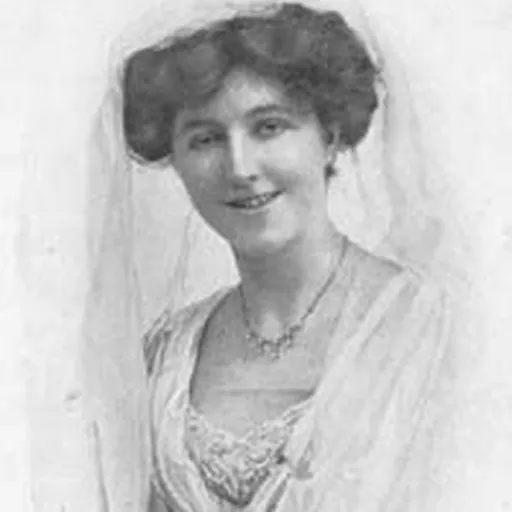
About Dorothy Lawrence
Lived 1896 – 1968 (aged 71). Dorothy Lawrence was a British journalist, autobiographer, writer and soldier, known for World War I.
War correspondent By outbreak of World War One Lawrence had had some articles published in The Times and in Nash's Pall Mall Magazine. She wrote to a number of the Fleet Street newspapers offering her services as a war correspondent.
Transformation
Lawrence persuaded two British Army soldiers she met in a Paris café to smuggle her a khaki uniform, piece by piece from their own laundry. She later dubbed the ten men who eventually shared in this exploit her "khaki accomplices". and headed for the front lines.
Front line She set out for the British sector of the Somme by bicycle. believes while Lawrence was not physically involved in tunnelling activities at the front line, she was undoubtedly in the trenches.
From Calais she was taken to Saint-Omer and further interrogated. The Army was embarrassed that a woman had breached security and was fearful of more women attempting male roles during the war if her story got out. Fearing she might divulge sensitive intelligence, a judge ordered that she would remain in France until after the imminent Battle of Loos.
Medals The National Archives (TNA) holds two medal index cards for Lawrence confirming her participation in the war: one showing her rank of Sapper with the Royal Engineers and another [debatably a different Dorothy Lawrence) as a Worker in the Queen Mary's Army Auxiliary Corps
Later life In 1919, she moved to Canonbury Islington, and published an account of her experiences: Sapper Dorothy Lawrence: The Only English Woman Soldier. Although well received in England, America and Australia, She was buried in a public pauper grave at New Southgate Cemetery. installed by Steve Davies, Military Grave Restorer. and crafted by London stonemasons Munday & Son As part of its Remembrance Day 2025 coverage, on 11 November 2025, BBC Breakfast News dedicated a news segment to the unveiling of the memorial.
Legacy In 2003, Richard Bennett, the grandson of Richard Samson Bennett – one of the soldiers who had helped Lawrence in France – found her autobiography while researching his family history at the Royal Engineers Museum (REM) in Chatham, Kent.
On further investigation, West Sussex historian Raphael Stipic found a letter written during World War I by Sir Walter Kirke, head of the secret service for the British Expeditionary Force. The letter mentioned a woman who dressed in men's clothing in hopes of becoming a war correspondent, pointing clearly to Lawrence. found a copy of Lawrence's book in the archives and began collecting notes to write a biography.
Lawrence's story later became part of an Imperial War Museum (IWM) exhibition covering women at war. Curator Laura Clouting stated that Lawrence was included because she was the exception to the rule that women were not included in any branch of the military. Blue Pen (2016), film by McNamara based on the stories of Lawrence and other women journalists whose voices were silenced through censorship, confinement in institutions, and abuse. Over the Top: the true-life tale of Dorothy Lawrence (2016), play written and directed by Lizzie Crarer, a production of theatre company The Heroine Project Presents, which offers stories of women who have been overlooked in history. After a trustee of the Historical Association (HA) saw a performance of Over the Top, the HA commissioned the theatre company to create three short films about Lawrence to use in classroom discussions about World War I. The films were posted on the HA website in May 2017.
Don’t just read it —
keep it.
Full-length biographies made to live with: read them, listen on the way to work, watch them tonight.
- E-book
- Audio
- Video
Instant download · yours to keep · every purchase keeps this site free
Important facts
People in Dorothy Lawrence's life
Named in this biography and alive at the same time



Related people
Same field, nearest in time




Contemporaries
People whose lives overlapped Dorothy Lawrence's



Frequently asked questions
Who was Dorothy Lawrence?
English reporter and cross-dresser
When was Dorothy Lawrence born?
Dorothy Lawrence was born on 4 October 1896 in Hendon.
When did Dorothy Lawrence die?
Dorothy Lawrence died on 29 August 1968 in Friern Hospital.
What was Dorothy Lawrence's occupation?
Dorothy Lawrence was a journalist, autobiographer, writer and soldier.
What was Dorothy Lawrence known for?
Dorothy Lawrence was known for World War I.
What nationality was Dorothy Lawrence?
Dorothy Lawrence was British.
Sources & further reading
Cite this page
APA: Biography.guide. (2026). Dorothy Lawrence. https://biography.guide/dorothy-lawrence/
MLA: "Dorothy Lawrence." Biography.guide, https://biography.guide/dorothy-lawrence/.
Chicago: "Dorothy Lawrence." Biography.guide. https://biography.guide/dorothy-lawrence/.
Data last updated: 2026-09-22 · Spot an error? Report a correction.
Portrait: Wikimedia Commons · author & licence
Page generated 2026-09-27 04:59 UTC