
About Dorothy Draper
Lived 1889 – 1969 (aged 79). Dorothy Draper was an American socialite, architect, interior designer and interior architect.
Dorothy Draper (November 22, 1889 – March 11, 1969) was an American interior decorator. Stylistically very anti-minimalist, she used bright, exuberant colors and large prints that encompassed whole walls. She incorporated black and white tiles, rococo scrollwork, and baroque plasterwork, design elements now considered defining elements of the Hollywood Regency style of interior decoration.
Early life She was born into the upper-class Tuckerman family in Tuxedo Park, New York, one of the first gated communities in the United States. Her parents were Paul Tuckerman (1856–1940) and Susan (née Minturn) Tuckerman (1866–1956). In addition to the house in Tuxedo Park, the family had a Manhattan townhouse and a summer cottage in Newport, Rhode Island Her brother Roger was the father of Nancy Tuckerman, the 12th White House Social Secretary who was appointed by Jackie Kennedy.
Her maternal grandparents were John Wendell Minturn (son of Robert Bowne Minturn) and Louisa (née Aspinwall) Minturn (daughter of William Henry Aspinwall). Draper's great-grandfather, Oliver Wolcott, was a signer of the Declaration of Independence. Drapers's cousin, Sister Parish, would also become a major interior designer of the 20th century. Packard hired Draper to harmonize the colors and fabrics of their automobile interiors. Draper's 1954 concept for the cafeteria at New York's Metropolitan Museum of Art, dubbed the Dorotheum, featured birdcage chandeliers and a skylighted canopy. One of Draper's last projects was the 1957 International Hotel at Idlewild Airport (today John F. Kennedy Airport) in New York.
Greenbrier Hotel
One of Dorothy Draper's most famous designs was The Greenbrier Hotel in White Sulphur Springs, West Virginia. During World War II it was used as a military hospital. After the war the Chesapeake and Ohio Railway repurchased the property and Dorothy Draper was retained to redecorate the entire resort. She designed everything from matchbook covers to menus to staff uniforms. Draper transformed the Greenbrier in 16 months. Since then, there have been many changes to the Greenbrier, such as the hidden vault built for emergency use by the United States Congress during the time of the cold war. Other changes were a Dorothy Draper-themed restaurant, a new casino, and updates to the property as a whole.
Style Draper created a new style known as "Modern Baroque," adding a modern flair to a classical style. She used dramatic interior color schemes, and trademark cabbage-rose chintz. She promoted shiny black ceilings, acid-green woodwork and cherry-red floors, believing that "Lovely, clear colors have a vital effect on our mental happiness." She also chose very dramatic and contrasting color schemes, such as black with white and adding in some bits of color. She combined different colors, fabrics, and patterns together, combining stripes with floral patterns. She often used large, oversized details and numerous mirrors. All of the colors and patterns contributed to her dramatic design now referred to as "the Draper touch." The opposite of minimalism, her designs were incorporated in homes, hotels, restaurants, theaters, and department stores.
By 1937, Draper had become a household name whose aesthetic enthusiasm was adopted by suburban housewives. Eleanor Roosevelt and Dorothy were cousins and good friends growing up, so the relationship between the two families grew. Together, the Drapers had three children, before divorcing in 1930.
Legacy In 2004, her 1941 book Entertaining is Fun! How to Be a Popular Hostess, was reissued, which had a hot pink, polka-dotted cover and was a best seller.
In May 2006, the Museum of the City of New York held an exhibition of Draper's work, curated by Donald Albrecht and designed by the Manhattan studio Pure+Applied, called "The High Style of Dorothy Draper." He has said, "Taking an eighteenth-century chair normally done in wood and making it in clear plastic is a Dorothy Draper kind of thing. And she is a fascinating person. All of her tips must have been really great for housewives in the fifties. To have this woman telling them, 'Don’t be afraid! Paint the door green!'" Draper-designed furniture was lent by The Greenbrier Hotel and The Arrowhead Springs resort—two of her best-known projects. A white "bird-cage" chandelier that Draper designed for the Metropolitan Museum of Art's Dorotheum cafe was also on display.
From December 2006 through July 2007, the Women's Museum in Dallas, Texas hosted "In the Pink: The Legendary Life of Dorothy Draper." It featured archival photographs of Draper's work from The Stoneleigh Hotel and the St. Anthony. The exhibition was designed by Pure+Applied of New York. The exhibition then moved to the Museum of Art in Fort Lauderdale from February through June 2008.
In 2006, Dorothy Draper was featured in an exhibition done in her memory in the Museum of New York City. The exhibition moved from New York City to Texas, and then to Florida.
Draper is considered a major influence on several modern designers, including Kelly Wearstler and Jonathan Adler.
Published works (Reprint) Dorothy Draper, Decorating is Fun!: How to Be Your Own Decorator. New York: Doubleday, Doran & Company, 1939. Dorothy Draper, 365 Shortcuts to Home Decorating. New York: Dodd, Mead, and Company, 1965.
Don’t just read it —
keep it.
Full-length biographies made to live with: read them, listen on the way to work, watch them tonight.
- E-book
- Audio
- Video
Instant download · yours to keep · every purchase keeps this site free
Important facts
People in Dorothy Draper's life
Named in this biography and alive at the same time






Related people
Same field, nearest in time

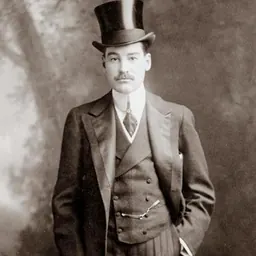
Contemporaries
People whose lives overlapped Dorothy Draper's
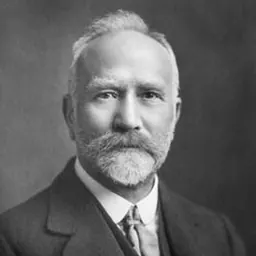

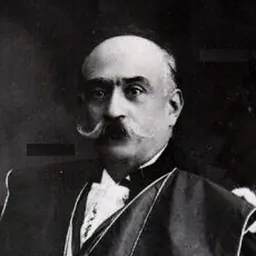

Frequently asked questions
Who was Dorothy Draper?
American interior designer (1889-1969)
When was Dorothy Draper born?
Dorothy Draper was born on 22 November 1889 in Tuxedo Park.
When did Dorothy Draper die?
Dorothy Draper died on 11 March 1969 in Cleveland, Ohio, United States.
What was Dorothy Draper's occupation?
Dorothy Draper was a socialite, architect, interior designer and interior architect.
What nationality was Dorothy Draper?
Dorothy Draper was American.
Sources & further reading
Cite this page
APA: Biography.guide. (2026). Dorothy Draper. https://biography.guide/dorothy-draper/
MLA: "Dorothy Draper." Biography.guide, https://biography.guide/dorothy-draper/.
Chicago: "Dorothy Draper." Biography.guide. https://biography.guide/dorothy-draper/.
Data last updated: 2026-09-25 · Spot an error? Report a correction.
Page generated 2026-09-27 05:08 UTC