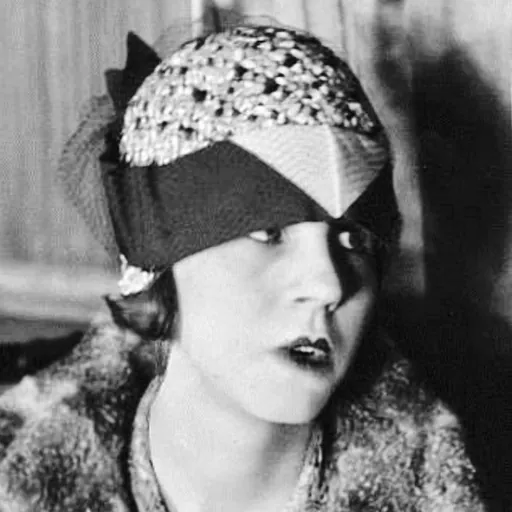
Doris von Schönthan
German model, journalist, photographer and resistance fighter
About Doris von Schönthan
Lived 1905 – 1961 (aged 55–56). Doris von Schönthan was a German journalist, photographer, fashion model and copywriter.
Doris von Schönthan (1905–1961), born Maria-Dorothea Ehemann (also Doris Ehemann; Doris von Salomon; Doris de Salomon; Maria-Dorothea von Salomon; Maria-Dorothea von Schönthan; Maria-Dorothea von Salomon-Schönthan; Doris von Salomon-Schönthan), called 'Dorinde', was a German model, a copywriter, journalist and photographer. She is characterised as a dazzling figure of the Weimar Republic or bohemian of the Roaring Twenties.
Family and circle of friends Schönthan was born in Worms. As an early orphan, she was adopted by the Berlin comedy writer , who together with his brother Paul became known for the comedy Der Raub der Sabinerinnen and worked behind the scenes, for example, on operettas to the music of Eduard Künneke. Professionally, she was partly employed, partly freelance, such as for a Berlin "advertising service of American style" (advertising agency), for Berlin daily newspapers, magazines and illustrated papers. She was portrayed in drawings by Paul Citroen, 1927 but also by the contemporary cultural magazine Der Querschnitt.
Schönthan belonged to the circle of friends around the closely connected siblings Erika and Klaus Mann, into which she brought Grete Dispeker (later married Weil), their friend from their shared childhood days at Tegernsee The brothers Edgar (1908-1941) and Hans Joseph Weil (1906-1969) and their friend Walter Jockisch (1907-1970) were also integrated. Dispeker admiringly called her a cherub. During walks through Berlin together, he served as a pretext for her to be able to photograph people unnoticed by seemingly aiming her camera at him at a suitable spot in order to deceive the actual photo subjects or lull them into a sense of security. In reality, she photographed past him, for example in the Schöneberger or people stepping out of the KaDeWe after shopping and strolling past its blue-uniformed porter with a German shepherd dog. She looked for types: a park bench with "broads", another with old men, scuffling little boys, children playing in the sandbox, ball players, a "slutty Venus" in the Königskolonnaden, women and men with "Kneifer", an old toilet woman....
Mit Hessel und Hilmar Adolf Otto Maximilian Thankmar von Münchhausen (1894–1976) verband Doris von Schönthan Ende der 1920er Jahre eine Dreiecksbeziehung. Gut befreundet war sie auch mit Ruth Landshoff-Yorck und Walter Benjamin, Walter Hasenclever and Alfred Kantorowicz, described by these as a "lovely woman", as "tall and slender, of fragile grace, nervously endangered" or as "lean and witty" or as "very thin, disjointed, uncommonly forgetful and scattered".
Klaus Mann described her in his diary as a "companion of my borderline walks between self-awareness and self-destruction": "Big evening with Doris. In search of cocaine. With transvestites taxi into the city [...] Finally the stuff. To Doris. Taken." She remained friends with him until his death in Cannes and also supported him financially. She took him to a clinic in Nice for detoxification on 4 May 1949, after he had taken an overdose of sleeping pills. Von Schönthan informed Thomas Mann, who was staying at the Grand Hotel in Stockholm, of Klaus' critical condition by telegram on 21 May 1949. That same evening, she informed the Mann family and friends of Klaus Mann's death by telephone.
Political resistance In 1933, she distributed anti-fascist flyers in the Reich capital together with Elisabeth Hauptmann and Friedrich Wolf. Politically persecuted persons such as Rudolf Olden found shelter in her flat. When she strictly refused to formulate professionally in the spirit of NS diction, it became so dangerous for her that she emigrated to France. Through this she met the political activist in Paris; they both married. Resigned, she is said to have emigrated again to France, where she died of a cerebral stroke in Paris.
Film Schönthan was portrayed by the actress in the 2001 three-part television film Die Manns – Ein Jahrhundertroman by Heinrich Breloer.
Don’t just read it —
keep it.
Full-length biographies made to live with: read them, listen on the way to work, watch them tonight.
- E-book
- Audio
- Video
Instant download · yours to keep · every purchase keeps this site free
Important facts
People in Doris von Schönthan's life
Named in this biography and alive at the same time



Related people
Same field, nearest in time



Contemporaries
People whose lives overlapped Doris von Schönthan's



Frequently asked questions
Who was Doris von Schönthan?
German model, journalist, photographer and resistance fighter
When was Doris von Schönthan born?
Doris von Schönthan was born in 1905 in Worms.
When did Doris von Schönthan die?
Doris von Schönthan died in 1961 in Paris.
What was Doris von Schönthan's occupation?
Doris von Schönthan was a journalist, photographer, fashion model and copywriter.
What nationality was Doris von Schönthan?
Doris von Schönthan was German.
Sources & further reading
· Wikipedia: Doris von Schönthan
· DBpedia: Doris von Schönthan
Cite this page
APA: Biography.guide. (2026). Doris von Schönthan. https://biography.guide/doris-von-schonthan/
MLA: "Doris von Schönthan." Biography.guide, https://biography.guide/doris-von-schonthan/.
Chicago: "Doris von Schönthan." Biography.guide. https://biography.guide/doris-von-schonthan/.
Data last updated: 2026-09-23 · Spot an error? Report a correction.
Portrait: Wikimedia Commons · author & licence
Page generated 2026-09-27 05:06 UTC