
Donovan Benson
British banker in Hong Kong
About Donovan Benson
Lived 1896 – 1972 (aged 76). Donovan Benson was a non-official justice of the peace, banker and politician.
Donovan Benson (; 21 January 1896—November 17, 1972) was a British colonial banker. From February 1937 to July 1952, he served as manager of the Mercantile Bank of India in Hong Kong. After retiring from banking, he served as chairman of the Royal Hong Kong Jockey Club from March 1953 to September 1967.
Benson joined the Mercantile Bank of India in 1919 and worked for 17 years in Malaya, Singapore and Penang before being transferred to Hong Kong as manager in February 1937. During his tenure, he lived through the Second World War. Although he was outside Hong Kong when the territory fell to Japanese forces in December 1941, he returned immediately after the British reoccupation in 1945 to reorganise the bank's operations. After the war, he planned the reconstruction of the bank's head office in Hong Kong, but the new building was not completed and opened until December 1953, after his retirement. During his time as manager, he was also appointed a non-official Justice of the Peace and twice served temporarily as an unofficial member of the Executive Council of Hong Kong.
After leaving the Mercantile Bank, Benson chose to make Hong Kong his home. In addition to holding chairmanships and directorships in various commercial organisations, he was active in public service, with a particular focus on child welfare. This included serving as a magistrate of the Hong Kong Juvenile Court from 1953 to 1964, where he often showed special leniency towards children from poor families who had committed offences. He also served as president of the Hong Kong Playground Association, a member of the executive committee of the Hong Kong Society for the Protection of Children, and was involved in the work of the Hong Kong Juvenile Placement Association and the Hong Kong Scouts Association. Benson had participated in the founding of the as early as 1940, serving as its honorary treasurer. After the war, he became a director in 1948, vice-chairman of the board in 1949, and chairman in 1963, retiring from that position in June 1964. While serving with the association, he regularly visited the children's ward at the Ruttonjee Hospital on Sundays to see children suffering from respiratory diseases.
A keen enthusiast of horse racing and polo, Benson served as chairman of the Hong Kong Jockey Club for 14 years. During his term, he strongly promoted the club's charitable work, not only securing multiple donations but also establishing the Hong Kong Jockey Club (Charities) Limited in 1959 to systematise the club's donation programmes. In recognition of the club's charitable activities, the British Crown granted it the "Royal" prefix in 1960, elevating it to the Royal Hong Kong Jockey Club. At the same time, Benson's tenure witnessed the increasing popularisation of horse racing betting. Although the club's only racecourse at Happy Valley Racecourse was frequently full on race days, plans to expand the grandstand and build a new racecourse were only realised after he left office. On the other hand, despite the problem of illegal off-course betting, the Hong Kong Government rejected the club's proposal to open off-course betting centres, while Benson himself opposed the professionalisation of amateur racing. Both proposals were only implemented after he stepped down as chairman. During his term, three jockeys (Samarcq, Neel, and 何炜航) died in riding accidents at Happy Valley, each causing a sensation in racing circles.
Early life Benson was born on 21 January 1896 in Hornsey, Middlesex (later part of the London Borough of Haringey), London. His father, William Tyler Benson, was a branch manager of the London and Provincial Bank. His mother was May Gertrude Gwyn. He was the second of four brothers. His eldest brother, William Roy Gwyn Benson (1895–1916), worked at the Standard Bank of South Africa and the Bank of Montreal before enlisting in the South Staffordshire Regiment at the outbreak of the First World War. He was killed in action at Vimy, France, in July 1916 at the age of 21 and is buried at the Cabaret-Rouge British Cemetery, Souchez.
His third brother, Wilfred Benson (1899–1963), graduated from Jesus College, Cambridge, and worked for the International Labour Organization and the United Nations. In 1942, he was the first to use the term "underdevelopment" to describe backward countries. His youngest brother, Gwyn Benson (1904–1977), also graduated from Jesus College, Cambridge, and later emigrated to Canada, where he worked in chemical research and the chemical industry in Shawinigan Falls.
Benson attended Hackney Downs School in London with his elder brother. While at school, he took a military signalling course in 1909. When the First World War broke out in 1914, he enlisted as a private in B Squadron of the Westminster Dragoons. He initially served in Egypt before being transferred in 1915 to the Gallipoli peninsula to take part in the Battle of Gallipoli. He was wounded when a bullet passed through several layers of sandbags and struck him in the jaw. He was evacuated to Exeter, England, on 9 September and underwent surgery on 27 September. Before the Second World War, it was one of the three note-issuing banks in Hong Kong, and Benson signed banknotes on behalf of the bank during his tenure. Benson was outside Hong Kong when Japanese forces advanced, so he was not interned after the fall. These facilities did not apply to accounts involving questionable assets, especially those suspected of having been acquired through improper means during the war. Before leaving, he planned the reconstruction of the Hong Kong head office. The old building, constructed during the First World War and over 30 years old, was demolished starting in August 1952. The new 10-storey head office building was completed and opened in December 1953, after his retirement. In the years after the Second World War, newly independent countries such as India and Pakistan introduced strict regulations and high tax rates that severely restricted the Mercantile Bank's traditional markets. This limited the bank's development. A few years after Benson's retirement, the bank was acquired by the Hongkong and Shanghai Banking Corporation in 1959, although the Hong Kong branch continued to issue notes until 1974 before gradually withdrawing from banking. After the war, he was appointed chairman of the Requisitioned Property and Allocation Committee, chairman of the Causeway Bay Reclamation Committee, and a member of the Education Committee. Between 1946 and 1953, he twice temporarily replaced Sir Arthur Morse as an unofficial member of the Executive Council while the latter was on leave.
In addition to government appointments, Benson held important positions in many Hong Kong charitable organisations after the war. These included president of the Hong Kong Playground Association, a member of the executive committee of the Hong Kong Society for the Protection of Children, and chairman of the Voluntary Welfare Committee for the Services. He was also involved in the Hong Kong Juvenile Placement Association, the Hong Kong Society for the Prevention of Cruelty to Animals, and the Family Planning Association of Hong Kong. He served as a governor of Diocesan Girls' School and as president of the Hong Kong Scouts Association from 1959 to 1964. He was also active in the St. John Ambulance Brigade, serving as a council member and as chairman of the council from 1953 to 1954. Although the association's work was suspended during the Japanese occupation, he helped re-establish it after the war. In October 1948, together with Sir Chau Sik-nin, J. H. Ruttonjee, Ngan Shing-kwan, and Lee Lu-cheung, he formally re-founded the association. He served as a director, became vice-chairman of the board in 1949, and chairman in 1963, retiring in June 1964. In recognition of his public service, he was awarded the OBE in the 1952 Queen's Birthday Honours. However, the association was embroiled in controversy when executive committee member Chin Ning was accused of making remarks that allegedly offended the chairman of the Malayan Football Association, Tunku Abdul Rahman. Because reporters had been present when Chin made the remarks, they were widely reported, causing embarrassment to the association. During his chairmanship, Benson secured several major donations. One of the most significant was over one million Hong Kong dollars for the construction of the Victoria Park Swimming Pool, which opened in 1957. The pool was opened by then Governor Sir Alexander Grantham and was Hong Kong's first public swimming pool as well as its first public pool meeting Olympic standards. the new clubhouse of the Kowloon branch of the St. John Ambulance Brigade, opened by Benson in May 1953 (with the club contributing half the construction cost of $25,000); and the new campus of the in Diamond Hill, whose foundation stone was laid by Benson in June 1953 (with a donation of $60,000 from the club). Other facilities funded by the club included the new campus of the (foundation stone laid by Benson in December 1958), the Kowloon branch of the Family Planning Association of Hong Kong (foundation stone laid by Benson in May 1960), the (opened in December 1960), and the (opened by Benson in July 1964). In the later years of his chairmanship, Benson secured a donation of $513,000 from the club to help the University of Hong Kong's Faculty of Medicine build the Lee Hysan Medical Library, which opened in January 1966. Benson was one of the guests of honour at the opening ceremony.
To make donations more systematic, Benson established the Hong Kong Jockey Club (Charities) Limited in 1959 to formulate donation policies and discuss uses with the government to ensure funds were used appropriately. Many years later, in 1993, the company was reorganised as the non-profit Hong Kong Jockey Club Charities Trust, which continues to work with the government and charitable organisations.
Racing matters With the growing popularisation of horse racing betting, the club's only racecourse at Happy Valley frequently displayed the "red flag" indicating full capacity on race days from the mid-1960s. Although the club had considered building a new racecourse as early as 1964 during Benson's term, expansion of the grandstand and other facilities at Happy Valley only took place after he left office in 1969. The government only gave in-principle approval in October 1971 for a new racecourse at Sha Tin. Construction of Sha Tin Racecourse began in December 1973 and it opened in October 1978. Because Benson had not appeared publicly for some time, the rumours gained traction. Even Sir Chau Sik-nin, who had just returned from abroad on the Friday evening, could not confirm their falsity. The rumours were finally dispelled on race day when Benson appeared at the racecourse to present trophies and personally conduct the sweepstake draw, and all races proceeded as scheduled. Off-course betting centres were finally approved by the government in 1973.
Benson's term also saw several fatal riding accidents. On 2 January 1960, champion jockey Marcel Samarcq was riding "满堂春" in the fourth race at Happy Valley when he fell after completing four-fifths of the course. He was trampled on the head by a following horse and died on the spot. In mourning, the club cancelled the remaining races and refunded tickets—an unprecedented move after the war. In September that year, Benson established the Samarcq Memorial Scholarship Fund and the Jockeys' Welfare Fund to assist jockeys injured in racing accidents. However, another accident occurred on 21 January 1961 during the first race at Happy Valley. Three jockeys fell, and J. S. C. Neel, riding "花木兰", died of his injuries after being taken to hospital. "花木兰" was humanely destroyed, and the club cancelled races after the fifth and flew flags at half-mast. When Ho's funeral was held on 20 April, Benson led the club's stewards in paying respects.
The Poon Wah case During Benson's term, the "Poon Wah case" (潘华案) occurred. Poon Wah was invited by the club in 1961 to become an apprentice jockey (commonly known as a "red badge" rider) and was also admitted as a club member. Later, however, the club discovered that he had falsified his occupation and date of birth when applying for membership. Although he claimed to be a merchant, he was in fact a fireman, and his real age was 36, not the 30 he had declared. The plaintiff argued, however, that the stewards' meeting to discuss Poon's expulsion had lasted only 15 minutes, with no inquiry held and Poon never given the opportunity to explain or appeal, which was unfair to him.
After several days of hearings, Mr Justice Ivo Rigby delivered judgment on 25 February 1965. He held that when the club invited Poon to join, it was not entirely unaware of his background, and the expulsion procedure had been flawed, causing injustice to Poon. He ruled in Poon's favour, ordering the club to fully restore his membership and associated rights and to pay him damages of $1,100. However, he refused Poon's request for an order compelling the club to allow him to ride. He also served as chairman of the Green Island Cement Co. Ltd and chairman of Rediffusion (Hong Kong) Ltd, and from January 1963 to 1968 as chairman of the board of South China Morning Post Ltd. and promoted the establishment of an industrial federation to protect the interests of the manufacturing sector, which contributed to the government's creation of the Hong Kong General Chamber of Commerce's industrial section and eventually the Federation of Hong Kong Industries in 1960.
However, Benson's health deteriorated in later years. In September 1967, he stepped down as chairman of the Jockey Club after 14 years, succeeded by Jake Saunders of the Hongkong and Shanghai Banking Corporation. The following year, he resigned from the position of steward, which he had held continuously for 21 years, and successively relinquished all his business and public appointments. Although he suffered from chronic illness in his later years, he continued to visit the racecourse regularly to watch the horse racing he loved. His funeral was held at 2:30 pm on 21 November at St. John's Cathedral in Central. Both his sons travelled from Britain to attend, along with his adopted daughter, many close friends, business figures and senior government officials. The pallbearers included the then Jockey Club chairman Sir Douglas Clague, the businessman Noel Croucher, former University of Hong Kong Vice-Chancellor Sir Lindsay Ride, and club steward Dr. Douglas Laing. The younger, Dr. William Geoffrey Benson (1928–2010), was a specialist physician. In addition to his two sons, Benson had an adopted daughter, Patricia Lee. His wife died in 1956, so in his later years, when he was chronically ill, he was cared for by his adopted daughter. He owned several racehorses in Hong Kong, including "Same Again", "Say When" and "Wodonga" in his earlier years, and "Paddy", "Bunkum" and "Irish Holiday" in later years.
While living in Hong Kong, Benson resided for many years on the top floor of St. John's Building at 1 Garden Road, Mid-Levels, Hong Kong Island. The flat employed a maid and a cook. On 26 December 1962, while the household was out celebrating Christmas, they returned to find the flat in disarray and signs of burglary. Cash and jewellery worth over $4,000 were stolen.
Honours Awards The following is a full list of honours with post-nominal letters: Unofficial Justice of the Peace for Penang (J.P.) (King's Official Birthday, 1935) Unofficial Justice of the Peace for Hong Kong (J.P.) (20 May 1938) Officer of the Order of the British Empire (O.B.E.) (Queen's Official Birthday, 1952)
Benson Cup: A horse racing event organised by the (Royal) Hong Kong Jockey Club in memory of Benson and named after him. It was discontinued after the 1997 handover of Hong Kong.
Don’t just read it —
keep it.
Full-length biographies made to live with: read them, listen on the way to work, watch them tonight.
- E-book
- Audio
- Video
Instant download · yours to keep · every purchase keeps this site free
Important facts
People in Donovan Benson's life
Named in this biography and alive at the same time


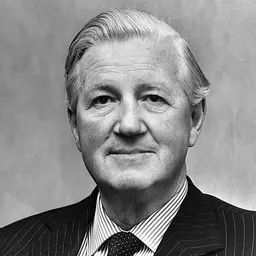



Contemporaries
People whose lives overlapped Donovan Benson's



Frequently asked questions
Who was Donovan Benson?
British banker in Hong Kong
When was Donovan Benson born?
Donovan Benson was born on 21 January 1896 in Middlesex.
When did Donovan Benson die?
Donovan Benson died on 17 November 1972 in British Hong Kong.
What was Donovan Benson's occupation?
Donovan Benson was a non-official justice of the peace, banker and politician.
Sources & further reading
Cite this page
APA: Biography.guide. (2026). Donovan Benson. https://biography.guide/donovan-benson/
MLA: "Donovan Benson." Biography.guide, https://biography.guide/donovan-benson/.
Chicago: "Donovan Benson." Biography.guide. https://biography.guide/donovan-benson/.
Data last updated: 2026-09-20 · Spot an error? Report a correction.
Page generated 2026-09-27 05:25 UTC