
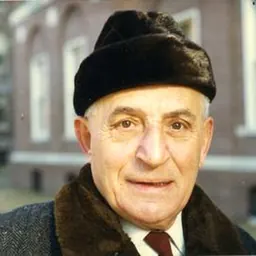
Donald L. Horowitz
James B. Duke Professor of Law and Political Science, Duke University
About Donald L. Horowitz
Born 1939. Donald L. Horowitz is an American political scientist, journalist, jurist and university teacher.
Donald L. Horowitz (born 1939) is James B. Duke Professor Emeritus of Law and Political Science at Duke Law School and Duke University in Durham, North Carolina, United States.
He earned his PhD from Harvard University in 1968 and also holds degrees from Syracuse University. He is a specialist in the study of ethnic conflict and author of the books Ethnic Groups in Conflict (University of California Press, 1985), A Democratic South Africa? Constitutional Engineering in a Divided Society (University of California Press, 1991), The Deadly Ethnic Riot (University of California Press, 2001) and Constitutional Change and Democracy in Indonesia (Cambridge University Press, 2013). Writing about Ethnic Groups in Conflict, political scientist Ashutosh Varshney states that it "was a seminal text", and that: "For the first time in scholarly history, a book on ethnic conflict covered a whole variety of topics, ranging from concepts and definitions to those spheres of institutional politics (party politics, military politics, affirmative action) in which the power of ethnicity had become obvious and could no longer be ignored".
Horowitz has acted as a consultant on the problems of divided societies and on policies to reduce ethnic conflict in locations including Russia, Romania, Nigeria, Tatarstan and Northern Ireland. In 2006, he was appointed to Secretary of State's Advisory Committee on Democracy Promotion.
Centripetalism Centripetalism, sometimes called integrationism, developed out of the criticism of consociationalism by Horowitz. It is a form of democratic power sharing for divided societies (usually along ethnic, religious or social lines) which aims to encourage the parties towards moderate and compromising policies and to reinforce the center of a divided political spectrum. Both models aim to provide institutional prescriptions for divided societies. While consociationalism aims to give inclusion and representation to each ethnic group, centripetalism aims to depoliticize ethnicity and to encourage the establishment of multi-ethnic parties.
Centripetalist institutions and voting systems are quite rare and there are not many examples of their use. The most famous examples come from Fiji (1997-2006), Northern Ireland (June 1973 to May 1974), Papua New Guinea, Sri Lanka,
Instruments Centripetalism is associated with institutions that provide incentives for elite cooperation such as vote pooling. Vote pooling occurs when politicians need to attract voters from the different groups in order to win the elections. For example, if some ethnic group is not large enough to get their own ethnic political representative, voters from that group would prefer to cast their second preference to the moderate politicians of the other ethnicity, rather than to the radical politician of the other ethnicity. In this theoretical model, vote pooling gives advantages to the moderate politicians aiming to attract the votes from the other groups because of the electoral system allowing voters to indicate preferences. This model incentivizes the formation of pre-electoral coalitions across conflict lines.
Some centripetalists have advocated voting systems like the alternative vote or single transferable vote on these grounds; however, the alternative vote does not necessarily advantage moderate politicians compared to proportional representation, as it suffers from the center squeeze effect.
Criticism One of the main problems of the theory is the lack of empirical evidence supporting the effectiveness of centripetalism. Some evidence suggests that centripetal institutions lead to more instability and extremism. O'Leary also notes that "centripetal vote-pooling institutions unfairly privilege the majority or largest group; politicians from such groups have to pool fewer votes to win office than do politicians from smaller groups.” McGarry also criticises that centripetalism tends to leave hardliners outside of the political system, which polarizes the political environment, making it impossible for moderates in the government to compromise. The moderates thus become more hardline.
Don’t just read it —
keep it.
Full-length biographies made to live with: read them, listen on the way to work, watch them tonight.
- E-book
- Audio
- Video
Instant download · yours to keep · every purchase keeps this site free
Important facts
People in Donald L. Horowitz's life
Named in this biography and alive at the same time

Related people
Same field, nearest in time





Contemporaries
People whose lives overlapped Donald L. Horowitz's





Frequently asked questions
Who is Donald L. Horowitz?
James B. Duke Professor of Law and Political Science, Duke University
When was Donald L. Horowitz born?
Donald L. Horowitz was born on 27 June 1939.
What is Donald L. Horowitz's occupation?
Donald L. Horowitz is a political scientist, journalist, jurist and university teacher.
What nationality is Donald L. Horowitz?
Donald L. Horowitz is American.
Sources & further reading
· Wikipedia: Donald L. Horowitz
Cite this page
APA: Biography.guide. (2026). Donald L. Horowitz. https://biography.guide/donald-l-horowitz/
MLA: "Donald L. Horowitz." Biography.guide, https://biography.guide/donald-l-horowitz/.
Chicago: "Donald L. Horowitz." Biography.guide. https://biography.guide/donald-l-horowitz/.
Data last updated: 2026-09-20 · Spot an error? Report a correction.
Page generated 2026-09-27 05:26 UTC