
Donal Cam O'Sullivan Beare
Last independent ruler of the O'Sullivan Beara sept
About Donal Cam O'Sullivan Beare
Lived 1561 – 1618 (aged 56–57). Donal Cam O'Sullivan Beare was a military personnel.
Donal Cam O'Sullivan Beare, Count of Berehaven (; 1560 – 6 July [ N.S. 16 July] 1618) was an Irish nobleman and soldier. He was the last Gaelic chief of the O'Sullivan clan prior to the completion of the Tudor conquest of Ireland.
O'Sullivan Beare immigrated to Spain after the Irish confederacy's defeat in the Nine Years' War, and was granted the titled Count of Berehaven in the Spanish nobility. In 1618, he was fatally stabbed by Anglo-Irish merchant John Bath during a quarrel in Madrid.
Early life
Donal Cam O'Sullivan Beare was born in 1560. His father was Donal Cam O'Sullivan Beare, chief of the O'Sullivan Beare in County Kerry and lord of Beare and Bantry. His mother was Margaret O'Brien, daughter of O'Brien of Thomond.
His father was murdered by the MacGillacuddys in 1563, and his father's younger brother Owen succeeded as lord of Beare and Bantry. Owen was confirmed by Dublin Castle administration with the title Lord of Beare and Bantry. In order to consolidate his position, Owen accepted the authority of Queen Elizabeth I and was knighted, thus becoming Sir Owen. In 1587, Donal asserted his own claim to leadership of the clan, petitioning the Dublin Castle administration to put aside Sir Owen's appointment with a claim derived from English laws based on absolute male primogeniture. These laws did not recognise age as relevant to inheritance rights. Keen to extend English legal authority over Ireland, the Dublin Castle administration accepted Donal's claim. He subsequently became The O'Sullivan Beare, head of the clan.
Nine Years' War
By 1600, the province of Munster had been devastated by battle, and Irish Catholics had lost over half a million acres (4,000 km2) of land to Protestant settlers following the defeat of the Desmond Rebellions.
In the lead up to the Nine Years' War O'Sullivan kept his distance from the rebel cause, but in time he joined a confederation of Gaelic chiefs led by Hugh O'Neill, Earl of Tyrone, Ó Néill, and Red Hugh O'Donnell, Ó Domhnaill, of Ulster. Conflict had broken out in 1594, and Tyrone secured support from Philip II of Spain. The Spanish sent an Armada under the command of Don Juan D'Aquilla in 1601. O'Sullivan wrote to the Spanish king in submission to his authority, but the letter was intercepted by the English. In early 1602 the allied Irish and Spanish forces met an English force at the Battle of Kinsale and were defeated.
O'Sullivan resolved to continue the struggle by taking control of the castle of Dunboy. In June 1602 English forces attacked Dunboy and the castle fell after a brief siege. The entire company of defenders was killed in combat or hanged afterwards.
O'Sullivan's march
Donal himself was absent from the siege of Dunboy, having travelled to Ulster for a conference with Tyrone. His letter to Philip II left him with little hope of a pardon from the English, and he continued the fight with guerilla tactics. He also maintained a stronghold on Dursey Island which was attacked by an English detachment under the command of George Carew. According to Philip O'Sullivan Beare, Carew's men killed all 300 occupants of the stronghold, including women and children who had taken shelter there, in what became known as the Dursey Island massacre. After the fall of Dursey and Dunboy, O'Sullivan Beare, Lord of Beara and Bantry, gathered his remaining followers and set off northwards on a 500-kilometre march with 1,000 of his remaining people, starting on 31 December 1602. He hoped to meet Lord Tyrone on the shores of Lough Neagh.
He fought a long rearguard action northwards through Ireland, through Munster, Connacht and Ulster, during which the much larger English force and their Irish allies fought him all the way. The march was marked by the suffering of the fleeing and starving O'Sullivans as they sought food from an already decimated Irish countryside in winter. They faced equally desperate people in this, often resulting in hostility, such as from the Mac Egans at Redwood Castle in Tipperary and at Donohill in O'Dwyer's country, where they raided the food store of The 10th Earl of Ormond. O'Sullivan marched through Aughrim, where he raided villages for food and met local resistance.
He was barred entrance to Glinsk Castle and led his refugees further north. On their arrival at Brian Oge O'Rourke's castle in West Breifne on 14 January 1603, after a fortnight's hard marching and fighting, only 35 of the original 1,000 remained. Many had died in battles or from exposure and hunger, and others had taken shelter or fled along the route. O'Sullivan Beare had marched over 500 kilometres, crossed the River Shannon in the dark of a midwinter night (having taken just two days to make a boat of skin and hazel rods to carry 28 at a time the half-kilometre across the river), fought battles and constant skirmishes, and lost almost all of his people during the hardships of the journey.
In County Leitrim, O'Sullivan Beare sought to join with other northern chiefs to launch a campaign against the English Crown, and organised a force to this end, but resistance ended when Tyrone signed the Treaty of Mellifont. O'Sullivan, like other members of the Gaelic nobility of Ireland who fled, sought exile, making his escape to Spain by ship. The Beara-Breifne Way long-distance walking trail follows closely the line of the historical march.
Immigration When he left Ireland, Cornelius O'Driscoll and other Irish knights helped him and his clan. In Spain, O'Sullivan Beare was welcomed by Philip III. His princely status was reconfirmed, and he received a commission as an imperial general. His nephew, Philip O'Sullivan Beare, was important in this regard and his 1618 disquisition in Latin, A Briefe Relation of Ireland and the diversity of Irish in the same, was influential.
O'Sullivan Beare attended the 1616 funeral of Hugh O'Neill, Earl of Tyrone.
Personal life O'Sullivan Beare married Elena, daughter of O'Sullivan Mór. The couple had two sons.
Death leftOn 6 July [ N.S. 16 July] 1618, O'Sullivan Beare was leaving Mass in the Plaza de Santo Domingo, Madrid, when he came upon a street duel between his nephew Philip O'Sullivan Beare and Anglo-Irish merchant John Bath.efn John Bath's brother was William Bath, a Jesuit who was head of the Irish College at Salamanca. He was 56 years old. Bath took refuge in the church. Irish bystanders ran after King Philip III's passing coach shouting "Justicia! Justicia!" The coach stopped, and the king gave orders to have Bath hauled from the church. Bath was imprisoned. According to Philip's account, he was about to kill Bath when Donal O'Sullivan Beare intervened to save Bath's life; ironically Bath took the opportunity to stab him. Bath, writing from prison, claimed that he was ambushed and mugged by Philip and his friends from Cork, and had no intention of fighting a duel since he was outarmed. He was already wounded in the duel when he struck out at O'Sullivan Beare. which helped to open doors for later soldiers from his line. About 165 years later, John Sullivan, regarded as a descendant of O'Sullivan Beare, served as a general in the American Revolution.
O'Sullivan Beare's will is kept in the Archive at Maynooth.
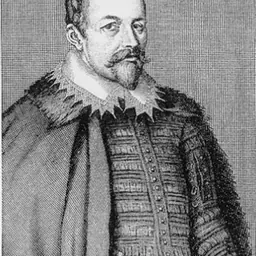
Portrait A 17th century portrait of O'Sullivan Beare hangs at St Patrick's College, Maynooth. It previously hung at the Irish College at Salamanca, and was restored in 1999.
In popular culture Donal Cam O'Sullivan Beare is mentioned in the early 20th-century Aisling poetry of Seán Gaelach Ó Súilleabháin (1882–1957). Other works, relating to O'Sullivan Beare, include: The Last Prince of Ireland by Morgan Llywelyn March into Oblivion by Michael J. Carroll O'Sullivan's Odyssey by Rick Spier
Don’t just read it —
keep it.
Full-length biographies made to live with: read them, listen on the way to work, watch them tonight.
- E-book
- Audio
- Video
Instant download · yours to keep · every purchase keeps this site free
Important facts
People in Donal Cam O'Sullivan Beare's life
Named in this biography and alive at the same time




Related people
Same field, nearest in time

Contemporaries
People whose lives overlapped Donal Cam O'Sullivan Beare's




Frequently asked questions
Who was Donal Cam O'Sullivan Beare?
last independent ruler of the O'Sullivan Beara sept
When was Donal Cam O'Sullivan Beare born?
Donal Cam O'Sullivan Beare was born in 1561.
When did Donal Cam O'Sullivan Beare die?
Donal Cam O'Sullivan Beare died in 1618.
What was Donal Cam O'Sullivan Beare's occupation?
Donal Cam O'Sullivan Beare was a military personnel.
Sources & further reading
· Wikipedia: Donal Cam O'Sullivan Beare
· DBpedia: Donal Cam O'Sullivan Beare
Cite this page
APA: Biography.guide. (2026). Donal Cam O'Sullivan Beare. https://biography.guide/donal-cam-o-sullivan-beare/
MLA: "Donal Cam O'Sullivan Beare." Biography.guide, https://biography.guide/donal-cam-o-sullivan-beare/.
Chicago: "Donal Cam O'Sullivan Beare." Biography.guide. https://biography.guide/donal-cam-o-sullivan-beare/.
Data last updated: 2026-09-20 · Spot an error? Report a correction.
Page generated 2026-09-27 05:32 UTC