
About Don R. Berlin
Lived 1898 – 1982 (aged 83). Don R. Berlin was an American engineer and military flight engineer.
Donovan Reese Berlin (June 13, 1898 – May 17, 1982) was an American military aircraft designer and aircraft industry executive. Among the many designs with which he is associated are the Curtiss P-36 Hawk and P-40 Warhawk and the Fisher P-75 Eagle. His name is "synonymous with the development of military aviation". He attended Purdue University, graduating in 1921 with a bachelor's degree in mechanical engineering.
Aviation career An XP-40, 11 MD, which was used for test purposes by the Materiel Division of the U.S. Army Air Corps Curtiss company executives, with their most famous design, represented by a P-40N that was firm's 15,000th fighter, November 1944. With his introduction to aeronautics, conducting early wind tunnel tests for the U.S. Army Air Corps at McCook Field, Dayton, Ohio, Berlin subsequently worked for Douglas Aircraft Company starting in 1926 as project engineer and chief draftsman. In a controversial move, Berlin was released when he and founder Jack Northrop were in disagreement over the wing design of a new fighter. Berlin was quickly hired at Curtiss-Wright in 1934, beginning a long career with the company. Berlin's first assignment was as project engineer on the company's new fighter aircraft design, bearing the nomenclature 'design number 75'. After first competing and losing to the Seversky P-35 in a fighter competition, Berlin persevered and his reconfigured design, initially known as the Y1P-36, and later, P-36 Hawk, won the U.S. Army Air Corps fighter competition in 1937. Consequently, the USAAC ordered 210 P-36A aircraft to serve as a frontline fighter. In 1938 and 1939, the P-36 was one of the premier fighters of the period.
World War II With foreign orders, P-36 Hawk production exceeded 1,000 aircraft. The Hawk was used more extensively by the French Air Force, both during the Battle of France and by the Vichy French; and was used against French forces in the Franco-Thai War (October 1940–May 9, 1941). It was also used by the British Commonwealth (where it was known as the "Mohawk"), and by Chinese air units. Several dozen also fought in the Finnish Air Force against the Soviet Air Forces.
Berlin continued to develop the P-36, mating it with a more powerful water-cooled Allison V-12 engine, moving the cockpit aft, changing the location of the airscoop and making other modifications. The revised design evolved into the experimental models: XP-37/YP-37 and XP-42, before ultimately, the XP-40. The XP-40 won the fighter competition in 1939 held by the U.S. Army Air Corps. Produced as the P-40 Warhawk, over 13,000 were eventually built, in a wide-ranging series of P-40 variants. In similar fashion to the success of the earlier P-36, the P-40 was adopted by many foreign air arms, including the Royal Air Force where early models were known as the "Tomahawk", and later series, "Kittyhawk". One hundred and forty-five pilots became aces in the P-40. |group=N
By the beginning of World War II, Berlin was Chief Engineer and the head of design at Curtiss-Wright. A number of experimental programs were begun during this period, including the revolutionary Curtiss-Wright XP-55 Ascender that never achieved production status, as well as the Curtiss SO3C Seamew, a floatplane that was adopted by the U.S. Navy, but had a troubled operational history. Although designed by George A. Page Jr., Berlin oversaw the design of the Curtiss C-46 Commando, the company's foray into civil and military transport markets. He also supervised the development of the Curtiss SB2C Helldiver, designed by Raymond C. Blaylock, the company's last major production aircraft series.
Frustrated with a lack of official backing for a new development of the P-40, Berlin left Curtiss-Wright in December 1941, and, at the request of the federal government, in 1942, he became Director of the Aircraft Development Section of the Fisher Body Division of the General Motors Corporation in Detroit. While at G.M., he designed the unsuccessful Fisher P-75 Eagle, first as an interceptor, later escort fighter, made up of components from a number of production aircraft. Although the concept was intriguing, in merging engineering and production elements, one of the main considerations was that "Berlin's reputation was such that any proposal from him had to be given serious consideration." In 1945, Berlin was named director of G.M.'s installation engineering section in Indianapolis. along with the XF-85 Goblin "parasite" fighter and XF-88 Voodoo "penetration" fighter for the U.S. Air Force.
The McDonnell XH-20 Little Henry was a 1940s American experimental lightweight helicopter designed and built by McDonnell Aircraft, a design that Berlin had championed. In 1953, Berlin was named president and director of Piasecki Helicopter in Morton, Pennsylvania. His time at the company was contentious, as he removed the founder and chairman of the board Frank Piasecki during a period ending in May 1956 that some called the "Berlin Hairlift".#tag:ref|The catchphrase "Berlin Hairlift" was reputed to refer to "the many scalps" Berlin took, and a clever play on Berlin Airlift. Berlin had the backing of the majority owners of Piasecki, including Laurance Rockefeller who felt that Frank Piasecki was lacking in business acumen. His continuing support of new rotorcraft designs for commercial and military markets was validated when the Vertol Model 107 won a U.S. Army design competition in September 1958. The Model 107, later named the Boeing CH-47 Chinook, became the Army's standard medium assault transport helicopter. By the end of the 1950s, Vertol was the largest independent manufacturer of helicopters in the United States. Berlin became vice-chairman and general manager of Boeing-Vertol when it became a division of the Boeing Company in 1960.
Berlin returned to Curtiss-Wright in 1963 as a vice-president of the corporate staff in Wood-Ridge, New Jersey, before joining W. Pat Crow Forgings as vice-president and general manager in Fort Worth, Texas. He ended his aviation career at E. F. Felt Company, an aviation components manufacturing company in San Leandro, California, shortly before his retirement to his home in Glen Mills, Pennsylvania.
Awards and honors Berlin was awarded an honorary doctorate by Purdue University in 1953. On May 17, 2013, Berlin was inducted into the Niagara Frontier Aviation & Space Hall of Fame. The Claire Lee Chennault Foundation of the Flying Tigers made Berlin an honorary member, recognizing his contribution to the design and excellent performance of the P-40, their primary aircraft.
Don’t just read it —
keep it.
Full-length biographies made to live with: read them, listen on the way to work, watch them tonight.
- E-book
- Audio
- Video
Instant download · yours to keep · every purchase keeps this site free
Important facts
People in Don R. Berlin's life
Named in this biography and alive at the same time





Related people
Same field, nearest in time
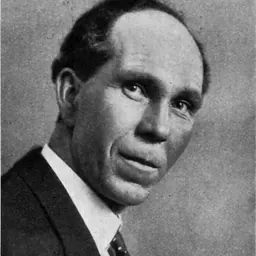

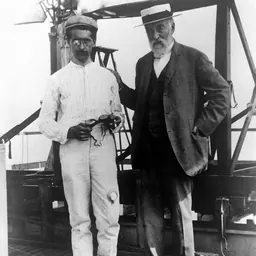

Contemporaries
People whose lives overlapped Don R. Berlin's
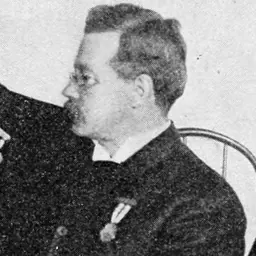


Frequently asked questions
Who was Don R. Berlin?
American aerospace engineer
When was Don R. Berlin born?
Don R. Berlin was born on 13 June 1898 in Washington Township.
When did Don R. Berlin die?
Don R. Berlin died on 17 May 1982 in Middletown Township.
What was Don R. Berlin's occupation?
Don R. Berlin was an engineer and military flight engineer.
What nationality was Don R. Berlin?
Don R. Berlin was American.
Sources & further reading
Cite this page
APA: Biography.guide. (2026). Don R. Berlin. https://biography.guide/don-r-berlin/
MLA: "Don R. Berlin." Biography.guide, https://biography.guide/don-r-berlin/.
Chicago: "Don R. Berlin." Biography.guide. https://biography.guide/don-r-berlin/.
Data last updated: 2026-09-20 · Spot an error? Report a correction.
Page generated 2026-09-27 05:33 UTC