
About Don Ohl
Lived 1936 – 2024 (aged 88). Don Ohl was an American basketball player.
Donald Jay Ohl (April 18, 1936 – December 2, 2024) was an American professional basketball player for ten seasons (1960–1970) in the National Basketball Association (NBA). He played college basketball for the Illinois Fighting Illini. The guard took part in five consecutive NBA All-Star Games (1963–1967).
Early life Ohl was born on April 18, 1936, in Murphysboro, a rural town in southern Illinois, to Elmer R. and Blanche E. (Brendel) Ohl. After living in Peoria, Illinois and Iowa, they moved to Edwardsville, Illinois when he was ten years old. He received Edwardsville's Warnock Trophy for the senior athlete with the highest scholastic average.
He graduated in the top ten percent of his class academically. The Brooklyn Dodgers offered him a contract to join their minor league baseball system after graduating high school. As a junior, he averaged 15.6 points per game, and a team-high 19.6 as a senior in 1957-58.
He was chosen the Illini's most valuable player as a senior. United Press International (UPI) also named him All-Big Ten as a senior. He graduated as the No. 3 scorer in school history with 1,230 points.
AAU basketball and Olympic trials In his final college season, Ohl began to pique the interest of several NBA teams in advance of the 1958 draft. The Philadelphia Warriors selected him in the fifth round (37th overall), but he was unsure about his readiness for the next level. Ohl accepted a position with the Peoria Caterpillar Tractor Company in Morton, Illinois, where he worked while playing one or two seasons for the Peoria Cats in the National Industrial Basketball League (NIBL). In March 1960, Peoria defeated Akron, 115–99, for the Amateur Athletic Union (AAU) title. Ohl scored 28 points with teammate, and future NBA player, Bob Boozer scoring 30. Ohl never signed with the Warriors.
As Ohl told The Edwardsville (Ill.) Intelligencer in a 2008 interview, "'It may have been a mistake, but I didn't end up playing in the NBA until two years after I got drafted. I didn't think I was good enough for the NBA even though people who should have known kept telling me that I was. I started working for Caterpillar and they had a team in the Industrial League, which might be comparable to a farm club of the NBA'".
"'In 1960, we won an AAU tournament in Denver, and the next week they had the Olympic Trials to see who would represent the U.S. in the Olympics. We played the final game against the college all-stars, who had a bunch of All-Americans like (future NBA stars) Oscar Robertson, Jerry West, Walt Bellamy and Jerry Lucas, and of course, they beat us.'"
In 1961-62, he averaged 17.2 points, 3.2 assists and 3.5 rebounds per game. He was seventh among all NBA guards in field goal percentage (.444), and third among shooting guards, behind only future Hall of Fame guards Sam Jones (.464) and Hal Greer (.447). The Pistons defeated the Cincinnati Royals in the first round of the Western Division playoffs. Ohl led the Pistons with 24 points per game. The Pistons lost the Western Division finals to the Los Angeles Lakers in six games, with Ohl averaging 17 points per game.
By his third year (1962-63) with the Pistons he was an all-star, averaging 19.3 points a game. The Pistons lost in the first round of the playoffs to the St. Louis Hawks, Ohl again leading the team in scoring (21.3 points per game) as well as assists (4.8 per game). The following season (1963-64) he averaged 17.3 points, 3.2 assists and 2.5 rebounds per game. Charlie Wolf, who was a strict and demanding coach, replaced McGuire as head coach that season. Some Pistons players rebelled at his coaching style and openly criticized Wolf, with Ohl and teammate Bob Ferry the most upset with Wolf. Also during the season, Wolf stripped future Hall of Fame forward Bailey Howell of his captaincy. Wolf was replaced after 11 games the following season by 24-year old future Hall of Fame forward Dave Debusschere, as the Pistons' player-coach.
Piston-Bullets Trade
'Brinks Robbery in Baltimore'
Shortly after the 1963–64 season ended, Ohl was involved in one of the first so-called megatrades, this one an eight-player blockbuster between the Pistons and the Baltimore Bullets. On June 9, 1964, the Pistons sent Ohl, center Bob Ferry, Howell, forward Les Hunter and the draft rights to guard Wally (later Wali) Jones to the Bullets in exchange for forwards Terry Dischinger (the 1963 NBA Rookie of the Year and a two time All-Star) and Don Kojis, and guard Rod Thorn.
The trade provided the Bullets with two all-star starters. Howell started two seasons in Baltimore, averaging 19.2 and 17.5 points per game, respectively, and was named an All-Star (1965-66); and Ohl was a starter and three-time All-Star with the Bullets (1964 to 1967).
Dischinger was an All-Star in his first year in Detroit, but then missed the next two seasons while in military service, and never regained his All-Star form. and traded Kojis after two years, after he averaged only 13 minutes per game over those two seasons (though he went on to play nine more NBA seasons, in two of which he was an All-Star).
"They called it the Brinks robbery out in Baltimore because it was so one-sided to Baltimore," Ohl told the Edwardsville (Ill.) Intelligencer. "Dickey McGuire was my coach my first two years [in Detroit] and I just admired him to death. He quit and Charlie Wolf took over, and for me it was not a good situation and apparently for two or three other players, because they went with me. I was happy to get out. I liked Detroit, but I was ready to go." and center Walt Bellamy. Ohl averaged 18.4 points, 4.4 rebounds and 3.2 assists per game, and was named an All-Star along with Bellamy and Johnson.
The Bullets reached the playoffs for the first time in the franchise's four year history, and achieved the first playoff series victory in franchise history, a four-game upset of the St. Louis Hawks in the 1965 Western Division semifinals. Ohl's 22 points per game led the Bullets in that series. He also averaged 7.5 rebounds and 2.8 assists per game in the series. (46.3 points per game).
Wild West Shootout Ohl experienced his finest hour in the 1965 playoffs, in which he averaged 26.1 points in 10 games. His 26.1 playoff average was behind only Hall of Fame players West, Wilt Chamberlain, Sam Jones and Oscar Robertson that season. In the Western Division finals that year, each game in the series was decided by eights points or less.
Years later Ohl recalled, Future Hall of Fame forward "(Elgin) Baylor wasn't playing -- he was hurt". "It was the third game. It was in Baltimore. We played, we won and in the locker room I said, 'How many did West get?' and they said, '51 (points).' I said, '51, you got to be kidding me.' I think I had 35 or 38, I don't remember. I said, 'I guarantee you one thing you can print is he won't get 51 tomorrow night.'" He missed the remaining five games in the series. The Bullets won Game 3 with Howell scoring 29, Ohl 24 and West 44. The Bullets tied the series with a two-point win in Game 4, West scoring 48 and Ohl scoring 28. The Lakers won the next two games, with West scoring 43 and 42, and Ohl scoring 28 and 34. In Game 6, Ohl was driving down the court for a layup when West came from behind Ohl and stole the ball. Had Ohl scored, the Lakers' lead would have been reduced to four; but the Lakers scored off West's steal to go up by eight points. Schaus considered it the most important play of the game.
Baltimore Bullets (1965-1968) In the 1965-66 season, Ohl led the Bullets in scoring with a 20.6 points per game average (11th in the NBA). He was in the top 10 among guards in field goal percentage (.445). He was again named an All-Star, for the fourth consecutive year. He scored 16 points in the 1966 All-Star Game. The Bullets were swept 3–0 in the first round of the 1966 playoffs by the St. Louis Hawks. However, Ohl averaged 26.7 points, 4.7 rebounds and 2.7 assists in that series.
His 1966-67 season ended in early February 1967 because of ligament damage in his right knee, for which he underwent surgery at Kernan Hospital in Baltimore. He was averaging 20.3 points per game over 58 games before his season ended. He was again among the top 10 guards in field goal percentage (.451), and was again 11th in the NBA in points per game (just behind teammate Johnson). He was selected to play in the All-Star Game for the fifth consecutive season, and scored 17 points in the January 10, 1967 game. After that season, he never averaged more than 14 points a game in his final three seasons. He was averaging 14.8 points per game at the time, his lowest scoring average since his rookie season; but had just scored 32 and 21 points in his most recent games before the trade. The Hawks were in first place at the time, and Hawks' coach Richie Guerin saw the experienced Ohl as insurance for the team's stretch drive. In a five-game stretch from March 3 to 9, he had games with 27, 28, 21, eight and 29 points. The Hawks lost to the San Francisco Warriors 4–2 in the first round of the playoffs. Ohl averaged 11.5 points and 23.8 minutes per game in the series. The favored Hawks were upset in the series' first game, 111–106. Ohl had rallied the Hawks late in the game, and led the team with 26 points, but it was not enough to win the game.
The following season, he averaged 12.1 points in 26.3 minutes per game. The Hawks defeated the San Diego Rockets in the first round of the 1968-69 NBA playoffs, with Ohl averaging 6.3 points and 1.5 rebounds over six games. He lost with a third different team to the Los Angeles Lakers and Jerry West in the 1968-69 Western Division finals; averaging seven points in 17 minutes per game over five games.
In his final season (1969-70), he averaged 6.2 points in 15 minutes per game. Upon learning of his selection, he considered retirement almost immediately in favor of working at his office equipment business; and with thoughts about potentially pursuing coaching or media work. Ohl was known for his outside shooting prowess, as one of the NBA's best shooters during his career. He had a .434 lifetime field goal percentage, and played his entire career before the advent of the three-point shot in the NBA.
Ohl made five consecutive NBA All-Star Teams from 1962–1963 to 1966–1967. He scored 43 again as a Baltimore Bullet on December 25, 1966, in a 129–127 loss to his former team, the Pistons. Ohl has the highest playoff scoring average in the Washington Wizards franchise history, at 26.23.
Ohl was inducted into the Illinois Basketball Coaches Association Hall of Fame in 1973, the Edwardsville High School Athletic Hall of Fame in 1981 and the St. Louis Sports Hall of Fame in 2017.
Personal life and death Ohl owned an office supply store in St. Louis during his playing career, and was pleased to be traded to the St. Louis Hawks in early 1968. That convenience was short-lived as the team moved to Atlanta the following season.
Career statistics
NBA Source
Regular season
Playoffs
Don’t just read it —
keep it.
Full-length biographies made to live with: read them, listen on the way to work, watch them tonight.
- E-book
- Audio
- Video
Instant download · yours to keep · every purchase keeps this site free
Important facts
People in Don Ohl's life
Named in this biography and alive at the same time
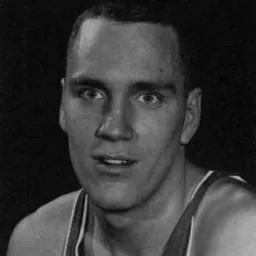


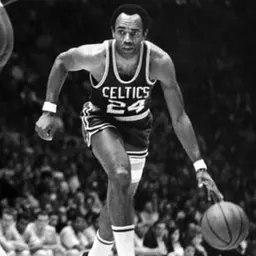



Related people
Same field, nearest in time

Contemporaries
People whose lives overlapped Don Ohl's






Frequently asked questions
Who was Don Ohl?
American basketball player
When was Don Ohl born?
Don Ohl was born on 18 April 1936 in Murphysboro.
When did Don Ohl die?
Don Ohl died on 2 December 2024 in St. Louis.
What was Don Ohl's occupation?
Don Ohl was a basketball player.
What nationality was Don Ohl?
Don Ohl was American.
Sources & further reading
Cite this page
APA: Biography.guide. (2026). Don Ohl. https://biography.guide/don-ohl/
MLA: "Don Ohl." Biography.guide, https://biography.guide/don-ohl/.
Chicago: "Don Ohl." Biography.guide. https://biography.guide/don-ohl/.
Data last updated: 2026-09-20 · Spot an error? Report a correction.
Page generated 2026-09-27 05:28 UTC