
About Don Heck
Lived 1929 – 1995 (aged 66). Don Heck was an American comics artist.
Donald "Don" L. Heck (January 2, 1929 – February 23, 1995 ) was an American comics artist best known for co-creating the Marvel Comics characters Iron Man, the Wasp, Black Widow, Hawkeye and Wonder Man and for his long run penciling the Marvel superhero-team series The Avengers during the 1960s Silver Age of comic books.
Early life One of Heck's earliest known comics credits: Weird Terror #1 (Sept. 1952): Cover, plus the story "Hitler's Head".
Heck was born in the Jamaica neighborhood of Queens, New York City, the son of Bertha and John Heck, of German descent. After impressing his parents with sketches of Donald Duck, they enrolled him in art correspondence courses before he began studies at Woodrow Wilson Vocational High School in Jamaica, and at a community college in Brooklyn. when at the recommendation of a college friend, he landed a job at Harvey Comics.
Career At Harvey Comics he repurposed newspaper comic strip Photostats into comic-book form – including the work of Heck's idol, famed cartoonist Milton Caniff.
Heck remained at Harvey, where one co-worker in the production department was future comics artist Pete Morisi, Heck's first known comics work appeared in two Comic Media titles both cover-dated September 1952: the war comic War Fury #1, for which he penciled and inked the cover and the eight-page story "The Unconquered", by an unknown writer; and the cover and the six-page story "Hitler's Head", also by an unknown writer, in the horror comic Weird Terror #1. Heck's work continued to appear in those titles and in the horror anthology Horrific, for which he designed the logo; the adventure-drama anthology Danger; the Western anthology Death Valley; and other titles through the company's demise in late 1954.
Atlas Comics Through his old Harvey Comics colleague Pete Morisi, Heck in 1954 met Marvel Comics’ Stan Lee, then editor-in-chief and art director of Marvel's 1950 predecessor, Atlas Comics. As Heck recalled
Pete Morisi, who worked at Media at the same time [I did], had been to Stan Lee's office, and he had brought his [art portfolio]. One of my stories was in there. and Stan kept going back to my story, saying, "This is the way you should have done it." Pete said. "Look, if you want Don Heck to come up here, he's looking for work, too. I'll tell him you're interested." Stan said, "Well, if he happened to walk up here, I might have a story for him." So I went up there on a Wednesday afternoon. Stan never saw anybody on Wednesdays, and he never saw anybody in the afternoon. But he came out. He looked at the first two pages and said, "Aw, hell, I know what your stuff looks like. Come on in. I got a story for you." his first known work for the company was the five-page horror story "Werewolf Beware" in Mystery Tales #25 (Jan. 1955), – Heck contributed dozens of war comics stories and Westerns plus a smattering of jungle and science-fiction/fantasy tales.
Atlas began revamping in late 1958 with the arrival of artist Jack Kirby, a comics legend whose career was also in need of revamping, and who threw himself into the anthological science fiction, supernatural mystery, and giant-monster stories of what would become known as "pre-superhero Marvel." Heck returned alongside other soon-to-be-famous names of Marvel Comics' 1960s emergence as a pop culture phenomenon, making his first splash with the cover of Tales of Suspense #1 (Jan. 1959), one of the very few Atlas/Marvel covers of that time not drawn by Kirby. In the years immediately preceding the arrival of the Fantastic Four, Spider-Man, and the other popular heroes of Marvel's ascendancy, Heck gave atmospheric rendering to numerous science fiction / fantasy stories in that comic as well as in sister publications Strange Tales, Tales to Astonish, Strange Worlds, World of Fantasy, and Journey into Mystery. Heck also contributed to such Atlas/Marvel romance comics as Love Romances and My Own Romance. Kirby "designed the costume," Heck recalled, "because he was doing the cover. The covers were always done first. But I created the look of the characters, like Tony Stark and his secretary Pepper Potts." Comics historian and former Kirby assistant Mark Evanier, investigating claims of Kirby's involvement in the creation of both Iron Man and Daredevil, interviewed Kirby and Heck on the subject, years before their deaths, and concluded that Kirby
Heck himself recalled in 1985 that while some sources claimed then "that Jack Kirby did breakdowns,"
Death and legacy Heck died of lung cancer in 1995.
In 2026, Heck was selected for inclusion in the Eisner Hall of Fame.
Don’t just read it —
keep it.
Full-length biographies made to live with: read them, listen on the way to work, watch them tonight.
- E-book
- Audio
- Video
Instant download · yours to keep · every purchase keeps this site free
Important facts
People in Don Heck's life
Named in this biography and alive at the same time

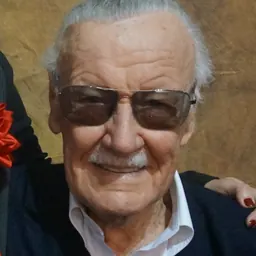





Related people
Same field, nearest in time

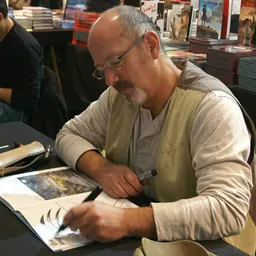
Contemporaries
People whose lives overlapped Don Heck's


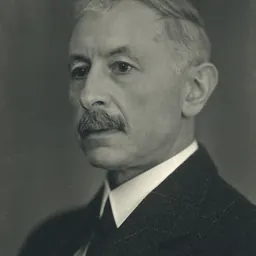


Frequently asked questions
Who was Don Heck?
American comics artist (1929–1995)
When was Don Heck born?
Don Heck was born on 2 January 1929 in Queens.
When did Don Heck die?
Don Heck died on 23 February 1995 in Toronto.
What was Don Heck's occupation?
Don Heck was a comics artist.
What nationality was Don Heck?
Don Heck was American.
Sources & further reading
Cite this page
APA: Biography.guide. (2026). Don Heck. https://biography.guide/don-heck/
MLA: "Don Heck." Biography.guide, https://biography.guide/don-heck/.
Chicago: "Don Heck." Biography.guide. https://biography.guide/don-heck/.
Data last updated: 2026-09-20 · Spot an error? Report a correction.
Page generated 2026-09-27 04:58 UTC