
Dominic Corrigan
Irish physician, known for his original observations in heart disease
About Dominic Corrigan
Lived 1802 – 1880 (aged 77). Dominic Corrigan was a British physician, politician, pathologist and cardiologist, known for Aortic insufficiency and Corrigan's pulse.
Birth and education Corrigan was born in Thomas Street, Dublin, the son of a dealer in agricultural tools. He was educated in St. Patrick's College, Maynooth, which then had a department for secular students apart from the ecclesiastical seminary. He was attracted to the study of medicine by the physician in attendance, and spent several years as an apprentice to the local doctor, Edward Talbot O'Kelly. Corrigan studied medicine in Dublin later transferring to Edinburgh Medical School where he received his degree as MD in August 1825.
Career Corrigan returned to Dublin in 1825 and set up a private practice at 11 Ormond Street, as his practice grew he moved to 12 Bachelors Walk in 1832, and in 1837 to 4 Merrion Square West. Apart from his private practice, Corrigan held many public appointments; he was a physician to Maynooth College, the Sick Poor Institute, the Charitable Infirmary Jervis Street (1830–43) and the House of Industry Hospitals (1840–1866). His work with many of Dublin's poorest inhabitants led to him specialising in diseases of the heart and lungs, and he lectured and published extensively on the subject. He was known as a very hard-working physician, especially during the Great Famine of Ireland. At a by-election in 1870 Corrigan was elected a Liberal Member of Parliament for Dublin. In parliament he actively campaigned for reforms to education in Ireland and the early release of Fenian prisoners. He did not stand for re-election in 1874; his support for temperance and Sunday closing (of pubs) is thought to have antagonised his constituents and alcohol companies.
Honours Marble statue of Dominic Corrigan at No.6 Kildare Street, the Royal College of Physicians of Ireland. Sculpted by John Henry Foley In 1847 Corrigan was appointed physician-in-ordinary to the Queen in Ireland. Two years later he was given an honorary MD from Trinity College. In 1846 Corrigan's application to become a fellow of the Royal College of Physicians of Ireland was blocked. In 1855 he got around this opposition by sitting the college's entrance exam with the newly qualified doctors. He became a fellow in 1856, and in 1859 was elected president, the first Catholic to hold the position; he was re-elected president an unprecedented four times.
He was President of the Royal Zoological Society of Dublin, the Dublin Pathological Society, and the Dublin Pharmaceutical Society. From the 1840s he was a member of the senate of the Queen's University and in 1871 became its vice-chancellor. In 1866 he was created a baronet, of Cappagh and Inniscorrig in the County of Dublin and of Merrion Square in the City of Dublin, partly as a reward for his services as Commissioner of Education for many years. He was a member of the board of Glasnevin Cemetery and a member of the Daniel O'Connell Memorial Committee. Armand Trousseau, the French clinician, proposed that aortic heart disease should be called Corrigan's disease.
The Corrigan Ward, a cardiology ward in Beaumont Hospital, Dublin is named in his honour. Part of his family crest is also part of the Beaumont Hospital crest.
Family and death
Corrigan married Joanna Woodlock, the daughter of a wealthy merchant, and sister of the Bishop Dr. Bartholomew Woodlock, in 1827. They had six children, three girls and three boys. Corrigan's eldest son, Captain John Joseph CORRIGAN, Dragoon Guards, died on 6 January 1866 aged 35 years and is interred at the Melbourne General Cemetery, Melbourne, Australia. His grandson succeeded him to the baronetcy. Corrigan died at Merrion Square, Dublin, on 1 February 1880, having suffered a stroke the previous December, and is buried in the crypt of St. Andrews Church on Westland Row, Dublin.
Arms
Don’t just read it —
keep it.
Full-length biographies made to live with: read them, listen on the way to work, watch them tonight.
- E-book
- Audio
- Video
Instant download · yours to keep · every purchase keeps this site free
Important facts
People in Dominic Corrigan's life
Named in this biography and alive at the same time


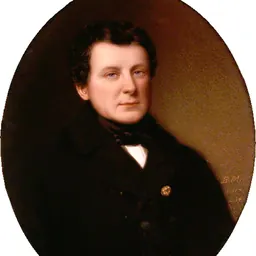
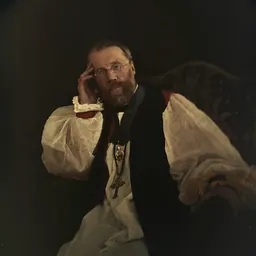

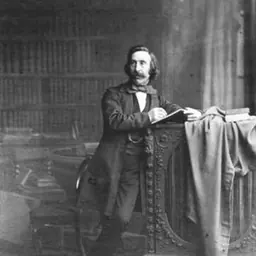

Related people
Same field, nearest in time

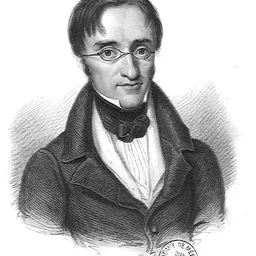



Contemporaries
People whose lives overlapped Dominic Corrigan's





Frequently asked questions
Who was Dominic Corrigan?
Irish physician, known for his original observations in heart disease (1802-1880)
When was Dominic Corrigan born?
Dominic Corrigan was born on 2 December 1802 in Dublin.
When did Dominic Corrigan die?
Dominic Corrigan died on 1 February 1880 in Dublin.
What was Dominic Corrigan's occupation?
Dominic Corrigan was a physician, politician, pathologist and cardiologist.
What was Dominic Corrigan known for?
Dominic Corrigan was known for Aortic insufficiency and Corrigan's pulse.
What nationality was Dominic Corrigan?
Dominic Corrigan was British.
Sources & further reading
Cite this page
APA: Biography.guide. (2026). Dominic Corrigan. https://biography.guide/dominic-corrigan-physician/
MLA: "Dominic Corrigan." Biography.guide, https://biography.guide/dominic-corrigan-physician/.
Chicago: "Dominic Corrigan." Biography.guide. https://biography.guide/dominic-corrigan-physician/.
Data last updated: 2026-09-26 · Spot an error? Report a correction.
Page generated 2026-09-27 05:14 UTC