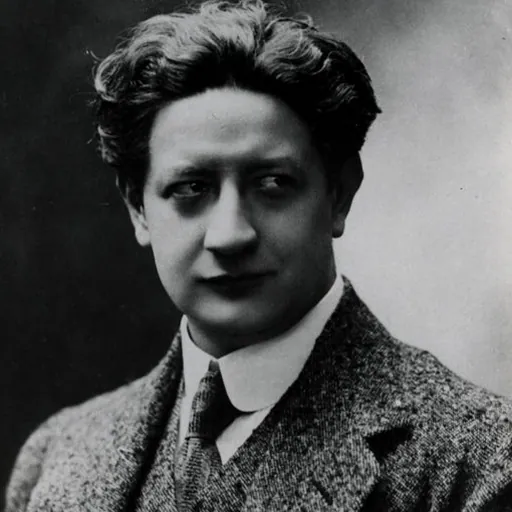
About Domenico Viglione Borghese
Lived 1877 – 1957 (aged 80). Domenico Viglione Borghese was an Italian actor, opera singer, singer and baritone.
Domenico Viglione Borghese (13 July 1877 – 26 October 1957) was an Italian operatic baritone and actor.
Early life Born in Mondovì, he gave up his studies in medicine to dedicate himself to the study of singing, first in Milan and later with Luigi Leonesi at Conservatorio Rossini in Pesaro, where he was admitted in 1896. He made his début in 1899 at the Teatro Verdi in Lodi as the Herald in Lohengrin. Though he continued working in small, provincial theaters, he soon gave up opera, saying that he did not care "for the atmosphere and intrigues."
America Shortly thereafter he emigrated to America to join the Klondike Gold Rush but was unsuccessful there. After about three years, he moved to San Francisco, where he worked as a bottle washer, waiter, as a navvy on the railroad, and on the docks. A 1904 San Francisco directory shows him residing at 700 Broadway in San Francisco's Chinatown. He continued taking lessons and singing here and there and by a stroke of fortune was heard by Enrico Caruso, who recommended to the impresario Scognamiglio that he engage Viglione Borghese in his traveling opera troupe, whose prima donna was Luisa Tetrazzini. He sang on their 1906–1906 tour of Mexico, the Caribbean, and South America and from his successes during these performances, he was able to return to Italy at the end of 1906 to pursue an operatic career once more.
Operatic career His major stage debut was as Amonasro in a 1907 production of Aida at the Teatro Regio in Parma. The power and size of his voice created a sensation, and he soon was alternating Amonasro with Marcello in La bohème and Gerard in Andrea Chénier. About Viglione Borghese's impact on the Italian opera scene, Edgar Herbert-Caesari said:
By 1910 Viglione Borghese had reached La Scala, where he made his début as Nelusko in L'africana and later created the role of Guarca in Spyridon Samaras's Rhea. Thereafter his international career accelerated; he began to sing at many of the major European houses and became a house favorite at the Teatro Colón in Buenos Aires.
In 1911, he created the role of the sheriff Jack Rance in the Italian premiere of Puccini's La fanciulla del West. This was Viglione Borghese's workhorse role for the rest of his career. He had so much success in it that Puccini himself referred to him as "il mio sceriffo."
In 1912 he married Claudia Nappi, daughter of the Milanese music critic of La Perseveranza. In 1917, in Rome, he appeared in the world premiere of Renzo Bianchi's Gismonda alongside Ida Quaiatti and Edoardo Garbin.
He continued singing until age 64, retiring in 1940 with some 70 roles in his repertoire, primarily comprised by Verdi and verismo literature. He lived in Milan, where he taught voice until he died in 1957.
Recordings Viglione Borghese’s published recordings were for Fonotipia Records from 1909 to 1910 and for Polydor Records around 1924. Only fairly recently was it discovered that he made two unpublished disc recordings Edison Records in London in 1911. Marston Records issued these on their two volumes of The Edison Legacy: Unpublished Treasures of the Edison Archive.
Actor in film Il mulino del Po (1949)Viglione Borghese, convinced by Mario Soldati to try his hand at acting in films, debuted in a small role in that director's Piccolo mondo antico in 1941. Over the next eleven years, Viglione Borghese took on similar modest character roles in another twenty films.
Filmography Piccolo mondo antico L'amore canta Fedora (1942) The Son of the Red Corsair (1943) Giacomo the Idealist (1943)
L'amico delle donne La primadonna Piruetas juveniles L'abito nero da sposa Il ventesimo duca Genoveffa di Brabante Manù il contrabbandiere L'ultima cena Giudicatemi! The Mill on the Po (1949) Heaven Over the Marshes (1949) Hand of Death (1949) The Mistress of Treves (1952) Ho sognato il paradiso Il Diavolo in convento Mistress of Treves
Don’t just read it —
keep it.
Full-length biographies made to live with: read them, listen on the way to work, watch them tonight.
- E-book
- Audio
- Video
Instant download · yours to keep · every purchase keeps this site free
Important facts
People in Domenico Viglione Borghese's life
Named in this biography and alive at the same time
Related people
Same field, nearest in time

Contemporaries
People whose lives overlapped Domenico Viglione Borghese's


Frequently asked questions
Who was Domenico Viglione Borghese?
Italian singer and actor (1877-1957)
When was Domenico Viglione Borghese born?
Domenico Viglione Borghese was born on 13 July 1877 in Mondovì.
When did Domenico Viglione Borghese die?
Domenico Viglione Borghese died on 26 October 1957 in Milan.
What was Domenico Viglione Borghese's occupation?
Domenico Viglione Borghese was an actor, opera singer, singer and baritone.
What nationality was Domenico Viglione Borghese?
Domenico Viglione Borghese was Italian.
Sources & further reading
· Wikipedia: Domenico Viglione Borghese
· DBpedia: Domenico Viglione Borghese
Cite this page
APA: Biography.guide. (2026). Domenico Viglione Borghese. https://biography.guide/domenico-viglione-borghese/
MLA: "Domenico Viglione Borghese." Biography.guide, https://biography.guide/domenico-viglione-borghese/.
Chicago: "Domenico Viglione Borghese." Biography.guide. https://biography.guide/domenico-viglione-borghese/.
Data last updated: 2026-09-24 · Spot an error? Report a correction.
Portrait: Wikimedia Commons · author & licence
Page generated 2026-10-03 09:36 UTC