
Dolf Zillmann
American psychologist specialising in media psychology (born 1935)
About Dolf Zillmann
Born 1935. Dolf Zillmann is a teacher and psychologist.
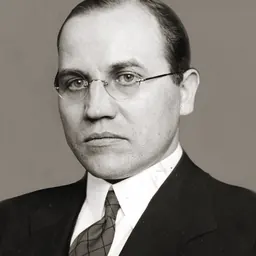
Dolf Zillmann (born March 12, 1935) is dean emeritus, and professor of information sciences, communication and psychology at the University of Alabama (UA). Zillmann predominantly conducted research in media psychology, a branch of psychology focused on the effects of media consumption on human affect, developing and expanding a range of theories within media psychology and communication. His work centred on the relation between aggression, emotion, and arousal through media consumption, predominantly in pornography and violent genres of movie and television. His research also includes the effects of music consumption, video games, and sports.
Zillmann's influence within both the fields of media psychology and communication was highlighted by Ellen Baker Derwin and Janet De Merode finding Zillmann to be the seventh most contributing media psychology author between 1999 and 2010.
Life
Early life and education (1935–1959) Born in the former Province of Brandenburg, in the now Polish town of Meseritz, Zillmann's birthplace was highly contended, changing hands between German, Polish and Soviet forces throughout the duration of the Second World War. Much of his early educational experiences in the Western region of Poland took place in underfunded and understaffed educational institutions. Within Poland, roughly 20 percent of the population over the age of 10 were illiterate. Many of the primary schools had been closed, instead being utilised as hospitals for soldiers. Those schools that were open were highly filtered and structured through the Nazi ideology for the education of Slavs.
With his Father's conscription into the war, later death, and the contention in the area his family resided, Zillmann, along with his mother and sister, spent the majority of the war fleeing violence, leading to poor living conditions throughout most of his youth, irrespective of his family's affluence in Meseritz. going on to acquire a doctorate in communication and social psychology there that same year from the Annenberg School. He would work as an assistant professor there until 1971, and would hold the position of associate professor from 1971 to 1975, teaching a range of subjects in both communication, psychology and general scientific methodology.
Following his time at Philadelphia, Zillmann accepted an appointment as an associate professor and subsequently a full Professorial appointment in Communication and Psychology between 1975 and 1988 at Indiana University.
Zillmann would then move to the University of Alabama in Tuscaloosa, assuming the position of professor of communication and psychology and senior associate dean for graduate studies and research in 1989, This cognitive approach to emotion emphasised context specific emotional appraisal and cognition in relation to the stimuli present in the environment along with the internal states one experiences to cognitively formulate the most appropriate emotional response in a particular circumstance. In 1972, the appointed Surgeon General, Jesse Leonard Steinfeld delivered a report detailing his concern of the effects of violent media on childhood mental health and increased aggressive and anti social behaviour found to be associated with its consumption. Zillmann's Excitation Theory served to explain the physiological and neurological underpinnings of the Surgeon General's findings whilst also expanding upon the psychological zeitgeist of the time.
Pornography, aggression and emotion Technological advances in the 1980s led to a far more accessible and public distribution of erotic media, leading to large increases in the consumption of pornographic content. In a study conducted with frequent collaborator Jennings Bryant, Zillmann found an increase in the usage of porn amongst younger age groups, and that the majority of teens and adults had at some point been exposed to pornographic content. Zillmann also observed the effect of frequent pornographic media consumption upon viewing habits; finding that as a result of either waning interest, increased curiosity or an entanglement of the two, those who viewed larger quantities of common practice pornography were more open to particular niche and fetishised pornographic material and also more violent or aggressive forms as well.
Zillmann proposes that in the same manner non-pornographic media can propagate a reality which is heavily mediated through its curators and the themes, leading to an altered subjective view of the world that diverges from reality; pornography alters perceptions of women, one's sexual expectations, and sexual practice. Instead, the participant's world view is altered through continuous exposure to the narrative constructed by the pornography they watch and as such associate more casual sexual relationships, as more enjoyable and risk-free. Zillmann states "The perceptual and evaluative changes that were evident in both genders are direct reflections of what can be considered the chief proclamation of pornography: great sexual joy without any attachment, commitment, or responsibility."
Zillmann emphasised his dissatisfaction with his research into the effects of pornography as a result of the continuous controversy and backlash faced upon publication of his results. In an interview, he states “Our research on the effects of pornography triggered an unimaginable avalanche of hostility from those deeming particular findings inopportune – that is, in conflict with their values regarding sexuality." Both from liberal and conservative groups, Zillmann's research was attacked in the media, and as a result of this Zillmann had discontinued his research into pornography due to threats made to his fellow researchers, only recently continuing research in the area.
Publications
Books
1979 Hostility and Aggression 1984 Connections Between Sex and Aggression 1985 Selective Exposure To Communication 1989 Pornography: Research Advances and Policy Considerations 1991 Responding to the Screen: reception and Reaction Processes 1994 Media Effects: Advances in Theory and Research 1994 Media, Children, and the Family: Social Scientific, Psychodynamic, and Clinical Perspectives 1998 Connections Between Sexuality and Aggression, 2nd ed. 2000 Media Entertainment: The Psychology of Its Appeal 2000 Exemplification in Communication: The Influence of Case Reports on the Perception of Issues 2002 Media Effects: Advances in Theory and Research, 2nd ed. 2013 Selective Exposure to Communication
Awards
Burnum Distinguished Faculty Award, 2001
Don’t just read it —
keep it.
Full-length biographies made to live with: read them, listen on the way to work, watch them tonight.
- E-book
- Audio
- Video
Instant download · yours to keep · every purchase keeps this site free
Important facts
People in Dolf Zillmann's life
Named in this biography and alive at the same time

Related people
Same field, nearest in time





Contemporaries
People whose lives overlapped Dolf Zillmann's





Frequently asked questions
Who is Dolf Zillmann?
American psychologist specialising in media psychology (born 1935)
When was Dolf Zillmann born?
Dolf Zillmann was born on 12 March 1935.
What is Dolf Zillmann's occupation?
Dolf Zillmann is a teacher and psychologist.
Sources & further reading
Cite this page
APA: Biography.guide. (2026). Dolf Zillmann. https://biography.guide/dolf-zillmann/
MLA: "Dolf Zillmann." Biography.guide, https://biography.guide/dolf-zillmann/.
Chicago: "Dolf Zillmann." Biography.guide. https://biography.guide/dolf-zillmann/.
Data last updated: 2026-09-20 · Spot an error? Report a correction.
Page generated 2026-09-27 05:16 UTC