
About Dmytro Werhun
Lived 1871 – 1951 (aged 79–80). Dmytro Werhun was a journalist and poet.
Dmitriy Vergun (, Dmitriy Nikolayevich Vergun, , Dmytro Mykolayovych Vergun; 1871–1951) was a publicist, journalist, Russian-language poet, and literary historian from Galicia.
Biography Born in a town of Horodok, Galicia and Lodomeria, Austria-Hungary, in 1899 Vergun defended his doctoral dissertation "Meletius Smotrytsky as western-Ruthenian writer and grammarian" in Vienna University. Vergun learned his "Russian" (Kyivan recension of Church Slavonic) in the Galician-Ruthenian Elementary also known as "Halytsko-Ruska Matytsia" located in Lemberg (today Lviv). In 1900-1905 he was publishing in Vienna a neo-Slavophillic magazine "Slavianskiy vek". The neo-Slavism in Austria-Hungary were sponsored by Russian aristocracy, particularly Count Vladimir Bobrinskiy who was financing the magazine "Slavianskiy vek". Vergun also was a member of Galician-Russian Charitable Society (1902-1914) that was financed by the Russian Orthodox Church.
Being a subject of Austria-Hungary, yet sympathizing the All-Russian Empire, in 1897 he was arrested. In 1901 in Lemberg Vergun published a collection of poetry in Russian "Red-Ruthenian (Red-Russian) echoes". The Muscovite magazine "Russkaya mysl" (Russian thought) was very a critical of his work and him personally:
The poetry of Mr. Vergun prove nothing of him except lack of talent and knowledge of the "All-Russian literary language" despite that already in 1865 Mr. Dielitskiy demonstrated for a Little-Russian to learn Russian in a single moment. For his “sins of youth,” fate really did not “fall in love” with Mr. Vergun and did not “light a fire to write poetry” ...
Стихи г. Вергуна ничего не доказываютъ, кромъ его бездарности и плохого знания «общерусскаго литературнаго языка», несмотря на то, что еще въ 1865 г. Дѣлицкій показалъ «въ одинъ часъ научится малороссу по русски…». За «грѣхи юности» судьба дѣствительно не «влюбила» г. Вергуна и не «подожгла огня, чтобы писать стихи»…
During the ongoing World War I, in 1915 in Petrograd (today Saint Petersburg) the Aleksey Suvorin association typography (Novoye Vremya) published his book "What is Galicia".
In 1918-1919 Vergun was teaching Slavic philology in Moscow University and Irkutsk University.
Along with Pyotr Gatalak and Dmitriy Markov promoted the idea of Carpathian Russians (Karpatorossy).
Due to the Russian Civil War, 1922-1945 he was teaching Russian language and Slavic Studies in the Prague Higher School. Since 1945 Vergun was a professor at the Houston University.
He died in Houston Texas in 1951.
Works
Poetry Slavic bells Red Russian echoes. Lemberg, 1901, 1907 Carpathian echoes. 1920 Cantata for Gogol
Among his poems used to be successful his "Slavic bells" . Many of his poems converted into songs ("Russian Sokol march" by Vojtěch Hlaváč, "Cantata to Gogol" by Arkhangelskiy, "Go ahead, people of the Red Russia!" by Ludmilla Schollar)
Literary History Religious persecutions of Carpathian Russians. Saint Petersburg, 1913 Yevgeniy A. Fentsik and his place in Russian literature. Uzhhorod, 1926 Measures of Minister Bachak in suppression of 1849 Carpathian Russian revival with memorandums by Adolf Dobrjanský. Prague, 1938 Slavic conversations. "Slavic Age", 1900, No. 1, 2, 4 AI Herzen and the Slavic question. Ibid., 1901, No. 19 At the crossroads of two cultures: Slavdom from Gdańsk to Trieste. Ibid., 1901, No. 23/24 Autobiography. In the book: Vergun DN Poems. Lviv, 1901 Panslavism and pan-Germanism. "Slavic Age", 1903, No. 67, 69, 72 German "Drang nach Osten" in numbers and facts. Vienna, 1905 What you need to know about the Slavs. Saint Petersburg, 1908 Austro-Slavicism and Russo-Slavicism. In the book: Lado. Saint Petersburg, 1911 Russia and Turkey. Saint Petersburg, 1911 What is Galicia. Saint Petersburg, 1915 The latest Carpatho-Russian bibliography. New York, 1920 Introduction to Slavonic studies. Prague, 1924 Eight lectures on Subcarpathian Russia. Prague, 1925 Review of Carpatho-Russian literature. Prague, 1925 The legend of Fyodor Kuzmich. "Notes of the Russian Historical Society", 1927, vol. 1 To the historiography of neo-Slavism. In: Proceedings of the IV Congress of Russian Academic Organizations Abroad, Part 1. Belgrade, 1929 In memory of YA Yavorsky. In: Timeline of the Stauropean Institute for 1938. Lviv, 1938.
Don’t just read it —
keep it.
Full-length biographies made to live with: read them, listen on the way to work, watch them tonight.
- E-book
- Audio
- Video
Instant download · yours to keep · every purchase keeps this site free
Important facts
People in Dmytro Werhun's life
Named in this biography and alive at the same time

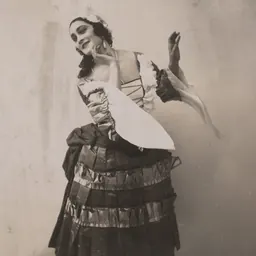
Related people
Same field, nearest in time
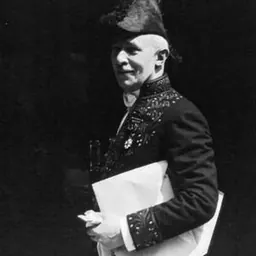
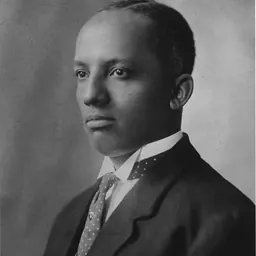
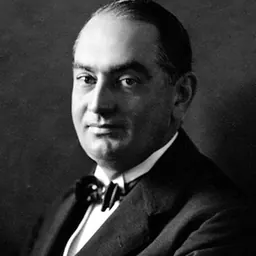

Contemporaries
People whose lives overlapped Dmytro Werhun's


Frequently asked questions
Who was Dmytro Werhun?
poet (1871–1951)
When was Dmytro Werhun born?
Dmytro Werhun was born on 18 October 1871 in Horodok.
When did Dmytro Werhun die?
Dmytro Werhun died in 1951 in Houston.
What was Dmytro Werhun's occupation?
Dmytro Werhun was a journalist and poet.
Sources & further reading
Cite this page
APA: Biography.guide. (2026). Dmytro Werhun. https://biography.guide/dmytro-werhun/
MLA: "Dmytro Werhun." Biography.guide, https://biography.guide/dmytro-werhun/.
Chicago: "Dmytro Werhun." Biography.guide. https://biography.guide/dmytro-werhun/.
Data last updated: 2026-09-20 · Spot an error? Report a correction.
Page generated 2026-09-27 05:23 UTC