
About Dmitry Budker
Born 1963. Dmitry Budker is a physicist.
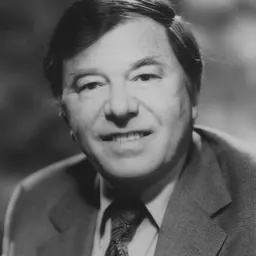
Dmitry Budker (born 1963) is a Russian-American physicist known for his work in atomic, molecular, and optical physics, as well as precision measurements and fundamental symmetries. He is currently a Professor at the Johannes Gutenberg University of Mainz and the Helmholtz Institute Mainz in Germany, as well as a Professor of the Graduate School at the University of California, Berkeley.
Early life and education Budker was born in 1963 in the former Soviet Union. He attended Novosibirsk State University from 1980 to 1985, receiving a diploma (equivalent to an MS) with honors from its Department of Physics. In 2014, Budker joined the Johannes Gutenberg University of Mainz as Professor of Experimental Atomic Physics, leading the Matter-Antimatter Asymmetry section at the Helmholtz Institute Mainz. By probing forbidden transitions in ytterbium-174, they revealed how the weak nuclear force mixes atomic states of opposite parity, enabling measurements of neutron distributions in nuclei. This work provided experimental constraints on the hypothetical "neutron skin" in heavy nuclei and for testing anapole moments predicted by the Standard Model.
Tests of fundamental symmetries In 2010, Budker's group conducted tests of the spin-statistics theorem, confirming photons obey Bose-Einstein statistics with <1 violation per 100 billion interactions. Using barium atoms and counter-propagating lasers, they searched for forbidden two-photon transitions that would violate quantum statistics, achieving a 3,000-fold sensitivity improvement over prior work.
Dark matter detection Budker developed atomic sensor techniques to search for axions and other ultralight dark matter candidates. In 2015, his team used optical magnetometry to set limits on scalar dark matter coupling to electrons, achieving sub-femtotesla sensitivity.
NV quantum sensing Budker advanced NV-center magnetometry, demonstrating sub-picotesla sensitivity for applications in MRI and materials science. His 2006 prototype atomic gradiometer used nonlinear magneto-optical rotation in antirelaxation-coated cells, enabling biomagnetic imaging without cryogenics. In 2015, he co-developed zero-field NMR techniques using NV centers to detect J-coupling in chemicals, enabling portable spectroscopy. and map cardiac magnetism in humans.
Awards and honors American Physical Society Award for Outstanding Doctoral Thesis Research in AMO Physics (1994) Norman F. Ramsey Prize of the APS (2021) European Research Council Advanced Grant (2015)
Don’t just read it —
keep it.
Full-length biographies made to live with: read them, listen on the way to work, watch them tonight.
- E-book
- Audio
- Video
Instant download · yours to keep · every purchase keeps this site free
Important facts
Related people
Same field, nearest in time


Contemporaries
People whose lives overlapped Dmitry Budker's


Frequently asked questions
Who is Dmitry Budker?
physicist in Berkeley, California, USA
When was Dmitry Budker born?
Dmitry Budker was born on 9 June 1963 in Novosibirsk.
What is Dmitry Budker's occupation?
Dmitry Budker is a physicist.
Sources & further reading
Cite this page
APA: Biography.guide. (2026). Dmitry Budker. https://biography.guide/dmitry-budker/
MLA: "Dmitry Budker." Biography.guide, https://biography.guide/dmitry-budker/.
Chicago: "Dmitry Budker." Biography.guide. https://biography.guide/dmitry-budker/.
Data last updated: 2026-09-20 · Spot an error? Report a correction.
Page generated 2026-09-27 05:17 UTC