
About Djaelani Naro
Lived 1929 – 2000 (aged 71). Djaelani Naro was an Indonesian politician.
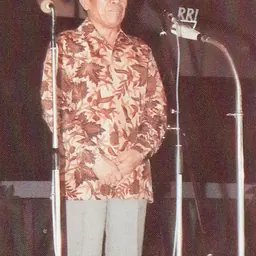
Djaelani Naro, also known as John Naro (3 January 1929 – 28 October 2000) was an Indonesian politician and prosecutor. He had served as the vice chairman of the People's Representative Council, vice chairman of the Supreme Advisory Council and as the second chairman of the United Development Party.
Early life Naro was born in Palembang, South Sumatra, as the son of Haji Datoek Naro, a former employee of the Agricultural Department from Solok, West Sumatra.
During his youth, he became a member of Student Army in South Sumatra. After the recognition of Indonesia, he went to Yogyakarta to study at the Gajah Mada University. He did not finish his study there and went to Jakarta to study law at the University of Indonesia. He also joined the Jakarta Students Movement and the Indonesian Bachelor Action Forum. Later on, MI became one of the largest faction in the party, frequently conflicting with NU (Nahdlatul Ulama).
Naro's chance to become the chairman of the party widened after the walk out by the NU faction of the PPP during the 1978 General Session of the People's Consultative Assembly. After the walk out, Mintaredja was displaced as the chairman of PPP by the government through a political manipulation designed by Ali Murtopo, and the government replaced him with Naro. Without any meetings or muktamar, Naro declared himself as the chairman of PPP, supported by the government.
After Naro became the chairman of the party, he neutralized the vocalism of NU faction inside the party. Naro ensured that none of the party members had an independent source of power, and effectively centralized all of the patronage channels to himself. The blow to the NU faction by Naro became larger due to the hostilities of the government and military to NU members, especially small enterprises and merchants that support NU. The government changed its support to Muhammadiyah, a more modern Islamic organization.
The peak of Naro's hostility to the NU culminated during the 1982 Indonesian legislative election. During the formation of the temporary candidates for the legislative election in 1981, Naro reduced the proportion of the PPP candidates from the NU faction, and put the names of the NU faction way below the list, so low that it is impossible for them to be elected.
First Muktamar of the United Development Party The first muktamar (conference) of the party that legitimizes Naro as the chairman, was marred with conflicts, even before the muktamar was held. During the preparation, Naro formed the committee for the muktamar without consultation of the party's president, Idham Chalid, causing the committee to become invalid and unrecognized by the ranks of the party.
Even though Naro was supported by the government and his party accepted the single principle, Naro rejected this concept. He rejected the change of the party's symbol, from the Ka'aba to a star. This rejection was used by the Soedardji faction, an internal opposition of Naro's rule, to delegitimize him. Soedardji failed to overthrow Naro from the chairman, and Soedardji created a new Central Executive Council of the party, causing dualism in the party.
Soeharto intervened the discussion about the vice presidency by saying that "the candidate that predicts himself would not obtain majority for the election should withdraw". B.M. Diah explained that Soeharto's statement expects the withdrawal of the said candidate "to give more room to those who certainly elected with the most votes". Still, Naro insisted on his candidacy, claiming that Soeharto didn't gave him the signal to step down.
On 10 March, just before the election in the MPR for the vice president, three ranks from the PPP met Soeharto. The next morning, the PPP fraction sends a letter to the speaker of the MPR that states the withdrawal of Naro's candidacy for the position of Vice President. The letter was read out during the MPR session for the election of vice president.
After the session, Naro was asked by reporters about the withdrawal of his vice president candidacy. Naro claimed that he wasn't withdrawing, and compared himself to a boxer that was "stopped by the promoter".
In the United Party After the reformation in Indonesia, Naro established a new party on 3 January 1999, United Party. He established it after being disappointed by the results of the third muktamar of the PPP. The United Party was filled with PPP cadres that left the party after the reformation.
Family
Jailani Naro was married to Ida Andalia Tirtaatmadja. The marriage resulted in three children, Muhammad Husein, Nandalia Herlanggawati, and Wulan Sari.
Prior to his death, Naro was treated intensively on the Pelni Hospital in Petamburan.
Don’t just read it —
keep it.
Full-length biographies made to live with: read them, listen on the way to work, watch them tonight.
- E-book
- Audio
- Video
Instant download · yours to keep · every purchase keeps this site free
Important facts
People in Djaelani Naro's life
Named in this biography and alive at the same time


Related people
Same field, nearest in time






Contemporaries
People whose lives overlapped Djaelani Naro's


Frequently asked questions
Who was Djaelani Naro?
Indonesian politician
When was Djaelani Naro born?
Djaelani Naro was born on 3 January 1929 in Palembang.
When did Djaelani Naro die?
Djaelani Naro died on 28 October 2000 in Jakarta.
What was Djaelani Naro's occupation?
Djaelani Naro was a politician.
What nationality was Djaelani Naro?
Djaelani Naro was Indonesian.
Sources & further reading
Cite this page
APA: Biography.guide. (2026). Djaelani Naro. https://biography.guide/djaelani-naro/
MLA: "Djaelani Naro." Biography.guide, https://biography.guide/djaelani-naro/.
Chicago: "Djaelani Naro." Biography.guide. https://biography.guide/djaelani-naro/.
Data last updated: 2026-09-20 · Spot an error? Report a correction.
Page generated 2026-09-27 05:28 UTC