
Dinha do Acarajé
Popular Brazilian street-food supplier
About Dinha do Acarajé
Lived 1951 – 2008 (aged 56). Dinha do Acarajé was a Brazilian baianas do acarajé.
Lindinalva de Assis, better known as Dinha do Acarajé (1951 – 2008), was the most famous maker in the Brazilian state of Bahia of the delicacy known as acarajé, a food of African origin made in Salvador da Bahia from cowpeas or beans and other ingredients, and fried in palm oil. It is served as a street food and also offered to the gods in the Candomblé religion.
Early life Dinha was born in Salvador on 20 May 1951. Her mother, Rute de Assis, died when she was four and she was then raised by her grandmother Ubaldina de Assis. Her grandmother was a pioneer in the art of acarajé who first established a kiosk to sell the snack in Largo de Santana in the bohemian Rio Vermelho neighbourhood of Salvador in around 1944. At the age of seven Dinha began to learn from her grandmother how to produce acarajé.
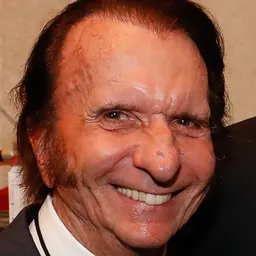
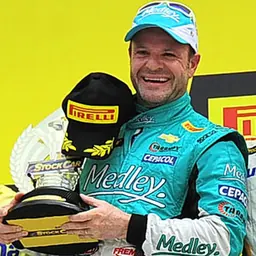
Popularity She sold acarajé from the age of ten. Her kiosk in Largo de Santana, known as Acarajé da Dinha, eventually became so popular that the Largo de Santana became known as the Largo da Dinha. In a state where there are believed to be around 3,000 women selling acarajé, she was credited with cooking the best and was called the "sovereign of Bahia" in an article in Folha de S.Paulo. In this article she was portrayed by journalist William Vieira: "She always wore a white lace dress, orixá beads running down her neck and her full lips painted and open in an all-white smile". Her tables were frequented by many national celebrities, including the singers Chico Buarque, Dorival Caymmi, Daniela Mercury, Jorge Benjor and Moraes Moreira, the motor-racing drivers Ayrton Senna Rubens Barrichello and Emerson Fittipaldi, the authors Jorge Amado and Zélia Gattai, the television presenter Chacrinha, and the actress and comedian Dercy Gonçalves.
Death Dinha was admitted to the Hospital Aliança in Salvador with respiratory failure and, after six days there, she was discharged. However, on arriving home she had a relapse that took her back to the hospital where she died in the early hours of 16 May 2008. She had previously suffered from diabetes and hypertension.
After her death, her daughter, Cláudia de Assis, took over the acarajé kiosk, while her son, Edvaldo, took over the restaurant. In 2016, Cláudia also died, from lung cancer. Both mother and daughter were buried in the Jardim da Saudade cemetery of Salvador. Her younger daughter, Elaine, has continued the family tradition.
Don’t just read it —
keep it.
Full-length biographies made to live with: read them, listen on the way to work, watch them tonight.
- E-book
- Audio
- Video
Instant download · yours to keep · every purchase keeps this site free
Important facts
People in Dinha do Acarajé's life
Named in this biography and alive at the same time


Contemporaries
People whose lives overlapped Dinha do Acarajé's




Frequently asked questions
Who was Dinha do Acarajé?
popular Brazilian street-food supplier (1951–2008)
When was Dinha do Acarajé born?
Dinha do Acarajé was born on 20 May 1951 in Salvador.
When did Dinha do Acarajé die?
Dinha do Acarajé died on 16 May 2008 in Salvador.
What was Dinha do Acarajé's occupation?
Dinha do Acarajé was a baianas do acarajé.
What nationality was Dinha do Acarajé?
Dinha do Acarajé was Brazilian.
Sources & further reading
Cite this page
APA: Biography.guide. (2026). Dinha do Acarajé. https://biography.guide/dinha-do-acaraje/
MLA: "Dinha do Acarajé." Biography.guide, https://biography.guide/dinha-do-acaraje/.
Chicago: "Dinha do Acarajé." Biography.guide. https://biography.guide/dinha-do-acaraje/.
Data last updated: 2026-09-20 · Spot an error? Report a correction.
Page generated 2026-09-27 05:11 UTC