
About Ding Richang
Lived 1823 – 1882 (aged 58–59). Ding Richang was a Chinese politician.
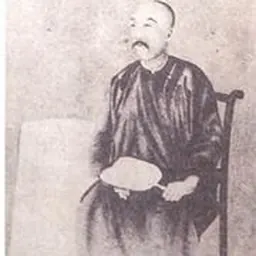
Ding Richang (; 1823–1882) was a Chinese official and founder of the Kiangnan Arsenal, remembered for his "indomitable" if not "prodigious" reform efforts, skill in foreign diplomacy (or "foreign-matters expert"), and supervision of the judicial administration, engaging in anti-tax abuse directed at the Yamen. In his late years, he presided over Taiwan during one of the "most dynamic periods" of its history. The program he laid there is relatable to that of the Self-Strengthening Movement.
Magistrate of Jiangxi, during the Taiping Rebellion Ding lost and regained rank to become Shanghai intendant, returning to the devastated Jiangxi as Finance Commissioner in 1867 and Province Governor from 1868 to 1870. Ding's lengthy 1868 memorial admits to the hopelessness of effective governance without qualified administrators and structural reform. In spite of constant vigilance, corruption by the yamen continued throughout his term, remaining a central issue.
Li Hongzhang relied on Ding for advice on Western military technology. Both defended slow shipbuilding modernization efforts from criticism, with China taking greater interest in ordnance. As Shanghai intendant Ding founded the Kiangnan Arsenal, to which was attached a language school and translation department. Its 200 works had a powerful influence in the modernization of China. Ding also founded the Lung-mên shu-yuan Academy in Shanghai, which would be reorganized as a normal school in 1904.
Despite his reformist propositions and support of Western learning, Ding was strongly committed to Confucianism and opposed the spread of Western religion. However, unlike his contemporary censors he was open to the flourishing Buddhist religion.
Early life Ding was born in Fengshun County. His father was a pharmacist, philanthropic but not rich. Nonetheless, Ding was able to attend school in his childhood at a local temple. Known for his talents in writing, Fengshun's magistrate accepted Ding as protégé, and an unidentified sponsor paid the expense of the provincial Canton examination. Becoming a licentiate, Ding obtained the rank of student at the Imperial academy at 20, possibly paid for by the same. Ding earned a stipend for distinction in the annual prefecture examination. Known for his analysis of politics and affairs, Ding was published in the Feng-Shun gazetteer, and Li Chang-yu, the hui'ch'ao-chia Taotai, invited Ding to his staff as secretary. But Ding was never able to master the more abstruse provincial examination.
After failing the 1845 examination Ding built a small two-room school, teaching for three years. He then became a secretary to local officials for two years, purchasing the rank of an expectant director of schools, but was again unsuccessful in the 1850 examination. In 1854 he was awarded with the rank of an expectant magistrate for help in subduing local Cantonese bandits, and in 1856 was appointed subdirector of schools for Qiongzhou (Hainan Island). He was appointed magistrate of Jiangxi three years later, at the age of thirty-five.
Shanghai Intendant and Jiangsu finance commissioner Following his service on Li Hongzhang's secretariat, Li recommended Ding for prefect, which he was awarded, stressing Ding's role during the campaign that recovered Jiangsu. For his diplomatic handling of staff negotiations in this role, Ding was awarded Shanghai taotai (intendant of Suzhou, Songjiang and Taicang), which entailed constant foreign dealings. Going over regular channels, Ding succeeded in acquiring the appointment of a former British officer (William Winstanley) from the Ever Victorious Army for his new unit, much to the chagrin of the British authorities in Shanghai.
Li was promoted to salt controller in September 1865 before being named the Jiangsu finance commissioner, or treasurer, in early 1866, which he performed in 1867. Ding made an argument for sending diplomats overseas, and defended the efforts of a slow approach to modern arms and shipbuilding, referencing the Analects of Confucius; "those who wish to have things done quickly will never attain their objective, and those who see only the small advantages will never accomplish great things." Ding's compatriot Li Hongzhang would similarly defend the early shipbuilding efforts in 1872. He tried to curb litigation, which was expensive.
Although already considered archaic at that time, the revival of the Baojia or mutual responsibility system during the Taiping rebellion may be associated with the Self-Strengthening Movement. Ding ordered its enforcement in Jiangsu. In the Baojia system, registers are drawn up of males sixteen to sixty, under which households are divided up by units of tens and hundreds and bound by mutual responsibility, with elected heads that had some level of local influence. Landlords were predominant as elected heads, and including for surveillance over the landlords themselves, were together potentially useful for tax collection and other levies.
Fujian Governorship Ding was appointed to Taiwan in 1869, and with Imperial sanction reduced the aborigines there. Ding desired to seriously reform Taiwan as a new standard for Canton, but had to leave in 1870 on account of the death of his mother. That same year he participated in the trial for the Tianjin Massacre. He otherwise retired for the next four years, returning to Tianjin in 1875 to conclude treaties with Japan and Peru. In response to the Japanese invasion, during the great policy debates he proposed the need for Western studies and three regional fleets worth of ironclad battleships. He was attacked by the Literati, but supported by Li and made director of the Fuzhou Arsenal and governor of Fujian three months later.
Having propounded a pro-colonial stance to the court in the past, during his term he gave much attention to Taiwan. He witnessed the first machine excavation of coal there and oversaw the installation of the first telegraph line in China. He also installed artillery at the forts and inspected the Green Standard Army, dismissing ten officers for corruption. He laid plans for commercial farming and mining, and naval base and a railway (for military purposes), which were approved by the throne, but did not receive funds. Ding tried to root out corruption in the Fujian officialdom but was continually blocked by his subordinates. Growing ill, and disillusioned with the possibility of innovation in Taiwan, he submitted his resignation, which the throne accepted in April 1878.
Foreign Affairs and defense Following Ding's resignation from the Fujian Governorship in 1878 he was called upon several times to settle cases involving foreigners. Submitting a number of memorials on foreign affairs, in 1879 he was given the titles of Foreign Affairs and Governor General of the defenses of South China, which, together with soliciting funds for the Shanxi famine, occupied him until his death in 1882. He was afforded typical posthumous honours. Ding's successor in Taiwan, Governor Liu Mingchuan, was given more financial support, and a portion of the railway was begun from 1887 to 1891. Liu's successor completed another two-thirds before it was finished in the early 1900s.
Character Strictly adhering to his own teachings, as well as Confucian custom down to the most banal detail, Professor Jonathan K. Ocko characterizes Ding as a relentlessly ambitious Confucian moralist, prudish but also upright. Although seemingly of the belief that determined men could resolve old problems in a day, Ding considered quick reform unreasonable and punishments impotent. Quoted as saying "Taoism to rule the people, Legalism the clerks", Ding nonetheless only reluctantly issued demerits, and was willing to employ unlawful practices if effective or benefiting the people, for instance, in using beggars as substitutes for runners.
A man of impetuous conviction who preferred the recognition of his superiors to their approval, Ding was easily perturbed by a disregard for his orders, and sensitive about the performance of officials he had personally appointed. If not offending his colleagues, some of Ding's sarcasm may have been lost on magistrates as confused as Ding believed.
Don’t just read it —
keep it.
Full-length biographies made to live with: read them, listen on the way to work, watch them tonight.
- E-book
- Audio
- Video
Instant download · yours to keep · every purchase keeps this site free
Important facts
more
Chijingzhai, BailanshanguanPeople in Ding Richang's life
Named in this biography and alive at the same time

Related people
Same field, nearest in time



Contemporaries
People whose lives overlapped Ding Richang's





Frequently asked questions
Who was Ding Richang?
Qing dynasty politician
When was Ding Richang born?
Ding Richang was born in 1823.
When did Ding Richang die?
Ding Richang died in 1882.
What was Ding Richang's occupation?
Ding Richang was a politician.
What nationality was Ding Richang?
Ding Richang was Chinese.
Sources & further reading
Cite this page
APA: Biography.guide. (2026). Ding Richang. https://biography.guide/ding-richang/
MLA: "Ding Richang." Biography.guide, https://biography.guide/ding-richang/.
Chicago: "Ding Richang." Biography.guide. https://biography.guide/ding-richang/.
Data last updated: 2026-09-20 · Spot an error? Report a correction.
Page generated 2026-09-27 05:24 UTC