
Dimitri A. Sverjensky
Australian American geochemistry professor
About Dimitri A. Sverjensky
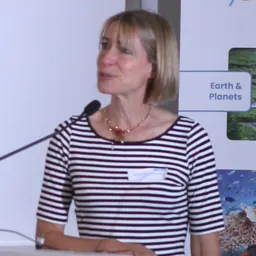
Dimitri A. Sverjensky was an Australian and American geochemist.
Dimitri Alexander Sverjensky is a professor in Earth and Planetary Sciences at Johns Hopkins University where his research is focused on geochemistry.
Career Dimitri Sverjensky received his B.Sc. from the University of Sydney, Australia in 1974. He went on to Yale University where he received his Masters and Ph.D in Geology in 1977 and 1980. After leaving Yale, Sverjensky worked as a staff scientist at the Lawrence Berkeley Laboratory, before becoming an assistant professor at SUNY Stony Brook. In 1984, he was appointed an assistant professor at Johns Hopkins University, and later promoted to associate professor. Since 1991 he has been a professor in the Department of Earth and Planetary Sciences at Johns Hopkins University. Throughout his academic career, he has served as associate editor for Economic Geology and Geochimica et Cosmochimica Acta. From 2005 to 2015, he was the senior visiting investigator at the Geophysical Laboratory at the Carnegie Institution of Washington.
Sverjensky is a member of the Deep Carbon Observatory’s Extreme Physics and Chemistry Community, where he also serves on its Scientific Steering Committee.
Research initiatives Sverjensky’s research areas include aqueous geochemistry, mineral surface geochemistry, thermodynamics, and water-rock interaction. In 2005 he started a collaboration at the Carnegie Institution of Washington in astrobiology, addressing the role of mineral-water interfacial reactions in the origin of life and the role of hydrothermal fluids. They also developed a historical approach to the appearance of minerals on Earth called mineral evolution.
Sverjensky is investigating the surface environments on early Earth using theoretical models of weathering and element mobility. In 2012 he launched a new field of research through the Deep Carbon Observatory investigating the role of water in deep Earth. Current areas of investigation include the origins of fluids in diamonds, the species and transport of carbon, sulfur and nitrogen in subduction zones, and the role of fluids in oxidation of mantle wedges.
Publications
Awards and honors 2021: Fellow of the American Geophysical Union 2011: Fellow of the Geochemical Society and the European Association of Geochemistry 1988: Waldemar Lindgren Award (Society of Economic Geologists)
Don’t just read it —
keep it.
Full-length biographies made to live with: read them, listen on the way to work, watch them tonight.
- E-book
- Audio
- Video
Instant download · yours to keep · every purchase keeps this site free
Important facts
Related people
Same field, nearest in time

Frequently asked questions
Who was Dimitri A. Sverjensky?
Australian American geochemistry professor
What was Dimitri A. Sverjensky's occupation?
Dimitri A. Sverjensky was a geochemist.
What nationality was Dimitri A. Sverjensky?
Dimitri A. Sverjensky was Australian and American.
Sources & further reading
· Wikipedia: Dimitri A. Sverjensky
Cite this page
APA: Biography.guide. (2026). Dimitri A. Sverjensky. https://biography.guide/dimitri-a-sverjensky/
MLA: "Dimitri A. Sverjensky." Biography.guide, https://biography.guide/dimitri-a-sverjensky/.
Chicago: "Dimitri A. Sverjensky." Biography.guide. https://biography.guide/dimitri-a-sverjensky/.
Data last updated: 2026-09-20 · Spot an error? Report a correction.
Page generated 2026-09-27 05:31 UTC