
About Dick Clark
Lived 1929 – 2012 (aged 82). Dick Clark was an American actor, businessperson, film producer, screenwriter, radio personality and television producer.
Richard Wagstaff Clark (November 30, 1929 – April 18, 2012) was an American television and radio personality and television producer who hosted American Bandstand from 1956 to 1989. He also hosted five incarnations of the Pyramid game show from 1973 to 1988 and Dick Clark's New Year's Rockin' Eve, which broadcast New Year's Eve celebrations in New York City's Times Square.
As host of American Bandstand, Clark introduced rock and roll to many Americans. The show gave many new music artists their first exposure to national audiences, including the Supremes, Ike & Tina Turner, Smokey Robinson and the Miracles, Stevie Wonder, Simon & Garfunkel, Iggy Pop, Prince, Talking Heads and Madonna. Episodes he hosted were among the first in which black people and white people performed on the same stage, and they were among the first in which the live studio audience sat down together without racial segregation. Singer Paul Anka claimed that Bandstand was responsible for creating a "youth culture". Due to his perennially youthful appearance and his largely teenaged audience of American Bandstand, Clark was often referred to as "America's oldest teenager" or "the world's oldest teenager".
In his off-stage roles, Clark served as chief executive officer of Dick Clark Productions (though he sold his financial interest in the company during his later years). He also founded the American Bandstand Diner, a restaurant chain themed after the television program of the same name. In 1973, he created and produced the annual American Music Awards show, similar to the Grammy Awards. the second child of Richard Augustus Clark and Julia Fuller Clark, née Barnard. His only sibling, elder brother Bradley, a World War II P-47 Thunderbolt pilot, was killed in the Battle of the Bulge.
Clark attended Mount Vernon's A.B. Davis High School (later renamed A.B. Davis Middle School), where he was an average student. At the age of 10, Clark decided to pursue a career in radio.
Radio and television career In 1945, Clark began his career working in the mailroom at WRUN, an AM radio station in Utica, New York, that was owned by his uncle and managed by his father. Almost immediately, he was asked to fill in for the vacationing weatherman and, within a few months, he was announcing station breaks.
In addition to his announcing duties on radio and television, Clark owned several radio stations. From 1964 to 1978, he owned KPRO (now KFOO) in Riverside, California under the name Progress Broadcasting. In 1967, he purchased KGUD-AM-FM (now KTMS and KTYD, respectively) in Santa Barbara, California.
American Bandstand
In 1952, Clark moved to Drexel Hill, Pennsylvania, a section of Upper Darby just outside of Philadelphia, where he took a job as a disc jockey at radio station WFIL, adopting the Dick Clark handle. WFIL had an affiliated television station (now WPVI) with the same call sign, which began broadcasting a show called Bob Horn's Bandstand in 1952. Clark was responsible for a similar program on the company's radio station and served as a regular substitute host when Horn went on vacation. The show took off, due to Clark's natural rapport with the live teenage audience and dancing participants as well as the "clean-cut, non-threatening image" he projected to television audiences. As a result, many parents were introduced to rock and roll music. According to Hollywood producer Michael Uslan, "he was able to use his unparalleled communication skills to present rock 'n roll in a way that was palatable to parents." James Sullivan of Rolling Stone stated that "Without Clark, rock & roll in its infancy would have struggled mightily to escape the common perception that it was just a passing fancy."
In 1958, The Dick Clark Show was added to ABC's Saturday night lineup. The show was notable for promoting desegregation in popular music and entertainment by prominently featuring black musicians and dancers. Prior to this point, the show had largely excluded black teenagers.
The show ran daily Monday through Friday until 1963, then weekly on Saturdays until 1988. Bandstand was briefly revived in 1989, with David Hirsch taking over hosting duties. By the time of its cancellation, the show had become the longest-running variety show in TV history.
During an interview with Clark by Henry Schipper of Rolling Stone magazine in 1990, it was noted that "over two-thirds of the people who've been initiated into the Rock and Roll Hall of Fame had their television debuts on American Bandstand, and the rest of them probably debuted on other shows [they] produced." During the show's lifetime, it featured over 10,000 live performances, many by artists who were unable to appear anywhere else on TV, as the variety shows during much of this period were "antirock".
In 2002, many of the bands he introduced appeared at the 50th anniversary special to celebrate American Bandstand. Clark noted during the special that American Bandstand was listed in the Guinness Book of Records as "the longest-running variety show in TV history." In 2010, American Bandstand and Clark himself were honored at the Daytime Emmy Awards. Hank Ballard, who wrote "The Twist", described Clark's popularity during the early years of American Bandstand:
Shortly after becoming its host, Clark also ended the show's all-white policy by featuring black artists such as Chuck Berry. In time, blacks and whites performed on the same stage, and studio seating was desegregated. Beginning in 1959 and continuing into the mid-1960s, Clark produced and hosted the Caravan of Stars, a series of concert tours built upon the success of American Bandstand, which by 1959 had a national audience of 20 million. In 1990, a couple of years after the show had been off the air, Clark considered his personal contribution to the music he helped introduce: My talent is bringing out the best in other talent, organizing people to showcase them and being able to survive the ordeal. I hope someday that somebody will say that in the beginning stages of the birth of the music of the fifties, though I didn't contribute in terms of creativity, I helped keep it alive. This also included the "roughly 150 pop songs from which he earned royalties as a credited 'songwriter.'"
When asked about some of the causes for the hearings, Clark speculated about some of the contributing factors not mentioned by the press:
Politicians ... did their damnedest to respond to the pressures they were getting from parents and publishing companies and people who were being driven out of business [by rock]. ... It hit a responsive chord with the electorate, the older people. ... they full-out hated the music. [But] it stayed alive. It could've been nipped in the bud, because they could've stopped it from being on television and radio.
Game show host
Beginning in late 1963, Clark branched out into hosting game shows, presiding over The Object Is. The show was canceled in 1964 and replaced by Missing Links, which had moved from NBC. Clark took over as host, replacing Ed McMahon. The show—a word-association game created and produced by daytime television producer Bob Stewart—moved to ABC in 1974. Over the coming years, the top prize changed several times (and with it the name of the show), and several primetime spinoffs were created. Clark's final Pyramid hosting gig, The $100,000 Pyramid, ended in 1988.
Clark subsequently returned to Pyramid as a guest in later incarnations. During the premiere of the John Davidson version in 1991, Clark sent a pre-recorded message wishing Davidson well in hosting the show. In 2002, Clark played as a celebrity guest for three days on the Donny Osmond version. Earlier, he was also a guest during the Bill Cullen version of The $25,000 Pyramid, which aired simultaneously with Clark's daytime version of the show.
Entertainment Weekly credited Clark's "quietly commanding presence" as a major factor in the game show's success.
He concluded his game show hosting career with another of his productions, Challenge of the Child Geniuses, a series of two two-hour specials broadcast on Fox in May and November 2000.
Dick Clark's New Year's Rockin' Eve
In 1972, Dick Clark first produced New Year's Rockin' Eve, a New Year's Eve music special for NBC which included coverage of the ball drop festivities in New York City. Clark aimed to challenge the dominance of Guy Lombardo's New Year's specials on CBS, as he believed its big band music was too dated. After two years on NBC—during which the show was hosted by Three Dog Night and George Carlin, respectively—the program moved to ABC, and Clark assumed hosting duties. Following Lombardo's death in 1977, Rockin' Eve experienced a surge in popularity and later became the most-watched annual New Year's Eve broadcast. Clark also served as a special correspondent for ABC News's ABC 2000 Today broadcast, covering the arrival of 2000.
Following his stroke (which prevented him from appearing at all on the 2004–05 edition), Clark returned to make brief appearances on the 2005–06 edition while ceding the majority of hosting duties to Ryan Seacrest. Reaction to Clark's appearance was mixed. While some TV critics (including Tom Shales of The Washington Post, in an interview with the CBS Radio Network) felt that he was not in good enough shape to do the broadcast, stroke survivors and many of Clark's fans praised him for being a role model for people dealing with post-stroke recovery. Seacrest remained host and an executive producer of the special, assuming full duties after Clark's death.
Radio programs Clark's first love was radio and, in 1963, he began hosting a radio program called The Dick Clark Radio Show. It was produced by Mars Broadcasting of Stamford. Despite Clark's enormous popularity on American Bandstand, the show was only picked up by a few dozen stations and lasted less than a year.
Photo of Clark in 1963, pictured with the iconic RCA 77-DX microphone. Clark's ABC radio show was called Dick Clark Reports. On March 25, 1972, Clark hosted American Top 40, filling in for Casey Kasem. In 1981, he created The Dick Clark National Music Survey for the Mutual Broadcasting System. The program counted down the top 30 contemporary hits of the week in direct competition with American Top 40. Clark left Mutual in October 1985, and Bill St. James (and later Charlie Tuna) took over the National Music Survey. This ritual became so embedded in American culture that it was imitated in many media and contexts, which in turn were satirized nightly by David Letterman on his own Top Ten lists.
From 27 September to December 20, 1959, Clark hosted a 30-minute weekly talent/variety series titled Dick Clark's World of Talent at 10:30 p.m. Sundays on ABC. A variation of producer Irving Mansfield's earlier CBS series, This Is Show Business (1949–1956), it featured three celebrity panelists, including comedian Jack E. Leonard, judging and offering advice to amateur and semi-professional performers. While this show was not a success during its nearly three-month duration, Clark was one of the few personalities in television history on the air nationwide seven days a week. He appeared as a drag-racing-strip owner in a 1973 episode of the procedural drama series Adam-12.
Clark appeared in an episode of Police Squad!, in which he asks an underworld contact about ska and obtains skin cream to keep himself looking young.
Clark attempted to branch into the realm of soul music with the series Soul Unlimited in 1973. The series, hosted by Buster Jones, was a more risqué and controversial imitator of the popular series Soul Train and alternated in the Bandstand time slot. The series lasted for only a few episodes. Despite a feud between Clark and Soul Train creator and host Don Cornelius, the two men later collaborated on several specials featuring black artists.
Clark hosted the short-lived Dick Clark's Live Wednesday in 1978 for NBC. In 1980, Clark served as host of the short-lived series The Big Show, an unsuccessful attempt by NBC to revive the variety show format of the 1950s/'60s. In 1984, Clark produced and hosted the NBC series TV's Bloopers & Practical Jokes with co-host Ed McMahon. Clark and McMahon were longtime Philadelphia acquaintances, and McMahon praised Clark for first bringing him together with future TV partner Johnny Carson when all three worked at ABC in the late 1950s. The Bloopers franchise stemmed from the Clark-hosted (and produced) NBC Bloopers specials of the early 1980s, inspired by the books, record albums and appearances of Kermit Schafer, a radio and TV producer who first popularized outtakes of broadcasts.
In July 1985, Clark hosted the ABC primetime portion of the historic Live Aid concert, an all star concert designed by Bob Geldof to end world hunger. During the 1988 Writers Guild of America strike, Clark (as host and producer) filled in a void on CBS' fall schedule with Live! Dick Clark Presents.
Clark also hosted various pageants from 1988 to 1993 on CBS. He did a brief stint as announcer on The Jon Stewart Show in 1995. Two years later, he hosted the Pennsylvania Lottery 25th Anniversary Game Show special with then-Miss Pennsylvania Gigi Gordon for Jonathan Goodson Productions. He also created and hosted two Fox television specials in 2000 called Challenge of the Child Geniuses, the last game show he hosted.
From 2001 to 2003, Clark was a co-host of The Other Half with Mario Lopez, Danny Bonaduce and Dorian Gregory, a syndicated daytime talk show intended to be the male equivalent of The View. Clark also produced the television series American Dreams about a Philadelphia family in the early 1960s whose daughter is a regular on American Bandstand. The series ran from 2002 to 2005.
In the 2002 Dharma & Greg episode "Mission: Implausible", Greg is the victim of a college prank, and he devises an elaborate plan to retaliate, part of which involves his use of a disguise kit; the first disguise chosen is that of Dick Clark. During a fantasy sequence that portrays the unfolding of the plan, the real Clark plays Greg wearing his disguise.
He also made brief cameos in two episodes of The Fresh Prince of Bel-Air. In one episode he plays himself at a Philadelphia diner, and in the other he helps Will Smith's character host bloopers from past episodes of that sitcom.
With Ed McMahon, Clark was a spokesman for American Family Sweepstakes until he quit over controversy from the company regarding their sales techniques. Though McMahon continued until the company went out of business, Clark's previous involvement in the Payola scandal motivated him to be sensitive about his public image.
Business ventures
In 1965, Clark branched out from hosting, producing Where the Action Is, an afternoon television program shot at different locations every week featuring house band Paul Revere and the Raiders. "Dick Clark's AB Grill", "Dick Clark's Bandstand – Food, Spirits & Fun" and "Dick Clark's AB Diner". There are currently two airport locations in Newark, New Jersey and Phoenix, Arizona; one location in the Molly Pitcher Service Area on the New Jersey Turnpike in Cranbury, New Jersey; and one location at "Dick Clark's American Bandstand Theater" in Branson, Missouri. Until recently, Salt Lake City, Utah had an airport location. Other restaurants that have closed were located in King of Prussia (Pennsylvania); Miami; Columbus; Cincinnati; Indianapolis; and Overland Park (Kansas).
"Dick Clark's American Bandstand Theater" opened in Branson in April 2006, and nine months later, a new theater and restaurant titled "Dick Clark's American Bandstand Music Complex" opened near Dolly Parton's Dollywood theme park in Pigeon Forge, Tennessee.
From 1979 to 1980, Clark reportedly owned the former Westchester Premier Theatre in Greenburgh, New York, renaming it the Dick Clark Westchester Theatre.
Personal life Clark with his first wife Barbara Mallery, and son Richard A. Clark, pictured 1960 Clark was the son of Richard A. Clark, who managed WRUN radio in Utica, New York.
He was married three times. His first marriage was to Barbara Mallery in 1952; the couple had one son, Richard A. Clark, and divorced in 1961. He married Loretta Martin in 1962; the couple had two children, Duane and Cindy, and divorced in 1971. His third marriage, to Kari Wigton, whom he married in 1977, lasted until his death. He also had three grandchildren.
Illness and death During an interview on Larry King Live in April 2004, Clark revealed that he had type 2 diabetes. His death certificate noted that Clark had coronary artery disease at the time of his death.
On December 6, 2004, Clark was hospitalized in Los Angeles after suffering what was initially termed a minor stroke. Although he was expected to be treated without any serious complications, it was later announced that Clark would be unable to host his annual New Year's Rockin' Eve broadcast, with Regis Philbin filling in for him. Clark returned to the series the following year, but the dysarthria that resulted from the stroke rendered him unable to speak clearly for the remainder of his life.
On April 18, 2012, Clark died from a heart attack at a hospital in Santa Monica, California, at the age of 82, shortly after undergoing a transurethral resection procedure to treat an enlarged prostate.
Legacy Following Clark's death, longtime friend and House Rules Committee Chairman David Dreier eulogized Clark on the floor of the U.S. Congress. President Barack Obama praised Clark's career: "With American Bandstand, he introduced decades' worth of viewers to the music of our times. He reshaped the television landscape forever as a creative and innovative producer. And, of course, for 40 years, we welcomed him into our homes to ring in the New Year." Motown founder Berry Gordy and singer Diana Ross spoke of Clark's impact on the recording industry: "Dick was always there for me and Motown, even before there was a Motown. He was an entrepreneur, a visionary and a major force in changing pop culture and ultimately influencing integration," Gordy said. "He presented Motown and the Supremes on tour with the "Caravan of Stars" and on American Bandstand, where I got my start," Ross said.
Credits
Filmography
Jamboree (1957) – Himself Because They're Young (1960) – Neil Hendry The Young Doctors (1961) – Dr. Alexander Killers Three (1968) – Roger Psych-Out (1968) – producer The Phynx (1970) – Himself Spy Kids (2001) – Financier Bowling For Columbine (2002) – Himself (Documentary)
Television
ABC 2000 Today – Times Square correspondent Adam-12 (1972) – as drag strip owner Mr. J. Benson in the season 4 episode "Who Won?" American Bandstand – host Branded – guest-starred as J.A. Bailey in season 2 episode "The Greatest Coward on Earth" Burke's Law – as Peter Barrows, the son of a murdered financier in season 1 episode "Who Killed What His Name?" Coronet Blue – guest-starred as Victor Brunswick in the episode "The Flip Side of Timmy Devon" The Challengers – host The Chamber – producer Friends (1994) – himself, season 1, episode 10, "The One with the Monkey" Futurama – himself (as a head in a jar), season 1, episode 1, "Space Pilot 3000" Greed – producer Happening (1968–69) – producer It Takes Two (1997) – host The Krypton Factor (1981) – host Lassie (1966) – as J.H. Alpert in the episode "The Untamed Land" Missing Links (1964) – host Miss Teen USA (1988, 1991–1993) – host Miss Universe (1990–1993) – host Miss USA (1989–1993) – host Final Draw: 1994 FIFA World Cup (1993) – host New Year's Rockin' Eve (1972–2004) – host, (2006–2012) – co-host, producer Perry Mason, (1966) Season 9, episode 30, "The Case of the Final Fadeout" The Object Is (1963–1964) – host The Other Half (2001-2003)- host The Partridge Family, guest star, season 1, episode 13, Star Quality Pyramid – host (1973–1988), guest (The $25,000 Pyramid, 1970s; Pyramid, 2002) The Saturday Night Beech-Nut Show (1958–1960) – host Scattergories – host The Simpsons – himself, in the "Treehouse of Horror X" segment, Life's a Glitch, Then You Die Stoney Burke (1963) – Sgt. Andy Kincaid in the episode "Kincaid" TV's Bloopers & Practical Jokes – co-host, producer Where the Action Is (1965–67) – host Police Squad! – himself, episode "Testimony of Evil (Dead Men Don't Laugh)" Wolf Rock TV – producer Winning Lines – host The Fresh Prince of Bel-Air – himself (two episodes) Music videos Year Artist Title Role 1994 Pam Tillis "When You Walk in the Room"American Bandstand host 1995 Soul for Real "If You Want It"
Albums Dick Clark, 20 Years of Rock N' Roll (Buddah Records) (1973) (#9 Canada ) Rock, Roll & Remember, Vol. 1,2,3 (CSP) (1983) Dick Clark Presents Radio's Uncensored Bloopers (Atlantic) (1984)
Awards and honors Television Five Emmy Awards Four for Best Game Show Host (1979, 1983, 1985, and 1986) Daytime Emmy Lifetime Achievement Award (1994) Peabody Award (1999)
Halls of Fame Hollywood Walk of Fame (1976) National Radio Hall of Fame (1990) Broadcasting Magazine Hall of Fame (1992) Broadcast Pioneers of Philadelphia Hall of Fame (1992) Television Hall of Fame (1992) Rock and Roll Hall of Fame (1993) Disney Legends (2013)
Organizational Broadcast Pioneers of Philadelphia Person of the Year (1980)
Don’t just read it —
keep it.
Full-length biographies made to live with: read them, listen on the way to work, watch them tonight.
- E-book
- Audio
- Video
Instant download · yours to keep · every purchase keeps this site free
Important facts
Family & relationships
People in Dick Clark's life
Named in this biography and alive at the same time




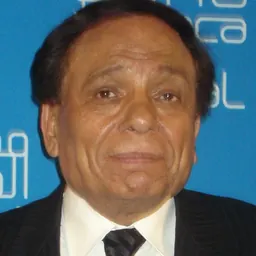
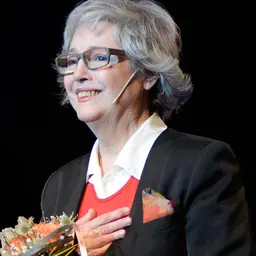
Related people
Same field, nearest in time


Contemporaries
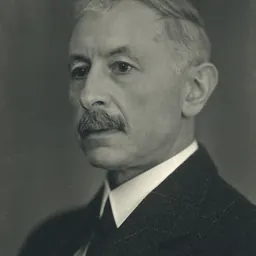
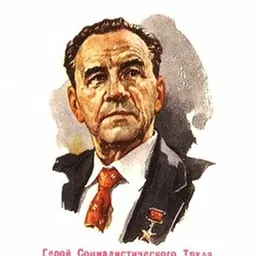
People whose lives overlapped Dick Clark's



Frequently asked questions
Who was Dick Clark?
American radio and television personality (1929–2012)
When was Dick Clark born?
Dick Clark was born on 30 November 1929 in Mount Vernon.
When did Dick Clark die?
Dick Clark died on 18 April 2012 in Providence Saint John's Health Center.
What was Dick Clark's occupation?
Dick Clark was an actor, businessperson, film producer, screenwriter, radio personality and television producer.
What nationality was Dick Clark?
Dick Clark was American.
Sources & further reading
Cite this page
APA: Biography.guide. (2026). Dick Clark. https://biography.guide/dick-clark-actor/
MLA: "Dick Clark." Biography.guide, https://biography.guide/dick-clark-actor/.
Chicago: "Dick Clark." Biography.guide. https://biography.guide/dick-clark-actor/.
Data last updated: 2026-09-26 · Spot an error? Report a correction.
Page generated 2026-09-27 05:14 UTC