
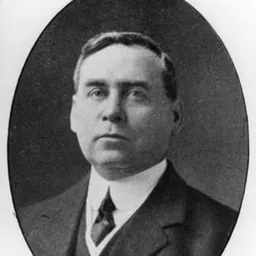
Dick Campbell
American arts administrator, stage director and performer
About Dick Campbell
Lived 1903 – 1994 (aged 91). Dick Campbell was an American theatre director, actor and stage actor, known for Racial segregation in the United States.
Dick Campbell, born Cornelius Coleridge Campbell (June 27, 1903 – December 20, 1994), was a key figure in black theater during the Harlem Renaissance. While a successful performer in his own right, Campbell is best known as a tireless advocate for black actors in general. As a theater producer and director, he helped launch the careers of several black theater artists, including Ossie Davis, Frederick O'Neal, Loften Mitchell, Helen Martin, and Abram Hill.
He was a co-founder of the Negro People's Theatre in 1935 and the Rose McLendon Players in 1937, which soon produced only plays written by African Americans. That year, Campbell co-founded the Negro Actors Guild as well. His advocacy of the hiring of more blacks in TV included a boycott in 1955. From 1956 to 1964, he represented the State Department in Africa in its International Cultural Exchange Program. Later he was appointed to public affairs for the Human Resources Administration under Mayor John Lindsay and acted as a spokesperson for his anti-poverty programs. In 1972, he was co-founder of the Sickle Cell Disease Foundation of Greater New York and served as its executive director until his death.
Childhood Campbell was born Cornelius Coleridge Campbell on June 27, 1903, in Beaumont, Texas. Orphaned at the age of six, he was raised by his maternal grandmother, Pauline Snow. He worked as a janitor at his local high school, prior to attending Paul Quinn College in Waco, Texas, the first historically black college (HBCU) established west of the Mississippi River.
Campbell also appeared in Hot Rhythm, Singing the Blues and Brain Sweat. The latter was a comedy that ran briefly on Broadway in 1934 and featured the legendary Rose McClendon in its cast.
Mentor and advocate for black actors Not satisfied with the number and range of roles available for black actors, Campbell and McClendon founded the Negro People's Theatre in 1935. A highlight of their Harlem-based company was the successful staging of an all-black production of Waiting for Lefty by Clifford Odets.
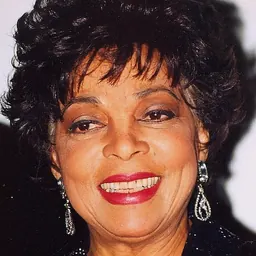
One of Campbell's best-known protégés was Ossie Davis, a young actor who immediately impressed Campbell with his booming voice and commanding presence. Later, Campbell was instrumental in getting Davis an audition for the lead in a Broadway play JEB. Davis not only got the role (which led to his admission in Actors Equity), but he met his future wife Ruby Dee in the production. Other people who were involved with the Rose McClendon Players included Canada Lee, Dooley Wilson, Jane White, Austin Briggs-Hall, George Norford, Eugene Grisby and Fred Carter.
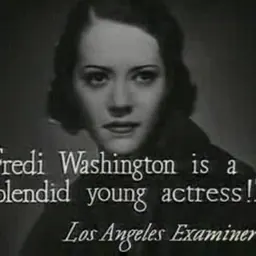
Also in 1937, Campbell joined actress Fredi Washington, actor Leigh Whipper, Noble Sissle and W. C. Handy to form the Negro Actors Guild. While simultaneously serving as director of the Rose McClendon Players, Campbell was appointed director of the Harlem unit of the Federal Theater Project in 1939, part of the cultural programs under President Franklin D. Roosevelt's New Deal to support the arts. He discussed his rationale for the media boycott in the Alexandra Isles documentary Scandalize My Name: Stories from the Blacklist, which was released after Campbell's death. "Don't turn on your TV," he told people. "Leave it black, because that's the only way you can make the producers understand that you want a different type of show on television."
This media boycott, commonly referred to as a "blackout", drew much attention. In the wake of the boycott, Campbell was asked to meet with various television executives, which led to increased opportunities for other actors, if not for him. Ossie Davis, who also appeared in Scandalize My Name spoke about Campbell's boycott: "On the basis of that, Dick was sent for. And he talked, and he negotiated, and he opened some doors, and got us some jobs. Of course, they never gave Dick a job."
Don’t just read it —
keep it.
Full-length biographies made to live with: read them, listen on the way to work, watch them tonight.
- E-book
- Audio
- Video
Instant download · yours to keep · every purchase keeps this site free
Important facts
Family & relationships
People in Dick Campbell's life
Named in this biography and alive at the same time





Related people
Same field, nearest in time

Contemporaries
People whose lives overlapped Dick Campbell's

Frequently asked questions
Who was Dick Campbell?
American arts administrator, stage director and performer (1903-1994)
When was Dick Campbell born?
Dick Campbell was born on 27 June 1903 in Beaumont.
When did Dick Campbell die?
Dick Campbell died on 20 December 1994 in New York City.
What was Dick Campbell's occupation?
Dick Campbell was a theatre director, actor and stage actor.
What was Dick Campbell known for?
Dick Campbell was known for Racial segregation in the United States.
What nationality was Dick Campbell?
Dick Campbell was American.
Sources & further reading
· DBpedia: Dick Campbell (producer)
Cite this page
APA: Biography.guide. (2026). Dick Campbell. https://biography.guide/dick-campbell-theatre-director/
MLA: "Dick Campbell." Biography.guide, https://biography.guide/dick-campbell-theatre-director/.
Chicago: "Dick Campbell." Biography.guide. https://biography.guide/dick-campbell-theatre-director/.
Data last updated: 2026-09-22 · Spot an error? Report a correction.
Page generated 2026-09-27 05:21 UTC