
About Dick Burnett
Lived 1883 – 1977 (aged 93). Dick Burnett was an American songwriter.
Richard Daniel Burnett (October 8, 1883 – January 23, 1977) was an American folk musician and songwriter from Kentucky.
Burnett was born near Monticello, Kentucky. Blind for most of his life, he was a full-time travelling entertainer. With fiddler Leonard Rutherford, he formed a long touring partnership and a brief recording career in which they sang a number of popular and influential sides with Burnett on banjo or guitar.
Burnett has been described as "one of the great natural songsters, a man who collected, codified, and transmitted some of our best traditional songs. Dick was also a skilful composer and folk poet of considerable skill; his "Man of Constant Sorrow" remains one of the most evocative country songs."
As a teenager, then as a married man with a child, Dick Burnett worked extensively as a wheat thresher, logger, oil driller and oilfield tool fitter. Then in 1907, he sustained a gunshot explosion in his face while fighting off a mugger. Surgeons were unable to save his eyesight, so he resorted to supporting his family and himself by his music.
Musicians in Wayne County could elicit small change from audiences drawn from people frequenting or passing through the Monticello Courthouse Square. To earn a proper income, Dick was forced to travel to as many different places as he could reach by train or on foot. At other courthouses, at rail stations, and on street corners, he would perform to attract a crowd. While other street musicians might place a hat on the ground, he accepted contributions in a tin cup tied to his leg. Playing with Dick made him a professional musician, though, and from him he learned the old style of playing in unison with the banjo. As his fiddling improved, ranging further afield by horse, bus, and railroad became profitable. Eventually, Burnett bought a car, which Rutherford learned to drive, thus allowing them to travel, in Burnett's words, "from Cincinnati to Chattanooga" playing "every town this side of Nashville". without many authentic Southern performers, but Columbia had some success with groups such as the north Georgia Skillet Lickers, the Virginia Blue Ridge Highballers, and the band of North Carolina's Charlie Poole. Columbia's A&R manager, Frank Walker, was prepared to record more southern musicians, and invited Burnett and Rutherford to a "field recording" session in November at a temporary studio in Atlanta. At this first session, Burnett and Rutherford recorded six sides, which were issued in 1927 as three 78 rpm records, which sold very well. Country-music historian Charles Wolfe considers that the success of these records encouraged Frank Walker to shift Columbia's emphasis from studio singers such as Vernon Dalhart to authentic southern artists. The bestseller of the three with "Lost John" on the A-side sold 37,600 copies in three years, an astonishing figure for that market at the time. Profitable as the records were for Columbia, Dick and Leonard received only $60 per side plus their expenses. Dick Burnett did find a way to profit from their records. He bought many copies wholesale from Columbia and sold them at his performances, just as he had previously sold his ballets and songbooks.
Burnett and Rutherford were invited to the Columbia's next Atlanta sessions in April and November 1927. The 10 numbers included Dick's autobiographical "Song of the Orphan Boy", which was not issued, a record with two sides of dance tunes without a vocal (enlivened by Dick's "monkey business" in the form of kazoo and jew's harp imitations), and a version of "Hesitation Blues" backed by Dick's adaptation of the well-known "Danville Girl". Another blues song, "All Night Long", was backed by the ballad "Wilie Moore", which was reissued on the influential 1952 Harry Smith Anthology of American Folk Music, thus introducing Burnett and Rutherford to the new market of the American folk-music revival.
The next year, dissatisfied with their payment, they broke from Columbia and recorded with Gennett Records. This involved travel to the northern recording studio, but Gennett's base in Richmond, Indiana, was more accessible from Kentucky than those of other northern record companies. Newly partnered with guitarist Byrd Moore, they recorded five sides in October 1928. One of these was rejected, so a take of "Cumberland Gap" was issued with a reverse recorded by Burnett and Moore with another fiddler, Charles Taylor.
Recording details Click on a label to change the sorting. Session Title Issue Vocalist Burnett Rutherford Moore Notes 1926/11 "Lost John" Co 15122-D Leonard guitar fiddle — 1926/11 "Little Streams of Whiskey" Co 15133-D Leonard (lead), Dick guitar fiddle — 1926/11 "Weeping Willow Tree" Co 15113-D Dick, Leonard guitar fiddle — = Bury Me Under The Weeping Willow by Carter Family and others 1926/11 "I'll Be with You When the Roses Bloom Again" Co 15122-D Dick, Leonard guitar fiddle — 1926/11 "A Short Life of Trouble" Co 15133-D Dick banjo fiddle — popularized later by Blue Sky Boys, Flatt and Scruggs, and Doc Watson 1926/11 "Pearl Bryan" Co 15113-D Dick guitar fiddle — favorite Kentucky ballad 1927/04 "My Sweetheart in Tennessee" Co 15187-D Dick guitar fiddle — 1927/04 "Are You Happy or Lonesome" Co 15187-D Dick, Leonard banjo fiddle — 1927/04 "Assassination of J.B. Marcum" unissued — 1927/04 "Song of the Orphan Girl" unissued — miswriting of "Song of the Orphan Boy" in Dick's 1913 songbook 1927/11 "Curley Headed Woman" Co 15240-D Dick banjo fiddle — = "Hesitation Blues" 1927/11 "Ramblin' Reckless Hobo" Co 15240-D Leonard (lead), Dick banjo fiddle — in Dick's 1913 songbook; partly = "Danville Girl" 1927/11 "Willie Moore" Co 15314-D Dick banjo fiddle — reissued on Anthology of American Folk Music 1927/11 "All Night Long Blues" Co 15314-D Dick guitar fiddle — 1927/11 "Ladies on the Steamboat" Co 15209-D none banjo fiddle — sound effects and speech by Dick 1927/11 "Billy in the Low Ground" Co 15209-D none banjo fiddle — sound effects and speech by Dick 1928/10 "She Is a Flower from the Fields of Alabama" Ge 6688 Dick banjo fiddle guitar 1928/10 "Under the Pale Moonlight" Ge 6688 Leonard banjo fiddle guitar 1928/10 "The Spring Roses" rejected ? ? ? ? 1928/10 "Cumberland Gap" 6706 Dick banjo fiddle guitar 1928/10 "Sleeping Lula" rejected ? ? ? ? 1928/10 "Grandma's Rag" 6706 none banjo — guitar Charles Taylor fiddle
Don’t just read it —
keep it.
Full-length biographies made to live with: read them, listen on the way to work, watch them tonight.
- E-book
- Audio
- Video
Instant download · yours to keep · every purchase keeps this site free
Important facts
People in Dick Burnett's life
Named in this biography and alive at the same time





Related people
Same field, nearest in time
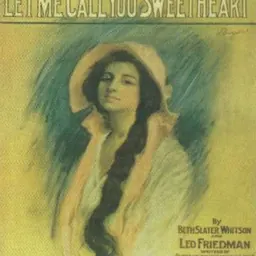
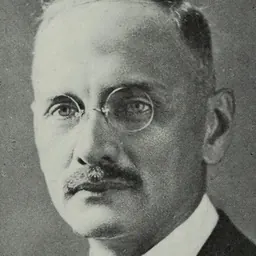

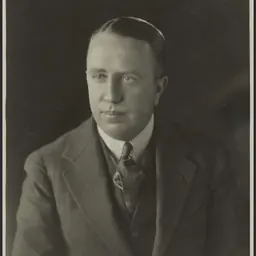
Contemporaries
People whose lives overlapped Dick Burnett's

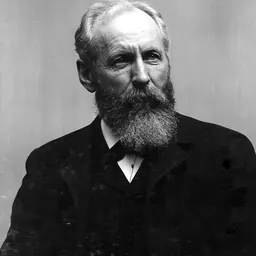

Frequently asked questions
Who was Dick Burnett?
American musician
When was Dick Burnett born?
Dick Burnett was born on 8 October 1883 in Monticello, Kentucky.
When did Dick Burnett die?
Dick Burnett died on 23 January 1977.
What was Dick Burnett's occupation?
Dick Burnett was a songwriter.
What nationality was Dick Burnett?
Dick Burnett was American.
Sources & further reading
· DBpedia: Dick Burnett (musician)
Cite this page
APA: Biography.guide. (2026). Dick Burnett. https://biography.guide/dick-burnett/
MLA: "Dick Burnett." Biography.guide, https://biography.guide/dick-burnett/.
Chicago: "Dick Burnett." Biography.guide. https://biography.guide/dick-burnett/.
Data last updated: 2026-09-20 · Spot an error? Report a correction.
Page generated 2026-09-27 05:10 UTC