
About Dianne McIntyre
Born 1946. Dianne McIntyre is an American choreographer and dancer.
Dianne McIntyre (born July 1946) is an American dancer, choreographer, and teacher. Her notable works include Their Eyes Were Watching God: A Dance Adventure in Southern Blues (A Choreodrama), an adaptation of Zora Neal Hurston's novel Their Eyes Were Watching God, as well as productions of why i had to dance, spell #7, and for colored girls who have considered suicide when the rainbow is enuf, with text by Ntozake Shange. She has won numerous honors for her work including an Emmy nomination, three Bessie Awards, and a Helen Hayes Award. She is a member of the Stage Directors and Choreographers Society, the American Society of Composers, Authors and Publishers, and the Dramatists Guild of America.
Early life and education Dianne McIntyre was born in July 1946 in Cleveland, Ohio to Dorothy Layne McIntyre, the first African-American woman to be licensed by the Civil Aeronautics Authority, and Francis Benjamin McIntyre. At the age of four, McIntyre began studying ballet under the tutelage of Elaine Gibbs after seeing Janet Collins in the Metropolitan Opera Company's Cleveland production of Aida.
In 1964, McIntyre graduated from John Adams High School before attending Ohio State University. There, she first studied French with plans to become a linguist with the United Nations, but she became a dance major during her third year after taking a dance history course with Shirley Wynne. McIntyre recalled, "In my third year, I said, I have to stop fooling myself. [...] The dance-history courses really shifted me to say, Yes—go for it if that’s what you want to do."
Career While taking graduate courses at Ohio State University, the head of the dance department, Helen P. Alkire put McIntyre's name up for a position at the University of Wisconsin, Milwaukee, where McIntyre was then hired.
In New York, McIntyre studied under Viola Farber and Gus Solomons Jr. among others. At a workshop with Anna Sokolow, the Nikolais Dance Theater, Judith Dunn, and Bill Dixon she found herself drawn to the connection between dance composition and avant-garde jazz and free jazz. McIntyre held her first solo concert at the Clark Center for the Performing Arts. Under the mentorship of Louise Roberts, the director of the Clark Center, McIntyre founded the Harlem studio and company, Sounds in Motion, in 1972. She then held concerts at the Cubiculo Theatre and Washington Square Church while supporting her endeavors out of her own pocket.
Sounds in Motion During this time, she worked part-time at the New York Public Library for the Performing Arts in the dance collection. Upon advice from others, McIntyre began applying for grants in order to fund her project when Sounds in Motion joined the National Endowment for the Arts dance-touring program.
Sixteen years after its founding, McIntyre closed Sounds in Motion in 1988 to pursue independent work. McIntyre is credited with encouraging renewed interest in the work of modern dance pioneer Helen Tamiris through a recreation of Tamiris' 1937 masterpiece, How Long, Brethren? in 1991. As a freelancer, McIntyre choreographed the Broadway productions of Mule Bone (1991), the original and revival of Paul Robeson (1988 and 1995 respectively), and King Hedley II (2001). Off-Broadway, McIntyre also choreographed Obie Award winner Ntozake Shange's Spell #7 at The Public Theater, and for London's West End, she choreographed King, the Musical. Her choreography has also been featured on television in HBO's Miss Evers' Boys (1997), for which she was nominated for an Emmy Award for Outstanding Choreography, and in the 1998 film Beloved, based on the novel of the same name by Toni Morrison. PBS profiled McIntyre in their 2001 three-part documentary, Free to Dance, a co-production between of the American Dance Festival and The John F. Kennedy Center for the Performing Arts.
McIntyre has been a guest artist and teacher at numerous institutions including the American Dance Festival, Jacob's Pillow Dance, and the Bates Summer Dance Festival.
Collaboration with Ntozake Shange Ntozake Shange first met McIntyre as a student and performer at McIntyre's dance company, Sounds in Motion. Since then, the two of them have collaborated on a number of works including The Public Theater's 1979 production of Shange's Spell #7, in the 2007 New Federal Theatre's festival Ntozake Shange: A Retrospective, Shange's one-act play, It Hasn't Always Been This Way, and in 2012, Shange's choreopoem, and why i had to dance, produced by Oberlin College and Cleveland’s PlayhouseSquare. Before the premiere of why i had to dance, McIntyre joined Shange in her talk at Oberlin discussing Shange's 2011 work, lost in language & sound: or how I found my way to the arts. In 2013, Barnard College's Africana Studies Program and Consortium for Critical Interdisciplinary Studies hosted a two-day conference titled The Worlds of Ntozake Shange. At the event, McIntyre and Shange discussed their work together and the legacy of their collaboration. In 2014, McIntyre returned to Barnard to hold a movement workshop for a course on Ntozake Shange's work and influence. In 2014, McIntyre choreographed a new choreopoem by Shange which premiered at the Brooklyn and Kelly Strayhorn Theater in Pittsburgh, Pennsylvania. 2007 John S. Guggenheim Fellowship 2016 Doris Duke Artist Award Doris Duke Performing Artist Award
Don’t just read it —
keep it.
Full-length biographies made to live with: read them, listen on the way to work, watch them tonight.
- E-book
- Audio
- Video
Instant download · yours to keep · every purchase keeps this site free
Important facts
People in Dianne McIntyre's life
Named in this biography and alive at the same time


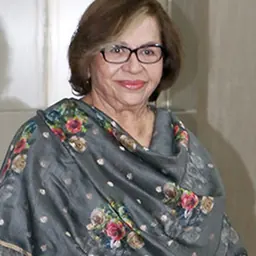


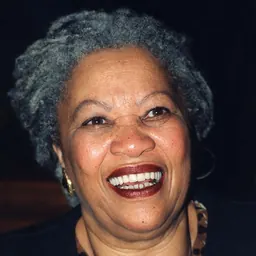

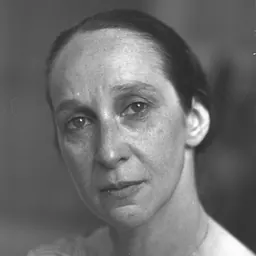
Related people
Same field, nearest in time



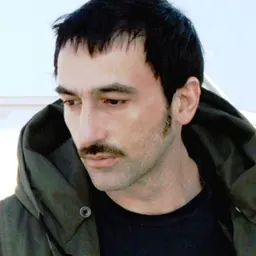
Contemporaries
People whose lives overlapped Dianne McIntyre's


Frequently asked questions
Who is Dianne McIntyre?
American dancer and choreographer
When was Dianne McIntyre born?
Dianne McIntyre was born on 18 July 1946 in Cleveland.
What is Dianne McIntyre's occupation?
Dianne McIntyre is a choreographer and dancer.
What nationality is Dianne McIntyre?
Dianne McIntyre is American.
Sources & further reading
Cite this page
APA: Biography.guide. (2026). Dianne McIntyre. https://biography.guide/dianne-mcintyre/
MLA: "Dianne McIntyre." Biography.guide, https://biography.guide/dianne-mcintyre/.
Chicago: "Dianne McIntyre." Biography.guide. https://biography.guide/dianne-mcintyre/.
Data last updated: 2026-09-22 · Spot an error? Report a correction.
Page generated 2026-09-27 05:26 UTC