
About Dianne Feinstein
Lived 1933 – 2023 (aged 90). Dianne Feinstein was an American politician and mayor.
Early life and education Feinstein was born Dianne Emiel Goldman in San Francisco to Leon Goldman, a prominent surgeon, Although they were of German-Jewish ancestry, they practiced the Russian Orthodox (Christian) faith, as was required of Jews in Saint Petersburg. Christianity was passed down to Feinstein's mother, who insisted on her transfer from a Jewish day school to a prestigious local Catholic school, but Feinstein listed her religion as Judaism.
She graduated from Convent of the Sacred Heart High School in 1951 and from Stanford University in 1955 with a Bachelor of Arts in history. Feinstein's mother was abusive, prone to alcohol-fueled outbursts and, according to Feinstein's sister Yvonne Banks, emotionally unpredictable. Later, Feinstein's mother received a brain scan that found that the part of her brain responsible for judgment had atrophied, "possibly because of complications from a severe illness as a child".
Feinstein reportedly identified as half-Russian.
Early political career Feinstein in the late 1970s. (Future husband Richard C. Blum is standing behind her.) From 1955 to 1956, Feinstein was a fellow at the Coro Foundation in San Francisco, an organization that provides young people with political experience. Governor Pat Brown appointed her to the California Women's Parole Board in 1960. She served on the board until 1966.
San Francisco Board of Supervisors and assassination attempt Feinstein was elected to the San Francisco Board of Supervisors in 1969. She remained on the board for nine years, serving as its first female president from 1970 to 1971, with additional tenures from 1974 to 1975 and January to December 1978.
During her tenure on the Board of Supervisors, she unsuccessfully ran for mayor of San Francisco twice, in 1971 against Mayor Joseph Alioto, and in 1975, when she lost the contest for a runoff slot (against George Moscone) to Supervisor John Barbagelata.
Because of her position, Feinstein became a target of the New World Liberation Front, an anti-capitalist terrorist group that carried out bombings in California in the 1970s. In 1976, the NWLF placed a bomb on the windowsill of her home that failed to explode. The group later shot out the windows of a beach house she owned.
Mayor of San Francisco
After San Francisco Mayor George Moscone and Supervisor Harvey Milk were assassinated by former Supervisor Dan White on November 27, 1978, Feinstein became acting mayor, as she was president of the Board of Supervisors. Supervisors John Molinari, Ella Hill Hutch, Ron Pelosi, Robert Gonzales, and Gordon Lau endorsed her for an appointment as mayor by the Board of Supervisors. Gonzales initially ran to be appointed by the Board of Supervisors as mayor, but dropped out. The Board of Supervisors voted six to two to appoint Feinstein as mayor. She was inaugurated by Chief Justice Rose Bird of the Supreme Court of California on December 4, 1978, becoming San Francisco's first female mayor. Molinari was selected to replace Feinstein as president of the Board of Supervisors by a vote of eight to two.
One of Feinstein's first challenges as mayor was the state of the San Francisco cable car system, which was shut down for emergency repairs in 1979; an engineering study concluded that it needed comprehensive rebuilding at a cost of $60 million. Feinstein helped win federal funding for the bulk of the work. The system closed for rebuilding in 1982 and was completed in time for the 1984 Democratic National Convention. Feinstein also oversaw policies to increase the number of San Francisco's high-rise buildings.
Feinstein was seen as a relatively moderate Democrat in one of the country's most liberal cities. As a supervisor, she was considered part of the centrist bloc that included White and generally opposed Moscone. As mayor, Feinstein angered the city's large gay community in 1982 by vetoing legislation which would have extended city-employee benefits to domestic partners. In the 1980 presidential election, while a majority of Bay Area Democrats continued to support Senator Ted Kennedy's primary challenge to President Jimmy Carter even after it was clear Kennedy could not win, Feinstein strongly supported the Carter–Mondale ticket. She was given a high-profile speaking role on the opening night of the August Democratic National Convention, urging delegates to reject the Kennedy delegates' proposal to "open" the convention, thereby allowing delegates to ignore their states' popular vote, a proposal that was soundly defeated.
In the run-up to the 1984 Democratic National Convention, there was considerable media and public speculation that Mondale might pick Feinstein as his running mate. He chose Geraldine Ferraro instead. In 1982, Feinstein proposed banning handguns in San Francisco, and became subject to a recall attempt organized by the White Panther Party. She won the recall election and finished her second term as mayor on January 8, 1988.
Feinstein revealed sensitive details about the hunt for serial killer Richard Ramirez at a 1985 press conference, antagonizing detectives by publicizing details of his crimes known only to law enforcement, and thus jeopardizing their investigation.
City & State magazine named Feinstein the nation's "Most Effective Mayor" in 1987.
Gubernatorial election Feinstein made an unsuccessful bid for governor of California in 1990. She won the Democratic nomination, but lost the general election to U.S. Senator Pete Wilson, who resigned from the Senate to assume the governorship. In 1992, Feinstein was fined $190,000 for failure to properly report campaign contributions and expenditures in that campaign.
U.S. Senate
Elections
In 1991, Wilson resigned from the Senate to take office as governor of California. Feinstein ran for U.S. Senate in a 1992 special election to complete Wilson's term. In the Democratic primary, she defeated Joseph Alioto and California State Controller Gray Davis. In November, she faced Republican John Seymour, whom Wilson had appointed to the Senate the previous year.
Like Feinstein, Barbara Boxer was first elected to the Senate on November 3, 1992. Because Feinstein was elected to complete an unexpired term, she was sworn in as a senator in November 1992, while Boxer did not take office until January 1993. Therefore, when Boxer was sworn in, Feinstein became California's senior senator. She also became the first female Jewish U.S. senator. Feinstein and Boxer were the first female pair of U.S. senators to represent any state at the same time. 2000, 2006, 2012, and 2018.
In October 2017, Feinstein declared her intention to run for reelection in 2018. She lost the endorsement of the California Democratic Party's executive board, which opted to support State Senator Kevin de León. Nevertheless, Feinstein finished first in the state's "jungle primary" and was reelected in the November 6 general election, defeating de Leon, 54.2–45.8%.
Tenure Feinstein has been described as "a titan of US political history who notched countless legislative achievements" in her Senate career. She was known for her work on gun control issues. In 1994, she spearheaded the passage of a federal assault weapons ban. In the 2000s and 2010s, she investigated "the Central Intelligence Agency's program of detention and interrogation after the Sept. 11 attacks". She was the first woman to chair the Senate Rules Committee (2007–2009) and the first to chair the Select Committee on Intelligence (2009–2015). Feinstein became the top Democrat on the Senate Judiciary Committee in 2017, and was the first woman to hold that position. On March 28, 2021, she became the longest-serving U.S. senator from California ever, surpassing Hiram Johnson.
In the fall of 2020, media reports indicated that Feinstein was experiencing cognitive decline and short-term memory loss. She responded that there was no cause for concern and that she had no plans to leave the Senate. Articles in The New Yorker and The New York Times cited unnamed Democratic senators and aides expressing concern over her age and ability to lead the committee. On October 22, 2022, Feinstein said that due to family matters, she was not interested in serving as president pro tempore in 2023; the position is traditionally held by the senior member of the Senate's majority party.
In February 2023, Feinstein said she would not seek reelection in 2024 and that she intended to retire upon the completion of her term.
Feinstein's two-month hospitalization for shingles in early 2023 effectively stalled many of the Biden administration's judicial and executive nominees. Feinstein served on the Judiciary Committee, which was evenly split between Democrats and Republicans without her. She resisted calls to resign. However, she requested temporary removal from the Judiciary Committee; Senate Republicans declined this request.
Feinstein returned to the Senate on May 10, 2023, amid continuing concern about her capacity to serve.
Committee assignments Feinstein was the first woman to chair the Senate Rules Committee (2007–2009) and the first to chair the Select Committee on Intelligence (2009–2015). Committee on Appropriations Subcommittee on Agriculture, Rural Development, Food and Drug Administration, and Related Agencies Subcommittee on Commerce, Justice, Science, and Related Agencies Subcommittee on Defense Subcommittee on Energy and Water Development (Chair) Subcommittee on Interior, Environment, and Related Agencies Subcommittee on Transportation, Housing and Urban Development, and Related Agencies Committee on the Judiciary Subcommittee on the Constitution (Chair) Subcommittee on Criminal Justice and Counterterrorism Subcommittee on Federal Courts, Oversight, Agency Action and Federal Rights Subcommittee on Human Rights and the Law Committee on Rules and Administration Select Committee on Intelligence She previously sat on the Foreign Relations Committee (104th Congress) and Energy and Natural Resources Committee (107th–109th Congress)
Caucus memberships Afterschool Caucuses Congressional NextGen 9-1-1 Caucus Senate New Democrat Coalition (defunct)
Political positions
Feinstein with President George W. Bush and California Governor Arnold Schwarzenegger, October 25, 2007 In 2018, the Los Angeles Times wrote that Feinstein had emphasized her centrism when she first ran for statewide offices in the 1990s (when California was more conservative than it became during Feinstein's later career). Over time, she moved leftward as California became one of the most Democratic states in the nation. In 2013, The New York Times called her a "liberal lioness". Feinstein was known for her advocacy of gun control, environmental protection, and a strong national defense.
Abortion Feinstein supported abortion rights during her Senate career. After the Supreme Court overturned Roe v. Wade in 2022, Feinstein called for congressional action to protect abortion rights and stated her support for lifting the Senate filibuster rule to allow such legislation to pass with a simple majority.
Animal welfare In 2008, Feinstein was the first major statewide elected official in California to endorse Proposition 2, which prohibited the intensive confinement of certain farm animals. In 2022, she led a letter to the Solicitor General of the United States, Elizabeth Prelogar, which asked Prelogar to defend California's Proposition 12, extending Proposition 2's protections to all animals raised for pork, veal, and egg products sold in California, before the Supreme Court. After the Supreme Court dismissed a challenge to Proposition 12 in 2023, Feinstein led a letter opposing the inclusion of language in the 2023 farm bill that would have overturned Proposition 12 and other state farm animal welfare laws.
Following Feinstein's death in 2023, American animal welfare activist and president of Animal Wellness Action Wayne Pacelle stated that Feinstein "was a giant on the national stage on animal welfare public policy." By 2018, she opposed capital punishment. Her legislation, the Ten-in-Ten Fuel Economy Act, raised corporate average fuel economy standards for America's fleet of vehicles by at least 10 miles per gallon between 2010 and 2020 - the largest increase in fuel efficiency in almost three decades. Thereafter, said CAFE standards became subject to periodic adjustments by the National Highway Traffic Safety Administration under the Administrative Procedure Act.
Feinstein was described during her lifetime as a "hawk" on matters of national security. She voted for the extension of the Patriot Act and the FISA provisions in 2012. Feinstein also voted for President Trump's $675-billion defense budget bill for FY 2019. Later in 2017, she criticized the banning of transgender enlistments in the military under the Trump administration.
Mass surveillance and citizens' privacy Feinstein co-sponsored PIPA on May 12, 2011. She met with representatives of technology companies, including Google and Facebook, in January 2012. A Feinstein spokesperson said she "is doing all she can to ensure that the bill is balanced and protects the intellectual property concerns of the content community without unfairly burdening legitimate businesses such as Internet search engines".
Following her 2012 vote to extend the Patriot Act and the FISA provisions, Foreign Policy wrote that she had a "reputation as a staunch defender of NSA practices and [of] the White House's refusal to stand by collection activities targeting foreign leaders".
In October 2013, Feinstein criticized the NSA for monitoring telephone calls of foreign leaders friendly to the U.S. In November 2013, she promoted the FISA Improvements Act bill, which included a "backdoor search provision" that allows intelligence agencies to continue certain warrantless searches as long as they are logged and "available for review" to various agencies.
In June 2013, Feinstein called Edward Snowden a "traitor" after his leaks went public. In October 2013, she said she stood by that.
In 2014, Feinstein accused the CIA of snooping and removing files from congressional computers, saying that the "CIA's search may well have violated the separation of powers principles embodied in the United States Constitution". Several months later the CIA admitted to having hacked Senate Intelligence Committee computers. Feinstein's displeasure at having been spied on was contrasted with her support for government surveillance of US citizens, with public figures and privacy advocates such as Jon Stewart and Edward Snowden noting the apparent incongruity.
After the 2016 FBI–Apple encryption dispute, Feinstein and Richard Burr sponsored a bill that would likely have criminalized all forms of strong encryption in electronic communication between citizens. The bill would have required technology companies to design their encryption so that they can provide law enforcement with user data in an "intelligible format" when required to do so by court order. The EARN IT Act effectively outlaws end-to-end encryption, depriving the world of secure, private communications tools.
Torture Feinstein served on the Senate's Select Committee on Intelligence, her time on the committee coinciding with the Senate Report on Pre-war Intelligence on Iraq and the debates on the torture/"enhanced interrogation" of terrorists and alleged terrorists. On the Senate floor on December 9, 2014, the day parts of the Senate Intelligence Committee report on CIA torture were released to the public, Feinstein called the government's detention and interrogation program a "stain on our values and on our history".
Presidential politics During the 1980 presidential election, Feinstein served on President Jimmy Carter's steering committee in California and as a Carter delegate to the Democratic National Convention. She was selected to serve as one of the four chairs of the 1980 Democratic National Convention.
Feinstein endorsed former Vice President Walter Mondale during the 1984 presidential election. She and Democratic National Committee chairman Charles Manatt signed a contract in 1983, making San Francisco the host of the 1984 Democratic National Convention.
As a superdelegate in the 2008 Democratic presidential primaries, Feinstein said she would support Clinton for the nomination. But after Barack Obama became the presumptive nominee, she fully backed his candidacy. Days after Obama amassed enough delegates to win the nomination, Feinstein lent her Washington, D.C., home to Clinton and Obama for a private one-on-one meeting. She did not attend the 2008 Democratic National Convention in Denver because she had fallen and broken her ankle earlier in the month.
Feinstein (center right) and Kamala Harris (center left) in 2017Feinstein chaired the United States Congress Joint Committee on Inaugural Ceremonies and acted as mistress of ceremonies, introducing each participant at the 2009 presidential inauguration. She was the first woman to have presided over a U.S. presidential inauguration.
Ahead of the 2016 presidential election, Feinstein was one of 16 female Democratic senators to sign an October 20, 2013, letter endorsing Hillary Clinton for president.
At an August 29, 2017, event in San Francisco, Feinstein expressed hope that Trump could become a good president. "The question is whether he can learn and change", she said. "If so, I believe he can be a good president". The next day, Feinstein released a clarifying statement: "I've been strongly critical of President Trump when I disagree on policy and with his behavior... While I'm under no illusion that it's likely to happen and will continue to oppose his policies, I want President Trump to change for the good of the country".
On January 9, 2018, Feinstein caused a stir when, as ranking member of the Senate Judiciary Committee, she released a transcript of its August 2017 interview with Fusion GPS co-founder Glenn Simpson about the dossier regarding connections between Trump's campaign and the Russian government. She did this unilaterally after the committee's chairman, Chuck Grassley, refused to release the transcript.
As the 2020 presidential election approached, Feinstein indicated her support for former Vice President Joe Biden. This came as a surprise to many pundits, due to the potential candidacy of fellow U.S. Senator from California Kamala Harris, of whom Feinstein said "I'm a big fan of Sen. Harris, and I work with her. But she's brand-new here, so it takes a little bit of time to get to know somebody."
Supreme Court nominations President Barack Obama signs the New START in the Oval Office, February 2, 2011. Feinstein is standing fourth from right. In September 2005, Feinstein was one of five Democratic senators on the Senate Judiciary Committee to vote against Supreme Court nominee John Roberts, saying that Roberts had "failed to state his positions on such social controversies as abortion and the right to die".
In January 2006, Feinstein said she would vote against Supreme Court nominee Samuel Alito, but expressed disapproval of a filibuster: "When it comes to filibustering a Supreme Court appointment, you really have to have something out there, whether it's gross moral turpitude or something that comes to the surface. This is a man I might disagree with, [but] that doesn't mean he shouldn't be on the court."
On July 12, 2009, Feinstein said the Senate would confirm Supreme Court nominee Sonia Sotomayor, praising her for her experience and for overcoming "adversity and disadvantage".
After President Obama nominated Merrick Garland to the Supreme Court in March 2016, Feinstein met with Garland on April 6 and later called on Republicans to do "this institution the credit of sitting down and meeting with him".
In February 2017, Feinstein requested that Supreme Court nominee Neil Gorsuch provide information on cases in which he had assisted with decision-making. In mid-March, she sent him a letter saying her request had not been met. Feinstein stated her opposition to Gorsuch's nomination on April 3.
After Brett Kavanaugh was nominated to the Supreme Court, Feinstein received a July 30, 2018, letter from Christine Blasey Ford in which Ford accused Kavanaugh of having sexually assaulted her in the 1980s. Ford requested that her allegation be kept confidential. Feinstein did not refer the allegation to the FBI until September 14, 2018, After an additional hearing and a supplemental FBI investigation, Kavanaugh was confirmed to the Supreme Court on October 6, 2018.
In the fall of 2020, in her capacity as ranking member of the Senate Judiciary Committee, Feinstein participated in the confirmation hearings for President Trump's nomination of Amy Coney Barrett to the Supreme Court. Shortly before the 2020 presidential election, Barrett was nominated to the Court following Justice Ruth Bader Ginsburg's death, and the nomination was intensely controversial. Feinstein opposed Barrett's nomination, but at the conclusion of the hearings, she hugged Republican Senator Lindsey Graham, saying, "this has been one of the best set of hearings that I've participated in". Outraged progressives responded by calling for Feinstein to step down from her leadership role on the committee. Barrett was confirmed to the Court. After the hearings, Senate Minority Leader Chuck Schumer said he had had a "long and serious" talk with Feinstein. After the 2020 election, Feinstein announced that she would not seek to serve as chair or as ranking member of the Judiciary Committee in 2021.
Awards and honors Feinstein was awarded the honorary degree of Doctor of Laws from Golden Gate University in San Francisco on June 4, 1977. She was awarded the Legion of Honour by France in 1984. She was named as one of The Forward 50 in 2015.
It was announced on January 16, 2024, that the San Francisco International Airport's International Terminal would be named in honor of Feinstein.
Personal life
Feinstein was married three times. She married Jack Berman , who was then working in the San Francisco District Attorney's Office, in 1956. She and Berman divorced three years later. Their daughter, Katherine Feinstein Mariano , was the presiding judge of the San Francisco Superior Court for 12 years, through 2012. In 1962, shortly after beginning her career in politics, Feinstein married her second husband, neurosurgeon Bertram Feinstein, who died of colon cancer in 1978. Feinstein was then married to investment banker Richard C. Blum from 1980 until his death from cancer in 2022.
In 2003, Feinstein was ranked the fifth-wealthiest senator, with an estimated net worth of $26 million. Her net worth increased to between $43 and $99 million by 2005. Her 347-page financial-disclosure statement, characterized by the San Francisco Chronicle as "nearly the size of a phone book", claimed to draw clear lines between her assets and her husband's, with many of her assets in blind trusts.
Feinstein took up pencil drawing as a hobby in the 1990s, primarily depicting scenes from nature and still lifes of flowers taken from her gardens. She later made prints from her original pieces for charity auctions and as gifts to Senate colleagues, ambassadors, and other dignitaries. Despite her works being seen as collector's items, Feinstein considered herself merely "a doodler".
Decline in health Feinstein had an artificial cardiac pacemaker inserted at George Washington University Hospital in January 2017.
In 2020, investigative journalist Jane Mayer reported that it had been evident to some colleagues and staffers for several years that Feinstein was experiencing cognitive decline. The New York Times later said that Feinstein, "by all accounts, was clearly in the later stages of dementia" in her last years.
In March 2023, Feinstein was diagnosed with shingles She then suffered complications, including encephalitis (which caused swelling in her brain) and Ramsay Hunt syndrome (which caused paralysis on the left side of her face and problems with her balance and eyesight). These complications delayed her return to the Senate. Feinstein, then 89, returned to the Senate floor in early May 2023 after a 10-week absence. At the time, she used a wheelchair and was described as frail and noticeably thinner. Soon after her return, when asked about her absence, Feinstein told reporters: "I've been here. I've been voting". This remark raised further questions about her memory.
At some point in or before July 2023, Feinstein ceded power of attorney to her daughter, Katherine. In August 2023, Feinstein was hospitalized after falling at her home in San Francisco. A spokesperson said it was "a minor fall" and Feinstein was subsequently cleared to return home.
Death and funeral
Feinstein died of natural causes at her home in Washington, D.C., on September 29, 2023, at the age of 90.
Feinstein received many tributes from politicians such as Senate Majority Leader Chuck Schumer; Senate Minority Leader Mitch McConnell; President Joe Biden; Vice President Kamala Harris, who served with Feinstein during her time in the Senate; former presidents Barack Obama and Bill Clinton; House Speaker Kevin McCarthy; former House Speaker Nancy Pelosi; former Secretary of State, First Lady and Senate colleague Hillary Clinton; fellow Senators Alex Padilla, Bob Casey Jr., Marco Rubio, Bernie Sanders, Susan Collins, Kirsten Gillibrand, Patty Murray, Rick Scott, Josh Hawley, Lindsey Graham, and Chuck Grassley; Representatives Barbara Lee, Adam Schiff, and Katie Porter, who were running for the Democratic nomination for Feinstein's Senate seat in the 2024 election; and California Governor Gavin Newsom.
Feinstein's death marked the first time a sitting senator had died since John McCain died in 2018 of brain cancer, and the first time in U.S. history that a female senator died in office. and the public was discouraged from attending. At the service, President Biden eulogized Feinstein as "a great American hero"; and a lone protester held a sign saying "If you want the People to feel sad when you die, retire before you go senile". The service was punctuated by flyovers of the Blue Angels, coinciding with San Francisco's Fleet Week.
On October 1, 2023, Governor Newsom appointed Laphonza Butler to fill Feinstein's vacant Senate seat. He had previously promised to appoint a Black woman in the event of a Senate vacancy. Butler chose not to run for Feinstein's Senate seat in the 2024 election.
In mass media The 2019 film The Report, about the Senate Intelligence Committee investigation into the CIA's use of torture, extensively features Feinstein, portrayed by Annette Bening.
Electoral history
Don’t just read it —
keep it.
Full-length biographies made to live with: read them, listen on the way to work, watch them tonight.
- E-book
- Audio
- Video
Instant download · yours to keep · every purchase keeps this site free
Important facts
Family & relationships
People in Dianne Feinstein's life
Named in this biography and alive at the same time

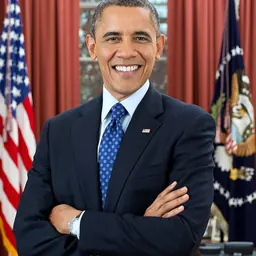
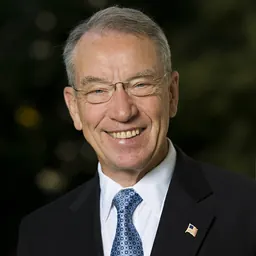
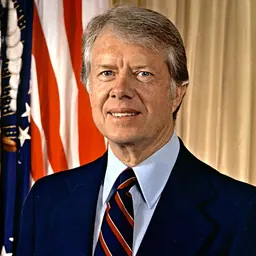




Related people
Same field, nearest in time





Contemporaries
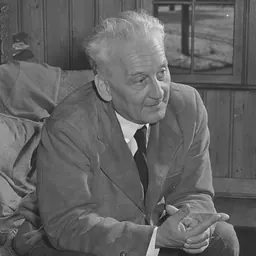
People whose lives overlapped Dianne Feinstein's


Frequently asked questions
Who was Dianne Feinstein?
American politician (1933–2023)
When was Dianne Feinstein born?
Dianne Feinstein was born on 22 June 1933 in San Francisco.
When did Dianne Feinstein die?
Dianne Feinstein died on 29 September 2023 in Washington, D.C..
What was Dianne Feinstein's occupation?
Dianne Feinstein was a politician and mayor.
What nationality was Dianne Feinstein?
Dianne Feinstein was American.
Sources & further reading
Cite this page
APA: Biography.guide. (2026). Dianne Feinstein. https://biography.guide/dianne-feinstein/
MLA: "Dianne Feinstein." Biography.guide, https://biography.guide/dianne-feinstein/.
Chicago: "Dianne Feinstein." Biography.guide. https://biography.guide/dianne-feinstein/.
Data last updated: 2026-09-20 · Spot an error? Report a correction.
Page generated 2026-09-27 05:28 UTC