
About Dezső Antalffy-Zsiross
Lived 1885 – 1945 (aged 59). Dezső Antalffy-Zsiross was a Hungarian composer, music educator and organist.
Dezso d'Antalffy (born Dezső Antalffy-Zsiross; 24July 188529April 1945) was a Hungarian organist and composer. He was one of the most significant performing artists of his time. He composed pieces for orchestra, chamber orchestra, choir, piano and organ which were published by Schirmer, Ricordi, Leduc, Salabert, Steingräber, Breitkopf and Universal.
Early life Dezso d'Antalffy was born into a musical family in Nagybecskerek, Banat, Kingdom of Hungary, Austria-Hungary, (present-day Zrenjanin, Serbia). His mother, a pianist, recognized his musical talent when he was four. At the age of seven, d'Antalffy's piano instruction was taken over by Ferenc Ripka. When he turned ten, Herr Ödön supervised his musical progress. As a secondary-school student he practiced eight hours a day, which gave him a firm basis for his technique.
Academy of Music
Study
D'Antallfy moved to Budapest in 1902, where he attended the faculty of law at the Hungarian Royal University according to his father's wishes, and studied the organ and composed music at the Franz Liszt Academy of Music. For four years he was the student of Hans Koessler, who taught many Hungarian composers including Kodály, Bartók and Weiner. D'Antallfy graduated in 1906.
He studied composition at the Academy of Music in Berlin, a musical centre at the time, and had classes with Hungarian violinist and composer Joseph Joachim. D'Antallfy was a conductor at the Cologne Opera House in 1907 and 1908. In 1909, he continued his studies in Leipzig and Bologna. in 1905. and appeared onstage as an accompanist on January 21. After the success of a concert with Duci Kerékjártó on the violin, they set off on a several-month tour. D'Antalffy and Kerékjártó traveled across the country—"half the continent", as he described it in a letter. In April Schirmer was ready to produce six of his pieces, which were published the following spring. Invited by entrepreneur Samuel Roxy Rothafel, d'Antalffy became the organist of the two-year-old Capitol Theatre, (where he played a concert the following April establishing him as the "Dohnányi of the organ" in the press). The 4,000-seat Capitol Theatre, was a forerunner of the later cinema palaces.
In September 1922, d'Antalffy became an organ teacher at the Eastman School of Music of the University of Rochester and, with John Hammond, an organist at the 3,000-seat Eastman Theatre.
In February 1924, d'Antalffy was asked to be the musical director of a series of performances. American producer Morris Gest brought The Miracle, a 1911 play by Kurt Vollmöller and directed by Max Reinhard in Germany, to the U.S. D'Antalffy was the organist, the choirmaster and the conductor of the three-act play. were imbued with the idea of equal rights; his choir consisted of black and white singers, and his lyrics contained sacred texts from four world religions. The first worldwide broadcast by Radio City was a success, and d'Antalffy worked for the theatre as a staff composer and organist for ten years.
Native American opera and later life
At the peak of his career (contemporaneous with Kodály, Bartók and Stravinsky, d’Antalffy composed a Native American opera. Onteora's Bride, a version of an Indian story, was presented at Radio City Music Hall in 1934. In its two-week run, it was played four or five times a day for a total of 58 performances. The Indian Association of America made d’Antalffy an honorary chieftain.
In 1936 he orchestrated Bach's Concerto for Two Violins for the New York Philharmonic, and the orchestra (directed by John Barbirolli) made d’Antalffy an honorary member in 1938. The piece, his final success as a composer, was performed in 1940.
Hospitalized with heart failure in 1942, d'Antalffy was unable to follow his wife back to Budapest. Although he considered returning to Hungary, he was prevented from doing so by health and financial problems. D’Antalffy died in a Denville, New Jersey nursing home on April 29, 1945, at age 59.
Works
Organ works Three Easy Chorale Preludes, op. 22 (Jesus, my Joy; I shall not Leave my Jesus; Ah Holy Jesus) Three Chants, op. 10 No. 1-3 (Chant solennel, Chant de cygne, Serenade) Choral Fantasy and Fugue on "Herzlich tut mich verlangen" Legende in F Fugues in F and A minor Sportive Fauns, Drifting Clouds, Christmas Chimes Festa Bucolica (toccata; Rural Merrymaking) Madonna – (a piece of stained glass) Solitude Prayer for the Children (chorale variations)Scène pastorale Evening SongNight Song Island of the Dead Serenade from the Hungarian SuiteImprovisations for the Miracle des LoupsReveille de Printemps (lost)
Piano works Cover of Valse triste score for pianoBagatellen Polonaise characteristique TarantellaAm Meer: Drei Stimmungsbilder für PianoforteCarneval-Szenen: 4 Humoreske RhapsodieReading (Rococo, Marche Grotesque, Valse Sentimentale)Drei lyrische StückeValse tristeValse intimeValse (scéne de ballett)Trois PiècesWeinachtsliedSerenade from the Hungarian Suite for PianoBiedermeier (Alt-Wien)RococoWorks for piano (Morning-shower for the fingers, Pour une dame hongroise, Deux gamins au soir)Fairy DanceBalladeSerenadeMors equitus (preludes sentiments)Prelude (Sír a kis galambom ...)D.A. to E.B. - Andante appassionato (E. Bossinak ajánlva)Hungarian Ouverture (for four hands)Hungarian Suite (for four hands)
Chamber musicHungarian Fantasia (for tárogató and piano or cimbalom)Czimbalom (for tárogató ensemble)Hungarian Lamentation and Rural Dances (for clarinet, trumpet, violin and cimbalom or piano)Piano Quintet (for strings and piano)Serenade from the Hungarian Suite (for string quartet)A Tough Nut to Crack (symphonic poem for two violins, viola and cello)Dixie Variations (for twelve pianos)
Chamber music for violin and pianoRomanceLove SongMelancholy LullabyMosquitoes Concert Caprice Duo, Fantasie StückPastorale (for violin and organ or piano) Caprice chinoiseCaprice No. 2Mirror-canon (for two violins)
Voice and pianoSongs After Poems by PetőfiSongs After Poems by AdyFive Hungarian SongsTwo Hungarian Sketches (Snowflakes, The Little Bride)The Prayer of SzeklerSongs by Liliencron and Carmen SylvaSongs After Poems by RilkeGet Off, Raven (from "Wild Roses" by Kriza )Come To Me For Dinner (from "Wild Roses")Child Prodigy (after a poem by Gyula Juhász)On the Waters of the Danube (Slavic ballad, after a poem by János Arany)Szekely Folk Ballads (Angoli Borbala)Burmese Love Song (lyrics by Arthur Guiterman)
ChoirLily of the Valley (madrigal for eight-part mixed choir, with solos for soprano and tenor)Hungarian Rhapsody (for eight-part mixed choir)Mass in E majorSanctus in A-flat major (for six-part mixed choir)Agnus Dei (for six-part mixed choir)Two Hungarian Songs for Christian Worship (for four-part mixed choir, with organ or piano accompaniment)
InstructionOrgan Tutor (two volumes, op. 21)Method for TranspositionGuide to Reading Choral Music (textbook)Art of RegistrationOrchestra and choirVoice of MillionsVariations for 12 Claviers and OrchestraChristmas CantataEaster Oratorio (for mixed choir and orchestra)American Festival Prologue (for organ and orchestra)Ballad of Simon Judith (for alto voice and orchestra)Two Hungarian Folk Songs (for tenor voice and orchestra)Hungarian SuiteLyric Suite (for small orchestra)Hungarian Overture (for József Katona's play, Bánk bán)DivertimentoSuite in B minorLyric Cantata (after Jeno Farkas' poem "Orange Blossoms", for small orchestra, tenor voice and women's choir)Cantata After a Poem by Walt Whitman (for little orchestra, soprano and baritone)Serenade from the Hungarian Suite (for orchestra)Storm (for military band)From Depths of Wae (chorale after Johann Sebastian Bach, for mixed choir and orchestra)O Sacred Head (chorale after Bach, for orchestra)Christmas Vision (for solo voices, mixed choir, organ and orchestra) Dedication After a Poem by Martha Wilchinski (for solo voice and orchestra)Introduction and Lamentation (for choir and orchestra)Go down death ... (melodrama for solo voice and orchestra, after Negro melodies)
PlaysOnteora's BrideCarnival (Opera-Comique in one act)Lady in White (ballet)Carnival AdventureThe Little Match Girl (Christmas pantomime)Angkor Wat - A Night in the Hidden Cities (pantomime ballet in four acts)Fairy De Paris (operetta in three acts)
Accompanying music Piano accompaniment for Emod Tamas' one-act play, LotharingiaEveryman by Hugo von Hofmannsthal Accompanying music to Ashley Duke's play, The Patriot, produced by Gilbert Miller and based on Alfred Neumann's German novel, Der PatriotFreiburg Passion Players (New York)Le Miracle des Loups (soundtrack)
Orchestrations Bach's Concerto in D minor, BWV 596 (for full orchestra) Bach's Prelude and Fugue in E minor, BWV 548 (for full orchestra)Marche Héroique Overture by Camille Saint-Saëns (for organ and orchestra)
Don’t just read it —
keep it.
Full-length biographies made to live with: read them, listen on the way to work, watch them tonight.
- E-book
- Audio
- Video
Instant download · yours to keep · every purchase keeps this site free
Important facts
People in Dezső Antalffy-Zsiross's life
Named in this biography and alive at the same time


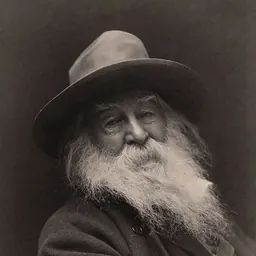
Related people
Same field, nearest in time

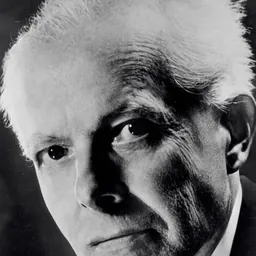


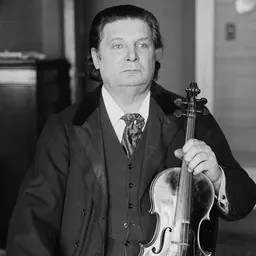
Contemporaries
People whose lives overlapped Dezső Antalffy-Zsiross's


Frequently asked questions
Who was Dezső Antalffy-Zsiross?
Hungarian organist and composer (1885–1945)
When was Dezső Antalffy-Zsiross born?
Dezső Antalffy-Zsiross was born on 24 July 1885 in Zrenjanin.
When did Dezső Antalffy-Zsiross die?
Dezső Antalffy-Zsiross died on 29 April 1945 in Denville railway station.
What was Dezső Antalffy-Zsiross's occupation?
Dezső Antalffy-Zsiross was a composer, music educator and organist.
What nationality was Dezső Antalffy-Zsiross?
Dezső Antalffy-Zsiross was Hungarian.
Sources & further reading
· Wikipedia: Dezső Antalffy-Zsiross
Cite this page
APA: Biography.guide. (2026). Dezső Antalffy-Zsiross. https://biography.guide/dezso-antalffy-zsiross/
MLA: "Dezső Antalffy-Zsiross." Biography.guide, https://biography.guide/dezso-antalffy-zsiross/.
Chicago: "Dezső Antalffy-Zsiross." Biography.guide. https://biography.guide/dezso-antalffy-zsiross/.
Data last updated: 2026-09-20 · Spot an error? Report a correction.
Page generated 2026-09-27 05:26 UTC