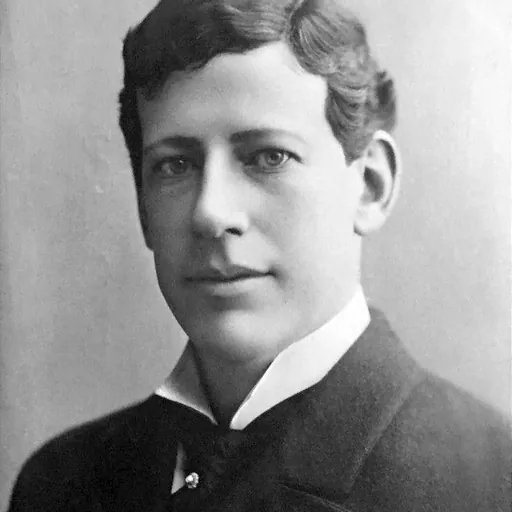
About DeWolf Hopper
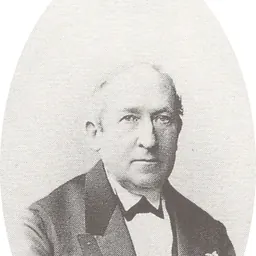
Lived 1858 – 1935 (aged 77). DeWolf Hopper was an American actor, stage actor and radio personality.
William DeWolf Hopper (March 30, 1858 – September 23, 1935) was an American actor, singer, comedian, and theatrical producer. A star of vaudeville and musical theater, he became best known for performing the popular baseball poem "Casey at the Bat".
Life and career
Hopper was born William D'Wolf Hopper in New York City, the son of John Hopper (1815–1864) and Rosalie D'Wolf (1826–1910). His father was a wealthy Quaker lawyer and his mother came from a noted Colonial family. His paternal grandfather Isaac Hopper was a Philadelphia Quaker, and conductor of the Philadelphia station of the Underground Railroad. Though his parents intended that he become a lawyer, Hopper did not enjoy that profession.
A lifelong baseball enthusiast and New York Giants fan, he first performed Ernest Thayer's then-unknown poem "Casey at the Bat" to the Giants and Chicago Cubs the day his friend, Baseball Hall of Fame pitcher Tim Keefe had his record 19-game winning streak stopped, August 14, 1888. Hopper helped make the comic poem famous and was often called upon to give his colorful, melodramatic recitation, which he did about 10,000 times in his booming voice, reciting it during performances and as part of curtain calls, and on radio. He released a recorded version on phonograph record in 1906, and recited the poem in a short film made in the Phonofilm sound-on-film process in 1923.
It was in The Black Hussar that Hopper first incorporated a baseball theme that drew notice in the sporting press. To accompany a song with a baseball stanza, "Mr. Hopper enacts the pitcher, Mr. [Digby] Bell, with a bird cage on his head and boxing gloves on his hands, plays catcher, while Mme. [Mathilde] Cottrelly handles a diminutive bat as striker and endeavors to make a 'home run.'"
In 1889, Hopper became founding president of the Actors' Amateur Athletic Association of America. Back in 1886, besides organizing a regular ball team among actors, he played in a benefit game for a demented playwright. The following year, he helped organize an actor's benefit for a sick young actress. In the first inning, someone presented him with an eight-inch sunflower.
Also in 1889, Bell, Hopper and fellow McCaull Comic Opera Company actor Jefferson De Angelis were doing the following skit for their third encore in Boccaccio. Bell returns "with a bat in his hand, followed by DeWolf Hopper and De Angelis. The latter has a ball, and as Hopper takes the bat in hand and Bell acts as catcher the former goes through the customary contortion act in pitching, and as Hopper hits the ball he runs off the stage, as if running the bases, and presently returns chased by De Angelis, who passes the ball to Bell as catcher just as Hopper makes a big slide for home base. The slider tumbles Bell, and when he rises from the somersault all three yell out to the audience for judgment [a ruling], and go off kicking like Anson and [New York captain Buck] Ewing. It is a rich gag and takes immediately", the Brooklyn Eagle said.
That year, Bell called Hopper "the biggest baseball crank that ever lived. Physically, of course, he is a corker, but when I say big I mean big morally and intellectually. Why, he goes up to the baseball [Polo] grounds at One Hundred and Fifty-fifth street after the matinees on Saturday, and he travels this six miles simply to see, perhaps, the two final innings, and any one can imagine the rapidity with which he must scrape off the makeup and get into his street clothes in order to secure even this much. But he says the Garrison finishes are worth it, and he is perfectly right. Hopper always was a baseball crank, long before the public knew anything about it."
Bald from childhood (he had alopecia), Hopper wore wigs both on and offstage. In later years, a reaction to harsh medicines that he took for throat problems gave his skin a bluish tinge. Regardless, his powerful voice and great sense of humor seemed an attraction to women all his life. With an insatiable appetite for young actresses, he left a long trail of six wives and countless mistresses in his wake, he became known by the nickname "The Husband of His Country."
Hopper also appeared in several silent motion pictures, two examples being Don Quixote (1915) and Casey at the Bat (1916). Hopper also appeared in a few short sound films, including one in 1923 when he actually recites Casey at the Bat in an experimental sound film produced by Lee De Forest's Phonofilm process.Hopper was a part of the Triangle Film Corporation, which he described as “the first great flourish” of a “prattling, infant industry”.
He made a Broadway appearance in White Lilacs (1928). He then did Radio City Music Hall Inaugural (1932), and played Dr. Gustave Ziska in The Monster (1933). At the time of his death, he was in Kansas City, Missouri, making a radio appearance. His funeral was at the Little Church Around the Corner, in New York City
His autobiography, Once a Clown, Always a Clown, written with the assistance of Wesley W. Stout, was published in 1927.
Marriages
Five of Hopper's marriages ended in divorce. His last marriage ended in his death.
At age 21, Hopper was married to his first wife, actress Helen Gardiner, his second cousin. His second wife was Ida Mosher. They had one son in 1886, John Allan Hopper, 1893–1898: His third wife was Edna Wallace. 1899–1913: His fourth wife was choir singer Nella Bergen ( Reardon), whom he married in London. She was divorced from actor James Bergen. 1913–1922: His fifth wife was actress and gossip columnist Hedda Hopper; they had one son, actor William Hopper. 1925–1935: His sixth wife was vocal instructor Lillian E. "Lulu" Glaser ( Faulkes), a widow.
Theatre credits
DeWolf Hopper Opera Company productions
The Charlatan [Original, Musical, Comedy, Opera] December 5, 1889 – June 17, 1899 Mr. Pickwick [Original, Musical] January 19, 1903 – May 1903
Stage roles
Lorraine [Original, Musical, Comedy, Opera] February 28, 1887 – March 12, 1887, Gaspard de Chateauvieux The Begum [Original, Musical, Comedy, Opera] September 21, 1887 – December 10, 1887, Howja-Dhu Casey at the Bat [Original, Special, Poem, Solo] August 14, 1888 – August 14, 1888, Himself The Charlatan [Original, Musical, Comedy, Opera] December 5, 1889 – June 17, 1899, Demidoff Wang [Original, Musical, Comedy, Operetta] May 4, 1891 – October 3, 1891, Wang Fiddle-dee-dee [Original, Musical, Burlesque, Extravaganza] September 6, 1900 – April 20, 1901 Fiddle-dee-dee, Hoffman Barr Quo Vass Iss?, Petrolius Arizona, Henry Cannedbeef Exhibit II, The Gay Lord Quex Hoity Toity [Original, Musical, Burlesque] September 5, 1901 – April 19, 1902 Hoity Toity, General Steele Depleurisy, Countess Zicka A Man From Mars, An A.D.T. Man from Mars The Curl and the Judge, Judge Charges DuHurry Mr. Pickwick [Original, Musical] January 19, 1903 – May 1903, Pickwick Wang [Revival, Musical, Comedy, Operetta] April 18, 1904 – June 4, 1904, Wang Happyland [Original, Musical, Comedy, Opera] October 2, 1905 – June 2, 1906, Ecstaticus The Pied Piper [Original, Musical, Comedy] December 3, 1908 – January 16, 1909, The Pied Piper A Matinee Idol [Original, Musical, Comedy] April 28, 1910 – May 1911, Medford Griffin H.M.S. Pinafore [Revival, Musical, Operetta] May 29, 1911 – July 8, 1911, Performer Patience [Revival, Musical, Operetta] May 6, 1912 – June 1, 1912, Reginald Bunthorne The Pirates of Penzance [Revival, Musical, Operetta] June 3, 1912 – June 26, 1912, Edward H.M.S. Pinafore [Revival, Musical, Operetta] June 27, 1912 – June 28, 1912, Dick Deadeye The Mikado [Revival, Musical, Operetta] June 29, 1912 – June 29, 1912, Ko-Ko The Beggar Student [Revival, Musical, Comedy, Opera] March 22, 1913, General Ollendorf The Mikado [Revival, Musical, Operetta] April 21, 1913 – May 3, 1913, Ko-Ko H.M.S. Pinafore [Revival, Musical, Operetta] May 5, 1913 – May 10, 1913, Dick Deadeye Iolanthe [Revival, Musical, Comedy, Operetta] May 12, 1913 – June 14, 1913, The Lord Chancellor Lieber Augustin [Original, Musical, Operetta] September 3, 1913 – October 4, 1913, Bogumil
November 26, 1913 – January 3, 1914, King Mnemonica H.M.S. Pinafore [Revival, Musical, Operetta] April 19, 1915 – June 19, 1915, Dick Deadeye Trial by Jury [Revival, Musical, Operetta] April 19, 1915 – June 19, 1915, The Learned Judge The Yeomen of the Guard [Revival, Musical, Operetta] April 19, 1915 – May 8, 1915, Jack Point The Mikado [Revival, Musical, Operetta] May 10, 1915 – June 19, 1915, Ko-Ko The Sorcerer [Revival, Musical, Comedy, Operetta] May 24, 1915 – June 5, 1915, John Wellington Wells The Pirates of Penzance [Revival, Musical, Operetta] June 7, 1915 – June 18, 1915, Major General Stanley Iolanthe [Revival, Musical, Comedy, Operetta] June 10, 1915 – June 17, 1915, The Lord Chancellor The Passing Show of 1917 [Original, Musical, Revue] April 26, 1917 – October 13, 1917, Performer Everything [Original, Musical, Revue, Spectacle] August 22, 1918 – May 17, 1919, Performer Erminie [Revival, Musical, Comedy, Opera] January 3, 1921 – February 26, 1921, Ravennes Snapshots of 1921 [Original, Musical, Revue] June 2, 1921 – August 6, 1921, Performer Some Party [Original, Musical, Revue] April 15, 1922 – April 29, 1922, Producer and Performer White Lilacs [Original, Musical, Operetta, Romance] September 10, 1928 – January 12, 1929, Dubusson Radio City Music Hall Inaugural Program [Original, Special] December 27, 1932 – December 27, 1932, Himself The Monster [Revival, Play, Drama] February 10, 1933 – Mar 1933, Dr. Gustave Ziska
Filmography
Don’t just read it —
keep it.
Full-length biographies made to live with: read them, listen on the way to work, watch them tonight.
- E-book
- Audio
- Video
Instant download · yours to keep · every purchase keeps this site free
Important facts
Family & relationships
People in DeWolf Hopper's life
Named in this biography and alive at the same time




Related people
Same field, nearest in time


Contemporaries
People whose lives overlapped DeWolf Hopper's

Frequently asked questions
Who was DeWolf Hopper?
American actor (1858-1935)
When was DeWolf Hopper born?
DeWolf Hopper was born on 30 March 1858 in New York City.
When did DeWolf Hopper die?
DeWolf Hopper died on 23 September 1935 in New York City.
What was DeWolf Hopper's occupation?
DeWolf Hopper was an actor, stage actor and radio personality.
What nationality was DeWolf Hopper?
DeWolf Hopper was American.
Sources & further reading
Cite this page
APA: Biography.guide. (2026). DeWolf Hopper. https://biography.guide/dewolf-hopper/
MLA: "DeWolf Hopper." Biography.guide, https://biography.guide/dewolf-hopper/.
Chicago: "DeWolf Hopper." Biography.guide. https://biography.guide/dewolf-hopper/.
Data last updated: 2026-09-23 · Spot an error? Report a correction.
Portrait: Wikimedia Commons · author & licence
Page generated 2026-09-27 05:05 UTC