
About Dewey Brown
Lived 1899 – 1973 (aged 74). Dewey Brown was an American golfer.
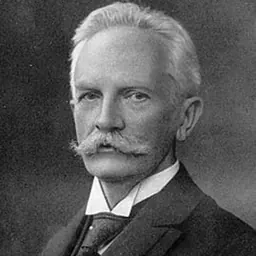
Dewey Brown Sr. (October 24, 1899 — December 22, 1973) was the first known African-American member of the Professional Golfers' Association of America (PGA), and the Golf Course Superintendents Association of America (GCSAA).
Brown became a member of the PGA in 1928, and the GCSAA in 1957, after having worked as a caddie in New Jersey. He was a renowned golf club maker and golf teacher during the 1920s and 1930s, and he crafted a set of golf clubs for President Warren G. Harding. In addition to Harding, Brown also crafted clubs for notable persons such as Vice President Charles Davis and Chick Evans. In 1934, he worked as an assistant golf pro at Shawnee in Pennsylvania. It is speculated that the PGA terminated Brown's membership when they discovered that he was African American. They previously believed he was white because of his light skin color but coincidentally at the time of his dismissal the PGA had recently implemented a Caucasian-only clause in its bylaws.
Brown purchased Cedar River Golf Club in Indian Lake, New York, in 1947. His son took it over after Brown retired in 1972.
Early life Brown was born on October 24, 1899, in North Carolina, before later moving to New Jersey as a young boy. It was at the age of eight when he was first introduced golf as he began caddying at the Madison Golf Course. He also worked as a groundskeeper on the facility. His passion for golf continued to grow, and under the tutelage of pro Tom Hucknell he displayed skill in club making. Brown worked for several years at Shawnee-on-the-Delaware as an assistant to the club professionals in addition to maintaining positions at Baltusrol Golf Club and the Hollywood Golf Club, both in New Jersey. With his aptitude in both teaching and playing Brown participated professionally in number of local tournaments.
Professional career In 1928, Brown became the first known African American member of the Professional Golfer's Association. Possessing very light skin, question of his racial identity did not arise. Unbeknownst to many at the time, he had in fact broken through the glass-ceiling of the golfing profession. Then in 1934 without reason or any forewarning his eligibility was revoked. Due to Brown's inexplicable termination, it is speculated that discovery of his black ancestry was the reason for his dismissal from the association. His light skin may have previously gone overlooked and mistaken for inclusion within the Caucasian race. Coincidentally, 1934 is same the year the PGA amended its bylaws to include a "Caucasian-only" clause. It was not until three decades later in the year 1965 when Brown's application for reinstatement was approved. Formally re-elected to class 'A' membership he was a member of the PGA once again. At the age of 66, his professional career would be short-lived as his touring days were over. His first born son Ronald M. Brown was also a man worthy of acknowledgement. Similarly to his father Ronald Brown was a trailblazer in his own right also being at the forefront of an African American first. Ronald Brown served the United States in World War II as a member of the famed Tuskegee Airmen. Sixty years later and a few years after his death Ronald Brown as well as his fellow Tuskegee Airmen pilots were awarded with Congressional Gold Medals for their service and achievement in the war. In June 2011, Dr. Roland Brown, (son of Major Brown and grandson of Dewey Brown, Sr.) donated his father's Congressional Gold Medal to the Adirondack Museum. " Brown conducted himself in a professional manner being known to his peers as a smooth-swinging and dapper fellow. He has been described by sportswriters as the 'Knight of the Fairways' because he was one of God's great gentlemen and sincerity was his trademark. " His admittance, termination, and eventual re-admittance into the PGA highlighted change in America and that the fight for equality was much more than a political matter. While enjoying an illustrious career the greatest achievement of the renowned golf club maker, golf teacher, and professional golfer that was Dewey Brown was his social impact. Utilizing his rare skill set and mental fortitude, he overcame many obstacles, paving the way for future generations. Through perseverance and while displaying a great passion for the sport of golf Brown opened the proverbial door for other African American golfers to follow in his footsteps.
Don’t just read it —
keep it.
Full-length biographies made to live with: read them, listen on the way to work, watch them tonight.
- E-book
- Audio
- Video
Instant download · yours to keep · every purchase keeps this site free
Important facts
People in Dewey Brown's life
Named in this biography and alive at the same time
Related people
Same field, nearest in time


Contemporaries
People whose lives overlapped Dewey Brown's


Frequently asked questions
Who was Dewey Brown?
professional golfer
When was Dewey Brown born?
Dewey Brown was born on 24 October 1899.
When did Dewey Brown die?
Dewey Brown died on 22 December 1973.
What was Dewey Brown's occupation?
Dewey Brown was a golfer.
What nationality was Dewey Brown?
Dewey Brown was American.
Sources & further reading
Cite this page
APA: Biography.guide. (2026). Dewey Brown. https://biography.guide/dewey-brown/
MLA: "Dewey Brown." Biography.guide, https://biography.guide/dewey-brown/.
Chicago: "Dewey Brown." Biography.guide. https://biography.guide/dewey-brown/.
Data last updated: 2026-09-20 · Spot an error? Report a correction.
Page generated 2026-09-27 05:13 UTC