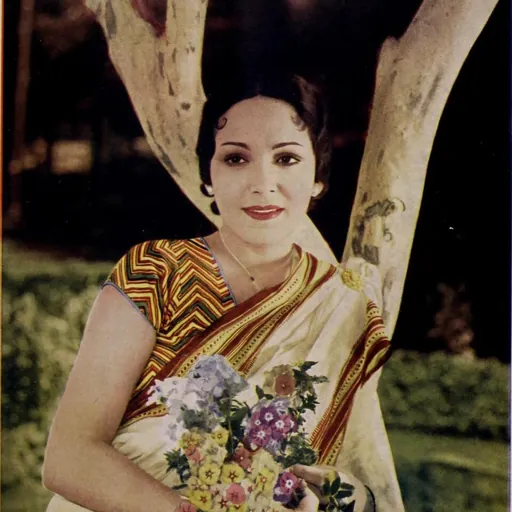
About Devika Rani
Lived 1908 – 1994 (aged 85). Devika Rani was an Indian film actor, actor and manufacturer.
Devika Rani Chaudhuri (; 30 March 1908 – 9 March 1994), known professionally as Devika Rani, was an Indian actress who worked in Hindi cinema. Widely acknowledged as the First Lady of Indian cinema, Devika Rani is regarded as one of the greatest actresses. She was the first recipient of the Dadasaheb Phalke Award and was awarded the Padma Shri. One of the highest-paid actress of the 1930s and early 1940s, she appeared in Box Office Indias "Top Actresses" list in 1940 and 1941.
Born into a wealthy, anglicized Indian family, Devika Rani was sent to boarding school in England at age nine and grew up in that country. In 1928, she met Himanshu Rai, an Indian film-producer, and married him the following year. She assisted in costume design and art direction for Rai's experimental silent film A Throw of Dice (1929). Both of them then went to Germany and received training in film-making at UFA Studios in Berlin. Rai then cast himself as hero and her as heroine in his next production, the bilingual film Karma, made simultaneously in English and Hindi. The film premiered in England in 1933, elicited interest there for a prolonged kissing scene featuring the real-life couple, and flopped badly in India. The couple returned to Bombay, India in 1934, where Himanshu Rai established a production studio, Bombay Talkies, in partnership with certain other people. They changed their studio name. The studio produced several successful films over the next 5–6 years in that time of period, and Devika Rani played the lead role in many of them. Her on-screen pairing with Ashok Kumar became popular in India. But before Ashok Kumar was selected by Bombay Talkies, Devika Rani was embroiled in a passionate affair with Najmul Hussain, the hero of Javani Ki Hawa. She ran away with him and after frantic efforts by Himanshu Rai to get her back she reluctantly came back.
Following Rai's death in 1940, Devika Rani took control of the studio and produced some more films in partnership with her late husband's associates, namely Sashadhar Mukherjee and Ashok Kumar. As she was to recollect in her old age, the films which she supervised tended to flop or be more average hits, while the films supervised by the partners tended to be hits. In 1945, she retired from films, married the Russian painter Svetoslav Roerich and moved to his estate on the outskirts of Bangalore, thereafter leading a very reclusive life for the next five decades. Her persona, no less than her film roles, were considered socially unconventional. Her awards include the Padma Shri (1958), Dadasaheb Phalke Award (1969) and the Soviet Land Nehru Award (1990).
Background and education Devika Rani was born as Devika Rani Choudhury on 30 March 1908 in Vizagapatam, Madras Presidency, British India (present-day Visakhapatnam, Andhra Pradesh, India), into an extremely affluent and educated Bengali family, the daughter of Col. Dr. Manmathnath Choudhury by his wife Leela Devi Choudhury.
Devika's father, Colonel Manmatha Nath Chaudhuri, scion of a large landowning zamindari family, was the first Indian Surgeon-General of Madras Presidency. Devika's paternal grandfather, Durgadas Choudhury, was the Zamindar (landlord) of Chatmohar Upazila of Pabna district of present-day Bangladesh. Her paternal grandmother, Sukumari Devi (wife of Durgadas), was a sister of the nobel laureate Rabindranath Tagore. Devika's father had five brothers, all of them distinguished in their own fields, mainly law, medicine and literature. They were Sir Ashutosh Chaudhuri, Chief Justice of Calcutta High Court during the British Raj; Jogesh Chandra Chaudhuri and Kumudnath Chaudhuri, both prominent Kolkata-based barristers; Pramathanath Choudhary, the famous Bengali writer, and Dr. Suhridnath Chaudhuri, a noted medical practitioner. The future Chief of Army Staff, Jayanto Nath Chaudhuri, was Devika's first cousin: their fathers were brothers to each other.
Devika's mother, Leela Devi Choudhury, also came from an equally educated family and was a niece of Rabindranath Tagore. Thus, Devika Rani was related through both her parents to the poet and Nobel Laureate Rabindranath Tagore. Her father, Manmathnath Choudhury, was the son of Sukumari Devi Choudhury, sister of Rabindranath Tagore. Devika's mother, Leela Devi Chaudhuri, was the daughter of Indumati Devi Chattopadhyay, whose mother Saudamini Devi Gangopadhyay was another sister of the Nobel laureate. Thus, Devika's father and maternal grandmother were first cousins to each other, being the children of two sisters of Rabindranath Tagore. Nor was this all: Two of Devika's uncles (Chief Justice Sir Ashutosh and Pramathanath) were married to their first cousins (mother's brother's daughters), the nieces of Rabindranath Tagore: Prativa Devi Choudhury, wife of Sir Ashutosh Choudhury, was the daughter of Hemendranath Tagore, and Indira Devi Choudhury, wife of Pramathanath Choudhury, was the daughter of Satyendranath Tagore. Devika thus had extremely strong family ties to Jarasanko, seat of the Tagore family in Kolkata and a major crucible of the Bengali Renaissance.
Devika Rani was sent to boarding school in England at the age of nine, and grew up there. After completing her schooling in the mid-1920s, she enrolled in the Royal Academy of Dramatic Art (RADA) and the Royal Academy of Music in London to study acting and music. She also enrolled for courses in architecture, textile and decor design, and even apprenticed under Elizabeth Arden. All of these courses, each of them a few months long, were completed by 1927, and Devika Rani then took up a job in textile design.
Career In 1928, Devika Rani first met her future husband, Himanshu Rai, an Indian barrister-turned-film maker, who was in London preparing to shoot his forthcoming film A Throw of Dice. She readily agreed, assisting him in areas such as costume designing and art direction. The two also traveled to Germany for the post-production work, where she had occasion to observe the film-making techniques of the German film industry, specifically of G. W. Pabst and Fritz Lang.
Acting debut alt=Devika Rani is seen sharing a full-mouth kiss with Himanshu Rai, with the former lying on the top.
Devika and Himanshu Rai returned to India, where Himanshu produced a film titled Karma (1933). The film was his first talkie, and like his previous films, it was a joint production between people from India, Germany and the United Kingdom. Rai, who played the lead role, decided to cast Devika Rani as the female lead, and this marked her acting debut. Karma is credited as having been the first English language talkie made by an Indian. It was one of the earliest Indian films to feature a kissing scene. The kissing scene, involving Himanshu Rai and Devika Rani, lasted for about four minutes, and eighty years later, this stands as the record for duration of a kissing scene in Indian cinema as of 2014. Devika Rani also sang a song in the film, a bi-lingual song in English and Hindi. This song is said to be Bollywood's first English song.
Made simultaneously in both English and Hindi, Karma premiered in London in May 1933. Alongside a special screening for the Royal family at Windsor, the film was well received throughout Europe. Following the release of the film, she was invited by the BBC to enact a role in their first ever television broadcast in Britain in 1933. She also inaugurated the company's first short wave radio transmission to India. In spite of its success in England, Karma did not interest Indian audiences and turned out be a failure in India when it was released in Hindi as Nagin Ki Ragini in early 1934. However, the film received good critical response and helped Devika Rani establish herself as a leading actress in Indian cinema. Indian independence activist and poet Sarojini Naidu called her a "lovely and gifted little lady". The studio's first film Jawani Ki Hawa (1935), a crime thriller, starring Devika Rani and Najm-ul-Hassan, was shot fully on a train.
Death She died of bronchitis on 9 March 1994, a year after Roerich died in Bangalore. At her funeral, Devika Rani was given full state honors. Following her death, the estate was on litigation for many years as the couple had no legal claimants; Devika Rani remained childless throughout her life. In August 2011, the Government of Karnataka acquired the estate after the Supreme Court of India passed the verdict in favour of them.
Legacy
Devika Rani was called the first lady of Indian cinema.
Rani's attire, both in films and sometimes in real life, were considered "risque" at that time. In his book Bless You Bollywood!: A tribute to Hindi Cinema on completing 100 years, Tilak Rishi mentions that Devika Rani was known as the "Dragon Lady" for her "smoking, drinking, cursing and hot temper". In 1958, the Government of India honoured Devika Rani with a Padma Shri, the country's fourth highest civilian honour. She became the first ever recipient of the Dadasaheb Phalke Award, the country's highest award for films, when it was instituted in 1969. In 1990, Soviet Russia honoured her with the "Soviet Land Nehru Award". A postage stamp commemorating her life was released by the Ministry of Communications and Information Technology in February 2011. In 2020, Kishwar Desai published a book titled The Longest Kiss: The Life and Times of Devika Rani, which sheds light on Devika Rani's professional accomplishments and her personal misfortunes.
Filmography
Karma (1933) Jawani Ki Hawa (1935) Mamta Aur Mian Biwi (1936) Jeevan Naiya (1936) Janmabhoomi (1936) Achhoot Kannya (1936) Savitri (1937) Jeevan Prabhat (1937) Izzat (1937) Prem Kahani (1937) Nirmala (1938) Vachan (1938) Durga (1939) Anjaan (1941) Hamari Baat (1943)
Family tree
Don’t just read it —
keep it.
Full-length biographies made to live with: read them, listen on the way to work, watch them tonight.
- E-book
- Audio
- Video
Instant download · yours to keep · every purchase keeps this site free
Important facts
Family & relationships
People in Devika Rani's life
Named in this biography and alive at the same time
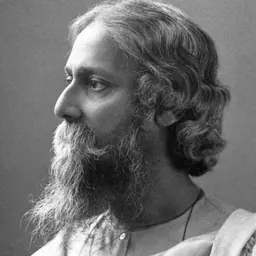

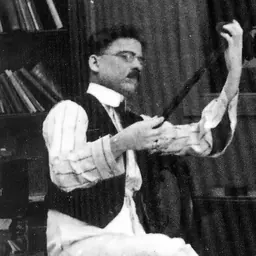
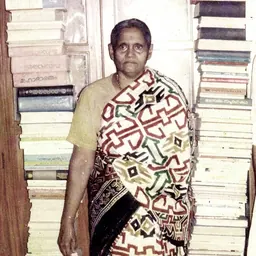

Related people
Same field, nearest in time


Contemporaries
People whose lives overlapped Devika Rani's

Frequently asked questions
Who was Devika Rani?
Indian actress (1908-1994)
When was Devika Rani born?
Devika Rani was born on 30 March 1908 in Visakhapatnam.
When did Devika Rani die?
Devika Rani died on 9 March 1994 in Bengaluru.
What was Devika Rani's occupation?
Devika Rani was a film actor, actor and manufacturer.
What nationality was Devika Rani?
Devika Rani was Indian.
Sources & further reading
Cite this page
APA: Biography.guide. (2026). Devika Rani. https://biography.guide/devika-rani/
MLA: "Devika Rani." Biography.guide, https://biography.guide/devika-rani/.
Chicago: "Devika Rani." Biography.guide. https://biography.guide/devika-rani/.
Data last updated: 2026-09-22 · Spot an error? Report a correction.
Portrait: Wikimedia Commons · author & licence
Page generated 2026-09-27 04:57 UTC