
About Detlev Bronk
Lived 1897 – 1975 (aged 78). Detlev Bronk was an American physician, biophysicist, educator and physiologist.
Detlev Wulf Bronk (August 13, 1897 – November 17, 1975) was a prominent American scientist, educator, and administrator. He is credited with establishing biophysics as a recognized discipline. Bronk served as president of Johns Hopkins University from 1949 to 1953 and as president of The Rockefeller University from 1953 to 1968. Bronk also held the presidency of the National Academy of Sciences between 1950 and 1962.
Biography Bronk was a descendant of Pieter Bronck, an early settler to New Netherland for whose relative Jonas Bronck the New York City borough The Bronx is named. In 1920 Bronk graduated with a B.S. in electrical engineering from Swarthmore College, where he was a member of Phi Kappa Psi fraternity. In September 1921 Bronk married Helen Alexander Ramsey, who had been a fellow student at Swarthmore. Turning to physics, he received an M.S. in 1922 from the University of Michigan. By 1924 he was intent on applying physics and mathematics to physiology, receiving a Ph.D. in 1926 from the University of Michigan.
Career When Bronk was offered the presidency of Johns Hopkins University in 1948, he accepted the position on the condition that Hopkins strengthen its program in biophysics. Hopkins did just that, building Jenkins Hall in 1950 specifically to house Biophysics and adding faculty and research facilities. Bronk believed the nation's universities had a responsibility to prepare students to improve the world, regardless of their academic curriculum. He also recognized that, during World War II, the Hopkins faculty had spent most of their time performing defense-related research, and now it was time to rejuvenate the idea of research for the sake of learning and discovery. He frequently spoke on "breadth in education," "fostering curiosity," and "a university is a community of scholars."
In addition to guiding Hopkins through its post-war "demobilization," Bronk believed strongly in maintaining his own presence in the scientific community. He presided over the National Academy of Sciences and served on boards for the American Association for the Advancement of Science, the Science Advisory Committee of the Office of Defense Mobilization, and the National Advisory Committee for Aeronautics (predecessor to NASA).
Bronk was elected to the American Philosophical Society in 1934 and the American Academy of Arts and Sciences in 1949.
From 1953 to 1968 Bronk was president of The Rockefeller University. (The Rockefeller Institute for Medical Research was renamed The Rockefeller University in 1965). He firmly espoused academic freedom and resisted attempts by Wisconsin Senator Joseph McCarthy to have Johns Hopkins University dismiss Professor Owen Lattimore. The same year he was awarded the Public Welfare Medal from the National Academy of Sciences. He was credited with formulating the modern theory of the science of biophysics. He served on the board of trustees for Science Service, now known as Society for Science & the Public, from 1965 to 1967. Bronk is quoted as saying:
Bronk crater on the Moon was named after him in 1979.
Don’t just read it —
keep it.
Full-length biographies made to live with: read them, listen on the way to work, watch them tonight.
- E-book
- Audio
- Video
Instant download · yours to keep · every purchase keeps this site free
Important facts
People in Detlev Bronk's life
Named in this biography and alive at the same time
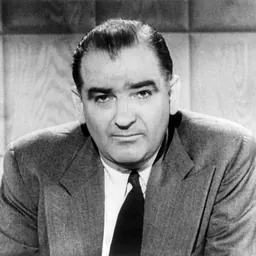



Related people
Same field, nearest in time

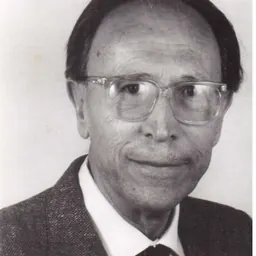
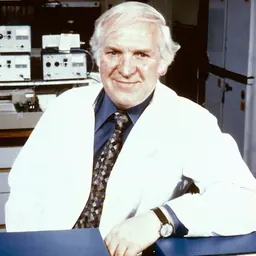
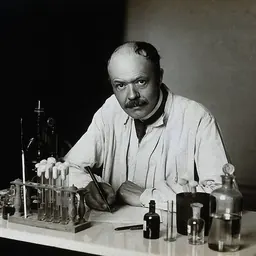
Contemporaries
People whose lives overlapped Detlev Bronk's

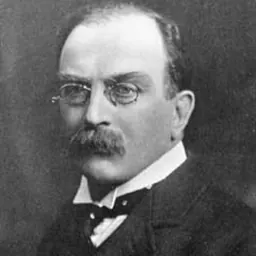


Frequently asked questions
Who was Detlev Bronk?
American biophysicist (1897–1975)
When was Detlev Bronk born?
Detlev Bronk was born on 13 August 1897 in New York City.
When did Detlev Bronk die?
Detlev Bronk died on 17 November 1975 in New York City.
What was Detlev Bronk's occupation?
Detlev Bronk was a physician, biophysicist, educator and physiologist.
What nationality was Detlev Bronk?
Detlev Bronk was American.
Sources & further reading
Cite this page
APA: Biography.guide. (2026). Detlev Bronk. https://biography.guide/detlev-bronk/
MLA: "Detlev Bronk." Biography.guide, https://biography.guide/detlev-bronk/.
Chicago: "Detlev Bronk." Biography.guide. https://biography.guide/detlev-bronk/.
Data last updated: 2026-09-20 · Spot an error? Report a correction.
Page generated 2026-09-27 05:33 UTC