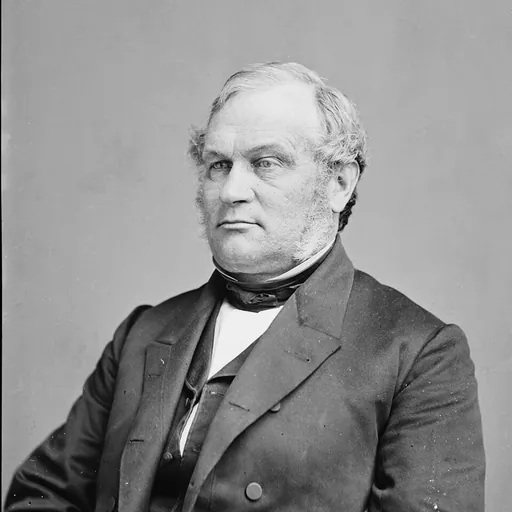
About Alexander Ramsey
Lived 1815 – 1903 (aged 87). Alexander Ramsey was an American politician.
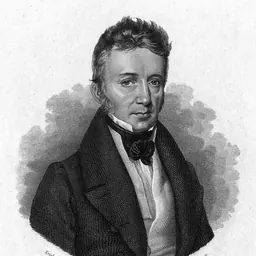
Alexander Ramsey (September 8, 1815 April 22, 1903) was an American politician, who became the first Minnesota Territorial governor and later became a U.S. Senator. He served as a Whig and Republican over a variety of offices between the 1840s and the 1880s.
Early years and family
Born in Hummelstown, Pennsylvania, on September 8, 1815. His father was a blacksmith who committed suicide, at age 42, when he went bankrupt in 1826, after signing for a note of a friend. His brother Justus Cornelius Ramsey served in the Minnesota Territorial Legislature.
Ramsey first studied carpentry at Lafayette College but left during his third year. He read law with Hamilton Alricks, and attended Judge John Reed's law school in Carlisle (now Penn State-Dickinson Law) in 1839. He was admitted to the Pennsylvania bar in 1839. He would lose the election to Henry Hastings Sibley by only 240 votes.
Governor of Minnesota
Ramsey became the second governor of Minnesota after statehood in 1860, after defeating George Loomis Becker in the 1859 Governor's election. He served from January 2, 1860, to July 10, 1863. Ramsey is credited with being the first Union governor to commit troops during the American Civil War. He happened to be in Washington, D.C., when fighting broke out. When he heard about the firing on Fort Sumter he went straight to the White House and offered Minnesota's services to Abraham Lincoln.
Ramsey called for the killing or removal of the Mdewakanton and Wahpekute Dakota from the state of Minnesota during the Dakota War of 1862. After pressing the Dakota to sell their land, he and other officials stole from the Dakota's annuities. In response, some of the Dakota attacked American settlements, resulting in the death of at least 800 civilian men, women and children, and the displacement of thousands more. When the Fond du Lac band of Chippewa learned of the uprising they sent a letter to Ramsey to forward to President Lincoln offering to fight the Sioux dated September 6, 1862.
On September 9, Ramsey addressed the state legislature proclaiming, "The Sioux Indians of Minnesota must be exterminated or driven forever beyond the borders of the State", which he justified by citing various outrages against the settlers and violations of their treaties. In the north the Chippewa/Ojibwa were having problems with their Indian agent stealing from them. Gov. Ramsey lead a legislative commission to the Crow Wing agency to address their issues. There 10 chiefs of the Leech Lake and Mississippi bands laid out their concerns and offered to fight the Sioux for the government. The commission liked their offer and Gov. Ramsey invited the leaders of 22 bands of Ojibwa to St. Paul. They came on September 23 waving the America flag thinking their offers had been accepted. Ramsey had to instruct them that Major General Pope would not accept their service on the grounds that it would not be good public policy. However, they would be contacted if they were needed. In 1863, in response to continued raids on settlers, he authorized a bounty for the scalps of Dakota males.
In January of 1863, Ramsey was elected as senator. He remained as governor until it was announced that Republican Stephen Miller had won the 1863 Minnesota gubernatorial election. He resigned the following day to leave for the senate, leaving Lieutenant Governor Henry Adoniram Swift as Governor until Miller's inauguration.
Senator He resigned the governorship to become a U.S. Senator, having been elected to that post in 1863 as a Republican. He was re-elected in 1869 and held the office until March 3, 1875, serving in the 38th, 39th, 40th, 41st, 42nd, and 43rd congresses. He supported the Radical Republicans, who called for vigorous prosecution of the Civil War, and a military reconstruction of the South.
On April 14, 1865, President Abraham Lincoln was assassinated and he died the following morning. There were very few senior officials in D.C. that morning. Ramsey was and took part in initiating the transfer of the Presidency to Vice President Johnson. He voted for the Impeachment of Andrew Johnson. As War Secretary, he investigated the assault of a black West Point cadet, Johnson Whittaker. He worked to improved the policies of West Point. He encouraged the army to track pursue the Apache under Chief Victorio. He was one of the commissioners to govern Utah from 1882 to 1886 under the Edmunds Act. That same year, he was elected as a 3rd Class (honorary) Companion of the Military Order of the Loyal Legion of the United States in recognition of his support for the Union during the American Civil War.
He died in Saint Paul in 1903 at 87.
Legacy
The Minnesota Historical Society preserves his home, the Alexander Ramsey House as a museum. It was added to the National Register of Historic Places in 1969. Counties, towns, parks, and schools are named after Ramsey, including: Ramsey County, Minnesota, Ramsey County, North Dakota The city of Ramsey, Minnesota The city of Ramsey, Illinois, Alexander Ramsey Park in Redwood Falls, Minnesota, formerly a state park, it is the largest municipal park in Minnesota. Ramsey Park in Stillwater, Minnesota Hidden River Middle School in Saint Paul, Minnesota was formerly named after him. During the 2021–2022 school year, the school was renamed after approval from the St Paul School Board; staff and students had previously called for a name change in the spring of 2021. Alexander Ramsey Elementary School in Montevideo, Minnesota. Justice Page Middle School in Minneapolis, Minnesota was formerly named after him when it was first founded in 1932 (Ramsey International Fine Arts Center and formerly Alexander Ramsey Junior High School). In the 2016–17 school year, a student-initiated effort to rename Ramsey Middle School resulted in renaming the school after Alan Page, the first African-American Minnesota Supreme Court justice.
He was the namesake of the Liberty Ship SS Alexander Ramsey launched in 1942.
Don’t just read it —
keep it.
Full-length biographies made to live with: read them, listen on the way to work, watch them tonight.
- E-book
- Audio
- Video
Instant download · yours to keep · every purchase keeps this site free
Important facts
People in Alexander Ramsey's life
Named in this biography and alive at the same time
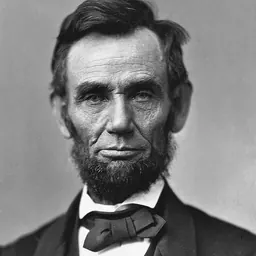






Related people
Same field, nearest in time




Contemporaries
People whose lives overlapped Alexander Ramsey's



Frequently asked questions
Who was Alexander Ramsey?
American politician (1815-1903)
When was Alexander Ramsey born?
Alexander Ramsey was born on 8 September 1815 in Harrisburg.
When did Alexander Ramsey die?
Alexander Ramsey died on 22 April 1903 in Saint Paul.
What was Alexander Ramsey's occupation?
Alexander Ramsey was a politician.
What nationality was Alexander Ramsey?
Alexander Ramsey was American.
Sources & further reading
Cite this page
APA: Biography.guide. (2026). Alexander Ramsey. https://biography.guide/alexander-ramsey/
MLA: "Alexander Ramsey." Biography.guide, https://biography.guide/alexander-ramsey/.
Chicago: "Alexander Ramsey." Biography.guide. https://biography.guide/alexander-ramsey/.
Data last updated: 2026-09-22 · Spot an error? Report a correction.
Portrait: Wikimedia Commons · author & licence
Page generated 2026-09-27 05:03 UTC