
About Derek Richter
Lived 1907 – 1995 (aged 88). Derek Richter was a British neuroscientist and psychiatrist.
Derek Richter (14 January 1907 – 15 December 1995), English neuroscientist, was one of the founding fathers of the science of brain chemistry. Identifying monoamine oxidase and demonstrating its function in the brain early in his career, he became a prime mover in his field. In 1968 he was involved in the foundation of the British Brain Research Organization (BRA). Before this he helped to establish the Mental Health Research Fund, later renamed The Mental Health Foundation,. He also established the Journal of Neurochemistry (1956), of which he was one of the chief editors from 1956 to 1969. He was involved in the foundation of the International Brain Research Organization (IBRO) (1960), of which he became secretary-general, and the International Society for Neurochemistry (ISN) (1967). After leading a research unit at Whitchurch Psychiatric Hospital (1947–1960), he became director of the Medical Research Council Neuropsychiatric Research Unit in Carshalton (1960–1971). Throughout his life he promoted international collaboration in research.
Biography
Richter was born in Bath, Somerset, the third child of Charles A Richter, co-founder of the family firm, Bath Cabinet Makers. From Oundle School he won a scholarship to Magdalen College, Oxford, where he gained a first-class honour's degree in chemistry. At the Ludwig-Maximilians-Universität München, he worked under Nobel Prize-winning Heinrich Wieland. In 1931, he gained a PhD (magna cum laude) for the autoxidation of aldehydes.
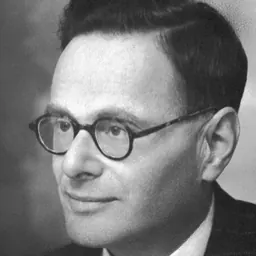
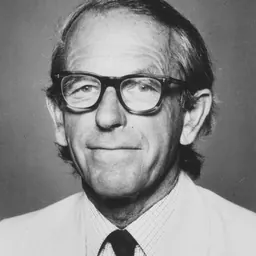
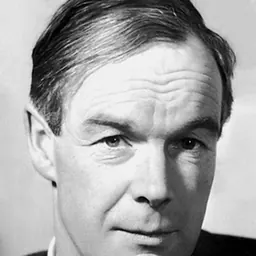
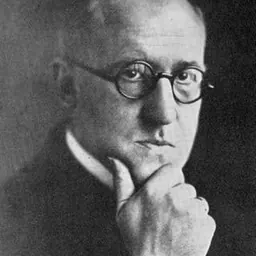
He then moved to Sir Frederick Gowland Hopkins Biochemical Laboratory at Cambridge alongside Nobel laureates Ernst Chain, Richard Synge, Frederick Sanger, Hans Krebs and Archer Martin. This was a defining period, working with Hermann Blaschko on monoamines that have a great physiological interest.
A year before the outbreak of World War II, he took a post at the Maudsley Hospital to work on amphetamines. Married to Beryl Ailsa Griffiths, with whom he had three children, he set up a wartime research laboratory for treating shell-shock in the Mill Hill Emergency Hospital. Despite taxing commitments, he simultaneously qualified in medicine at St Bartholomew's Hospital. Between April 1945 and 1951 he made weekly contributions at a time when AID was strictly anonymous and very controversial. It was a precursor to modern developments in reproductive technology such as IVF, that are leading to changes in the structure of families.
He continued to write and edit enlightened books, gardened passionately and joined his second wife, Molly Bullock, in establishing South Lodge, a refuge in Epsom for discharged mental patients.
Don’t just read it —
keep it.
Full-length biographies made to live with: read them, listen on the way to work, watch them tonight.
- E-book
- Audio
- Video
Instant download · yours to keep · every purchase keeps this site free
Important facts
People in Derek Richter's life
Named in this biography and alive at the same time



Related people
Same field, nearest in time


Contemporaries
People whose lives overlapped Derek Richter's

Frequently asked questions
Who was Derek Richter?
neuroscientist from England
When was Derek Richter born?
Derek Richter was born on 14 January 1907 in Bath.
When did Derek Richter die?
Derek Richter died on 15 December 1995.
What was Derek Richter's occupation?
Derek Richter was a neuroscientist and psychiatrist.
What nationality was Derek Richter?
Derek Richter was British.
Sources & further reading
Cite this page
APA: Biography.guide. (2026). Derek Richter. https://biography.guide/derek-richter/
MLA: "Derek Richter." Biography.guide, https://biography.guide/derek-richter/.
Chicago: "Derek Richter." Biography.guide. https://biography.guide/derek-richter/.
Data last updated: 2026-09-22 · Spot an error? Report a correction.
Page generated 2026-09-27 05:33 UTC