
About Dennis MacDonald
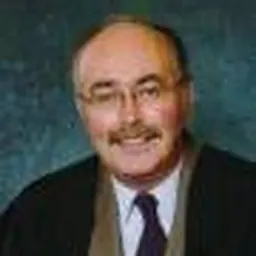
Born 1946. Dennis MacDonald is an American theologian, university teacher and new Testament scholar.
Dennis Ronald MacDonald (born 1946) is the John Wesley Professor of New Testament and Christian Origins at the Claremont School of Theology in California. MacDonald proposes a theory wherein the earliest books of the New Testament, including the Gospel of Mark and the Acts of the Apostles, were responses to the Homeric epics. The methodology he pioneered is called Mimesis Criticism. If his theories are correct then "nearly everything written on [the] early Christian narrative is flawed." According to him, modern biblical scholarship has failed to recognize the impact of Homeric Poetry. In it he argued that one could detect trends that showed parallels between the Homeric epic and the Acts of Andrew. He argued that the Acts of Andrew is better understood in light of the Odyssey. That the order of events in the Acts follows those found in the Acts of Andrew, that certain events in the Acts are better understood when understood in context of the Homeric epics, and that the Homeric texts commonly were available during the first century AD. In subsequent works, MacDonald expanded his hypothesis to include the Acts of the Apostles and the Gospel of Mark as being Christian variations of the Homeric epics.
In Christianizing Homer, MacDonald lays down his principles of literary mimesis, his methodology for comparing ancient texts. There are six aspects he examines 1) accessibility, 2) analogy, 3) density, 4) order, 5) distinctive traits, and 6) interpretability.
Homeric epics and the Gospel of Mark MacDonald's most famous work, however, is The Homeric Epics and the Gospel of Mark. According to MacDonald, the Gospel of Mark is "a deliberate and conscious anti-epic, an inversion of the Greek 'Bible' of Homer's Iliad and Odyssey, which in a sense updates and Judaizes the outdated heroic values presented by Homer, in the figure of a new hero."
The book begins by examining the role that the Homeric epics played in antiquity—namely that anybody who was considered educated at the time learned to read and write, and they did so by studying the Odyssey and Iliad. Students were expected, not only to understand the epics, but be able to rewrite the stories in their own words. Rewriting the Homeric epics was commonplace and accepted in biblical times. Karl Olav Sandnes notes the vague nature of alleged parallels as the "Achilles' heel" of the "slippery" project. He has also questioned the nature of the alleged paralleled motifs, seeing MacDonald's interpretations of common motives. He states, "His [MacDonald's] reading is fascinating and contributes to a reader-orientated exegesis. But he fails to demonstrate authorial intention while he, in fact, neglects the OT intertextuality that is broadcast in this literature."
Daniel Gullotta from Stanford similarly writes "MacDonald's list of unconvincing comparisons goes on and has been noted by numerous critics. Despite MacDonald's worthy call for scholars to reexamine the educational practices of the ancient world, all of the evidence renders his position of Homeric influential dominance untenable."
Adam Winn, though adopting MacDonald's methods of mimetic criticism, concluded after a detailed analysis of MacDonald's theses and comparisons between Homer and Mark that "MacDonald is unable to provide a single example of clear and obvious Markan interpretation of Homer... because MacDonald's evidence is at best suggestive, it will ultimately convince few."
David Litwa argues that problematic parts of MacDonald's thesis include that he construes both large ranges of similarity in addition to large range of difference as evidence for parallel, that he alters his parallels in order to make them more convincing like suggesting that Jesus walking on water is comparable to Athena and Hermes flying above water, that he has an inconsistent application of his own six criteria (where he often uses only one or two to establish parallel and thus relies largely on loose structural standards of similarity), and that he often has completely unconvincing parallels such as his comparison of Odysseus on a floating island to Jesus sitting in a boat that floats on water.
Selected works Book
Edited by
Chapters
Don’t just read it —
keep it.
Full-length biographies made to live with: read them, listen on the way to work, watch them tonight.
- E-book
- Audio
- Video
Instant download · yours to keep · every purchase keeps this site free
Important facts
People in Dennis MacDonald's life
Named in this biography and alive at the same time



Related people
Same field, nearest in time


Contemporaries
People whose lives overlapped Dennis MacDonald's

Frequently asked questions
Who is Dennis MacDonald?
American theologian
When was Dennis MacDonald born?
Dennis MacDonald was born in 1946 in United States.
What is Dennis MacDonald's occupation?
Dennis MacDonald is a theologian, university teacher and new Testament scholar.
What nationality is Dennis MacDonald?
Dennis MacDonald is American.
Sources & further reading
Cite this page
APA: Biography.guide. (2026). Dennis MacDonald. https://biography.guide/dennis-macdonald/
MLA: "Dennis MacDonald." Biography.guide, https://biography.guide/dennis-macdonald/.
Chicago: "Dennis MacDonald." Biography.guide. https://biography.guide/dennis-macdonald/.
Data last updated: 2026-09-20 · Spot an error? Report a correction.
Page generated 2026-09-27 05:28 UTC