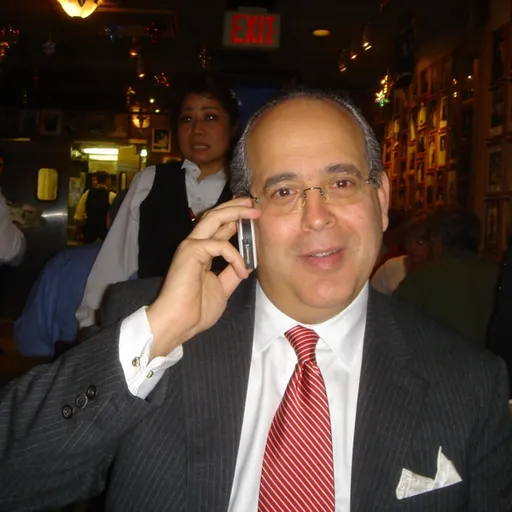
About Dennis Levine
Born 1952. Dennis Levine is an American businessperson and investment banking.
Dennis B. Levine (born August 5, 1952) is a corporate consultant and former investment banker. He was a managing director at the investment banking firm Drexel Burnham Lambert in the 1980s. Levine was one of the first of several high-profile insider trading defendants in the Wall Street insider trading investigations of the mid-1980s. As a result of the investigation by and subsequent proceedings, Levine pleaded guilty.
Early life Levine grew up in a middle-class Jewish family in Bayside in eastern Queens. He graduated from CUNY's Baruch College, obtaining an MBA from the same college in 1976.
Career After being hired away from his career at Citibank in 1978, he joined Smith Barney's corporate finance department and worked in its Paris office specializing in mergers and acquisitions. He moved to Lehman Brothers in 1981. Shortly after Lehman was bought by American Express in 1985, Levine moved to Drexel as a managing director.
Levine spent most of his career as a specialist in mergers and acquisitions. It was very common to see him on a telephone with an extra-long cord while hunched over a Quotron, checking out signs of possible deals. He participated in many transactions throughout his career, three of which were among the more notable hostile takeovers of the 1980s — James Goldsmith's takeover of Crown Zellerbach, Coastal Corporation's takeover of American Natural Resources, and Ron Perelman's takeover of Revlon.
In 1991, CBS 60 Minutes reported that Levine was involved in advanced fee scams. This was further investigated by The New York Times''' and Los Angeles Times''. Levine was working with people that he had met in prison and alleged members of the New York Mafia to con real estate developers out of their money by providing "introductions" to phony overseas banks and other con men. Information about these further crimes and his original conviction has resulted in various Wikipedia wars in the past, as anonymous edits routinely try to scrub Levine's Wikipedia page, only to have the more accurate information reinserted and the page locked for vandalism.
Insider trading Over the years, Levine built a network of professionals at various Wall Street firms. Participants exchanged and traded on information that they obtained through their work. Levine placed his trades through an account maintained under an assumed name at Bahamian subsidiaries of Swiss banks, using pay phones to prevent his calls from being traced. After briefly doing business with Pictet & Cie, he moved his business to Bank Leu in May 1980, eventually earning $10.6 million in profits.
Subsequently, Levine directly implicated powerful arbitrageur Ivan Boesky, and information from the Boesky case also implicated another prominent player in the mergers and acquisitions circle, Martin Siegel. Both Boesky and Siegel subsequently pleaded guilty. Due in part to this co-operation, federal judge Gerald Goettel imposed a lenient sentence of two years in prison and a $362,000 fine. However, since Levine had been stripped of nearly all of his liquid assets by the SEC and IRS, Goettel did not "commit" the fines, meaning that he would not be held in contempt of court if he left prison without paying them. At sentencing, Goettel said that Levine had helped expose "a nest of vipers on Wall Street", of which Levine himself had been a part.
Levine said that after his arrest, he seriously considered fighting the charges. He claimed that the government circumvented Bahamian law in order to obtain most of the evidence against him (even though he was guilty), including records of his phone calls. However, he said, the possibility of additional charges in a superseding indictment—possibly including the powerful Racketeer Influenced and Corrupt Organizations Act — and concern about the effects on his family led him to conclude this was a battle he could not win. Levine recalled that his lawyer, Arthur Liman, told him that if he went to trial, he faced up to 20 years in prison if found guilty and the loss of everything he owned. .
Don’t just read it —
keep it.
Full-length biographies made to live with: read them, listen on the way to work, watch them tonight.
- E-book
- Audio
- Video
Instant download · yours to keep · every purchase keeps this site free
Important facts
People in Dennis Levine's life
Named in this biography and alive at the same time
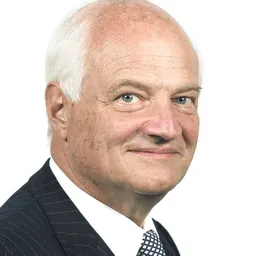

Related people
Same field, nearest in time






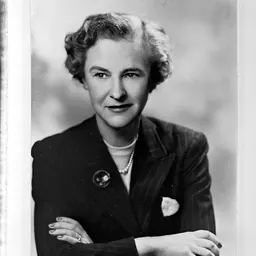
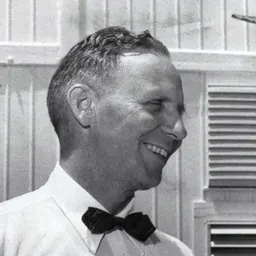
Contemporaries
People whose lives overlapped Dennis Levine's

Frequently asked questions
Who is Dennis Levine?
American investor, white-collar criminal
When was Dennis Levine born?
Dennis Levine was born on 5 August 1952 in Bayside.
What is Dennis Levine's occupation?
Dennis Levine is a businessperson and investment banking.
What nationality is Dennis Levine?
Dennis Levine is American.
Sources & further reading
Cite this page
APA: Biography.guide. (2026). Dennis Levine. https://biography.guide/dennis-levine/
MLA: "Dennis Levine." Biography.guide, https://biography.guide/dennis-levine/.
Chicago: "Dennis Levine." Biography.guide. https://biography.guide/dennis-levine/.
Data last updated: 2026-09-20 · Spot an error? Report a correction.
Portrait: Wikimedia Commons · author & licence
Page generated 2026-09-27 04:58 UTC