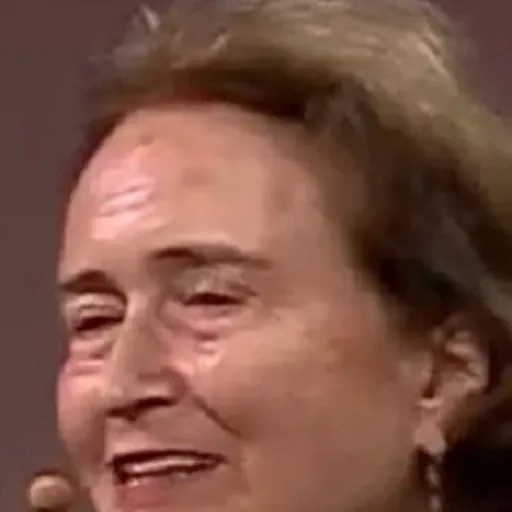
About Denise Kandel
Born 1933. Denise Kandel is an American and French epidemiologist and researcher, known for Longitudinal study.
Denise Kandel (; née Bystryn; born February 27, 1933) is an American medical sociologist and epidemiologist, Professor of Sociomedical Sciences and Psychiatry at Columbia University and Head of the Department of Epidemiology of Substance Abuse at the New York State Psychiatric Institute. She is known for her epidemiological longitudinal studies on the sequence of first-time use of various legal and illegal drugs, carried out beginning in the 1970s and continuing until at least 2016.
Life
Background and family Bystryn was born to Jewish parents who emigrated in the 1920s, before knowing each other, from eastern Poland to France to attend university. Her father Iser Bystryn (1901–1954) studied in Caen and became chief engineer in a truck factory near Paris. Her mother Sara Wolsky Bystryn (1906–2003) had to abandon her plans to study in Paris for financial reasons and learned making hats and corsets. Kandel was born two years after the marriage (1930) of her parents. She had a younger brother, Jean-Claude Bystryn (1938–2010), who became a known American dermatologist and scientist at the NYU Langone Medical Center. Both parents were fluent in French, but spoke Yiddish at home.
In France up to 1949 The family lived in Colombes near Paris, and Kandel attended a primary school for girls (Ecole des Filles). The children grew up secularly, the family never went to synagogue, and had presents at Christmas. In 1941, when Kandel was eight, and one year after the German invasion of France during the Second World War, Denise’s father was arrested as a "foreign Jew" and interned 100 km south of Paris in the Nazi Beaune-la-Rolande internment camp. After some time he succeeded in fleeing to Cahors in south-western France, where he could also meet his family again. While the parents – separated from each other – had to change hiding places, the children found more stable shelter. Kandel was able to stay as a pupil in the convent Sainte-Jeanne d'Arc of Cahors until spring 1944, when she had to flee even from there and then lived with a family near Toulouse. In 1949 her family emigrated to the US.
In the USA since 1949 Kandel attended the Lycée Français de New York, where she received the Baccalauréat after one year. At the age of 17 she was accepted by Bryn Mawr College near Philadelphia, where she graduated within two years for financial reasons. She then returned to New York to become a PhD student at Columbia University. Her tutor was Robert K. Merton, and she wrote a thesis in medical sociology about how medical students decide on their professional specialization.
During this time she met neuropsychiatrist Eric Kandel, future recipient of the 2000 Nobel Prize in Physiology or Medicine. They married in 1956 and had two children.
Scientific work When in the 1960s research on drug misuse gained in importance, Kandel applied to join a research team that intended to investigate drug use among high school students. She assumed she could contribute with her research experience concerning the influence of parents and peer groups on adolescents. However, she was rejected, because she wanted to interview both parents and students, and the research team feared that this might undermine students' cooperation. Kandel developed her own research project, which ultimately led to an influential longitudinal study of 1,325 persons. Later, she considered this work as a turning point in her career. Contrary to many others, Kandel always emphasized the difference between sequence and causation in the first-time use of different substances. These may – but need not – be coupled, a question which is investigated in further research, particularly in physiological experiments.
Awards 1985 – National Institutes of Health (NIH): National Institute on Drug Abuse (NIDA): Senior Scientist Research Award (K05) 2002 – R. Brinkley Smithers Distinguished Scientist Award 2003 – Prevention Science Award 2019 – Rema Lapouse Award for Achievement in Epidemiology, Mental Health and Applied Public Health Statistics
Selected publications
Original research reports
Books Denise B Kandel: The career decisions of medical students: a study in occupational recruitment and occupational choice. Dissertation, Columbia University, New York 1960. Denise B Kandel, Richard Hays Williams: Psychiatric rehabilitation: some problems of research. New York, Atherton 1964. Denise Bystryn Kandel, Gerald S. Lesser: Youth in two worlds. San Francisco, Jossey-Bass 1972. Denise Bystryn Kandel: Longitudinal Research on Drug Use: Empirical Findings and Methodological Issues. Halsted Press 1978. Denise B. Kandel: Parental Influences on Adolescent Marijuana Use And The Baby Boom Generation: Findings from the 1979–1996 National Household Surveys on Drug Abuse. U.S. Government Printing Office 2001. Denise B. Kandel (Ed.): Stages and Pathways of Drug Involvement: Examining the Gateway Hypothesis. Cambridge University Press 2002.
Don’t just read it —
keep it.
Full-length biographies made to live with: read them, listen on the way to work, watch them tonight.
- E-book
- Audio
- Video
Instant download · yours to keep · every purchase keeps this site free
Important facts
Family & relationships
People in Denise Kandel's life
Named in this biography and alive at the same time

Related people
Same field, nearest in time


Contemporaries
People whose lives overlapped Denise Kandel's



Frequently asked questions
Who is Denise Kandel?
American medical sociologist and epidemiologist
When was Denise Kandel born?
Denise Kandel was born on 27 February 1933 in Paris.
What is Denise Kandel's occupation?
Denise Kandel is an epidemiologist and researcher.
What is Denise Kandel known for?
Denise Kandel is known for Longitudinal study.
What nationality is Denise Kandel?
Denise Kandel is American and French.
Sources & further reading
Cite this page
APA: Biography.guide. (2026). Denise Kandel. https://biography.guide/denise-kandel/
MLA: "Denise Kandel." Biography.guide, https://biography.guide/denise-kandel/.
Chicago: "Denise Kandel." Biography.guide. https://biography.guide/denise-kandel/.
Data last updated: 2026-09-23 · Spot an error? Report a correction.
Portrait: Wikimedia Commons · author & licence
Page generated 2026-09-27 05:05 UTC