
About Denise C Park
Denise C Park was a psychologist, gerontologist and university teacher.
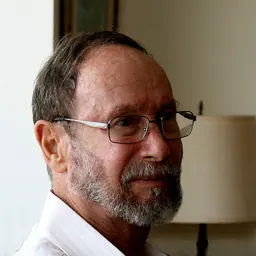
Denise C. Park (née Cortis; October 2, 1951 - February 1, 2026) was an American neuroscientist, the head of the Aging Mind Lab, the Principal Investigator of the Dallas Lifespan Brain Study (DLBS), and a Distinguished University Chair of the School of Behavioral and Brain Sciences at The University of Texas at Dallas. Park's research focused on how the brain changes and adapts with age. She investigated the neuroscience of memory and aging, and the impact of stimulation on maintaining brain health. Her research also sought to identify a "neural signature" in middle-aged adults which would indicate who would be at increased risk of less adaptive cognitive aging.
Early life and education
She was born on October 2, 1951 in Dearborn, Michigan and grew up in the Detroit suburb of Allen Park, Michigan where she lived with her parents and five siblings. She attended local parochial schools and graduated in 1969 from St. Frances Cabrini High School. Her family's financial means were modest.
Park initially became interested in the neuroscience of memory in her first semester at Albion College where she graduated with a bachelor's degree in psychology summa cum laude and Phi Beta Kappa.
Career Park began as an assistant professor at the University of North Carolina at Charlotte, where she worked for eight years, before moving to the University of Georgia,
In 1995, she moved to the University of Michigan at Ann Arbor, held a faculty position as Professor of Psychology and began to transition her research program to fMRI studies of the function of the aging brain and cognition with an emphasis on visual memory. Her research was supported during this period of time with over $2 million in NIH funding. Park then moved to the University of Illinois at Urbana-Champaign from 2002 to 2006, continuing her focus on visual memory and aging until 2006, when she began to focus on dedifferentiation and memory in the aging brain. She retired from the Aging Mind Lab and The University of Texas at Dallas on May 31, 2025.
Park's research focused on how the brain changes and adapts with age. Her research investigated the neuroscience of memory and aging, and the impact of stimulation on maintaining brain health. Park also sought to identify a "neural signature" in middle-aged adults which would indicate who would be at increased risk of less adaptive cognitive aging. She studied the impact of culture on cognition and investigated the neural mechanisms that underlie effects of culture. Park's research also explored the influence of everyday life factors on cognition e.g., how the demands of daily routines affect cognitive performance, examined challenges for aging adults such as remembering (or forgetting) to take medications, and explored the consequences of disorders like rheumatoid arthritis and fibromyalgia on memory.
Research Initiatives Aging Mind Lab The Aging Mind Lab is researching how aging affects brain structure and function, the earliest possible detection of Alzheimer's disease, and how to intervene to slow the brain's decline.
The Center for Vital Longevity Founded by Park in 2010, the Center researches changes in the brain that occur with aging, means of predicting who is at risk of cognitive decline and interventions that could slow such decline. It includes eight research labs and collaborates with many other labs and research institutions throughout the world.
Dallas Lifespan Brain Study DLBS seeks to detect a "neural signature" in middle-aged adults that will be predictive of healthy or unhealthy brain aging and to identify who is at risk of Alzheimer's Disease long before symptoms manifest themselves.
Scaffolding theory of aging and cognition In collaboration with Patti Reuter-Lorenz, Park proposed a conceptual framework: The Scaffolding Theory of Aging and Cognition, a theory which continues to evolve based on new research on neurocognitive aging. Park's work indicated that new neural circuits are created in the brains of older adults to compensate for impairments associated with aging. One goal of the research was to identify these compensatory changes in order to predict the risk of cognitive decline long before it occurs.
Dallas Aging and Cognition Conference Park established the Dallas Aging and Cognition Conference (DACC) in 2010, a biennial international conference held in Dallas at which researchers present findings on aging and cognition.
Personal life Park was married to William Brian Park for 18 years and they had two children, Rob and Colleen. She had three grandchildren who affectionately referred to her as "Didi." Following her retirement, she enjoyed spending time with her grandchildren and attending their concerts and sporting events despite her health issues. Hobbies included engaging in intellectual discussions on a range of topics and reading spy and mystery novels. Park died on February 1, 2026. Fellow, American Psychology Association William Owens Award given to the outstanding social and behavioral researcher at the University of Georgia, 1995 Distinguished Alumni Award, 1997, Albion College Faculty Research Award, 1998, University of Michigan Distinguished Contribution Award to Psychology of Aging, Division 20, Adult Development and Aging, August 2002, American Psychological Association NIH MERIT AWARD Neuroimaging Dedifferentiation in the aging mind, 2006 2015, NIH Best Article Award, 2008, Journal of Consumer Research, Association for Consumer Research Distinguished Mentor Award in Psychology of Aging, Division 20, Adult Development and Aging, 2015, American Psychological Association Fellow for the American Association for the Advancement of Science Federal Research Innovation and ExpeNditures Dynamo (FRIEND) of the Office of Research, March 2020, The University of Texas at Dallas Delivered 2020 Annual Polykarp Kusch Lectures, highest faculty honor at UT Dallas, April 2020, University of Texas at Dallas Named in 2022 and 2023 as a Top 1000 Female Scientist in the World by Researchgate.
Selected works
Smith, E. T., Hennessee, J. P., Wig, G. S., Frank, S., Gonzalez, H., Bacci, J., Chan, M., Carreno, C. A., Kennedy, K. M., Rodrigue, K. M., Hertzog, C., & Park, D. C. (2023). Longitudinal changes in gray matter correspond to changes in cognition across the lifespan: implications for theories of cognition. Neurobiology of aging, 129, 1–14. Advance online publication. https://doi.org/10.1016/j.neurobiolaging.2023.04.014
Smith, E. T., Skolasinska, P., Qin, S., Sun, A., Fishwick, P., Park, D. C., & Basak, C. (2022). Cognitive and structural predictors of novel task learning, and contextual predictors of time series of daily task performance during the learning period. Frontiers in aging neuroscience, 14, 936528. https://doi.org/10.3389/fnagi.2022.936528
Park, Denise & Smith, Evan. (2022). Facilitation of Cognition in Older Adults: Traditional and Non-Traditional Approaches to Inducing Change. Medical Research Archives. https://doi.org/10.18103/mra.v10i10.3192
Hennessee, J. P., Webb, C. E., Chen, X., Kennedy, K. M., Wig, G. S., & Park, D. C. (2022). Relationship of prefrontal brain lateralization to optimal cognitive function differs with age. NeuroImage, 264, 119736. https://doi.org/10.1016/j.neuroimage.2022.119736
Park, D. C., & Abner, E. L. (2020). Amyloid deposits in the banks (of the superior temporal sulcus) yield a high return about memory futures. Neurology, 94(14), 603–604. https://doi.org/10.1212/WNL.0000000000009213
Reuter-Lorenz PA, Park DC. How does it STAC up? Revisiting the scaffolding theory of aging and cognition. Neuropsychol Rev. 2014 Sep;24(3):355-70. doi: 10.1007/s11065-014-9270-9. Epub 2014 Aug 21. PMID: 25143069; PMCID: PMC4150993.
Don’t just read it —
keep it.
Full-length biographies made to live with: read them, listen on the way to work, watch them tonight.
- E-book
- Audio
- Video
Instant download · yours to keep · every purchase keeps this site free
Important facts
Related people
Same field, nearest in time




Frequently asked questions
Who was Denise C Park?
researcher
What was Denise C Park's occupation?
Denise C Park was a psychologist, gerontologist and university teacher.
Sources & further reading
Cite this page
APA: Biography.guide. (2026). Denise C Park. https://biography.guide/denise-c-park/
MLA: "Denise C Park." Biography.guide, https://biography.guide/denise-c-park/.
Chicago: "Denise C Park." Biography.guide. https://biography.guide/denise-c-park/.
Data last updated: 2026-09-20 · Spot an error? Report a correction.
Page generated 2026-09-27 05:07 UTC