
About Denis Vaughan
Lived 1926 – 2017 (aged 91). Denis Vaughan was an Australian conductor, musician and musicologist.
Denis Edward Vaughan (Melbourne, 6 June 1926 – London, 7 July 2017 ) was an Australian-born orchestral conductor and multi-instrumentalist. In 1950, he joined the Royal Philharmonic Orchestra in London and by 1966 had settled in Rome. He was a campaigner for wider access to arts and culture for young people, promoting the health benefits of music, the arts, and sport. He returned to the United Kingdom and from 1987 he became more widely known as the driving force behind the creation of that country's National Lottery. He was president of CAARE (Council for the Advancement of Arts, Recreation & Education), the charity he founded in 1996.
Biography Denis Edward Vaughan was born on 6 June 1926 in Melbourne, Australia. He graduated from University of Melbourne with a Bachelor of Music in 1947. In October then-Princess Elizabeth of York (see Elizabeth II) presented Vaughan with the Tagore Gold Medal for general achievement during 1949. In March the following year he performed with George Malcolm for the Organ Music Society at King's College Chapel, University of London. In the 1950s and early 1960s he participated in annual concerts featuring four harpsichordists, with Malcolm, Thurston Dart and fellow Australian, Eileen Joyce. In 1957 this group recorded two of Vivaldi's Concertos for Four Harpsichords, one in a Bach arrangement, with the Pro Arte Orchestra under Boris Ord. The ensemble's works were issued in June 1958 by Angel Records for the US market. He followed with engagements at La Scala, Hamburg and Munich opera houses and a season at Bayreuth as assistant to Hans Knappertsbusch.
By 1966 he had moved to Rome and received wider acclaim by his recordings for RCA Victor. His discography with the Orchestra "Scarlatti" of Naples includes the complete symphonies of Schubert, twelve Haydn symphonies, other works by Schubert, Bach and Mozart, with eleven early symphonies and the opera Il re pastore (with Lucia Popp, Reri Grist, and Luigi Alva). In 1967 he provided his report, Facts and Opinions on Certain Practices Regarding Copyright in Musical Works, on behalf of the International Federation of Musicians, to the Berne Convention for the Protection of Literary and Artistic Works. From 1972 to 1980 he was in Germany as the director at the Munich State Opera House, before being appointed as musical director of the State Opera of South Australia in Adelaide (1981–84). Following his 1988 Sunday Telegraph article "Why not gamble on culture?", Ken Hargreaves MP presented an early day motion in the House of Commons in April 1989 calling for an Arts/Sports Lottery. It received 67 all-party signatures. Less than a year later, the Adam Smith Institute invited Vaughan to write a paper, "The Case for a National Arts Lottery". In 1996 he founded the charity, Council for the Advancement of Arts, Recreation & Education (CAARE) to continue promoting the benefits of wider access to arts and sport, and to act as a monitor of the National Lottery's use of funds in these areas. As president of CAARE he directs the charity's work in seeking further improvements in the quality of life of young people in Britain.
In 2008 his work with CAARE was highly praised in The Times (17 April) ("Thank heavens for campaigners such as Denis Vaughan"). The fundamental changes which he aims to achieve with CAARE's help include priorities in Treasury in GB, so that the daily lives of the populace are based on physical, emotional, mental and spiritual education, in equal proportions.
The minimal effort put into providing facilities for and constant stimulation towards daily participation for all young people in physical and creative activities needs to be radically changed until a permanent programme is available, not at risk of being dropped as a result of bureaucratic or political whim.
Vaughan's indications of how the holistic aspects of behaviour include spiritual awareness at a high level are discussed at the highest levels, including Anthony Seldon at Wellington College and Matthew Taylor at the Royal Society of Arts.
Denis Vaughan was a world authority on the manuscript scores of Verdi, Puccini and Antonín Dvořák. In May 2005 he conducted the London Philharmonic Orchestra at the Royal Festival Hall.
Don’t just read it —
keep it.
Full-length biographies made to live with: read them, listen on the way to work, watch them tonight.
- E-book
- Audio
- Video
Instant download · yours to keep · every purchase keeps this site free
Important facts
People in Denis Vaughan's life
Named in this biography and alive at the same time
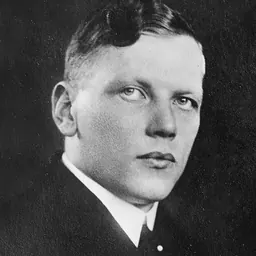

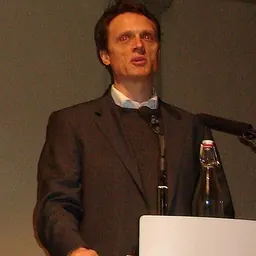



Related people
Same field, nearest in time

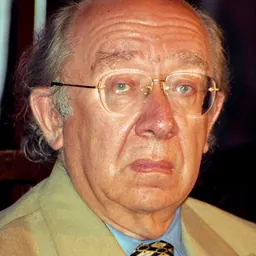

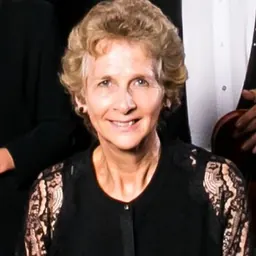
Contemporaries
People whose lives overlapped Denis Vaughan's

Frequently asked questions
Who was Denis Vaughan?
Australian conductor (1926–2017)
When was Denis Vaughan born?
Denis Vaughan was born on 6 June 1926 in Melbourne.
When did Denis Vaughan die?
Denis Vaughan died on 7 July 2017 in London.
What was Denis Vaughan's occupation?
Denis Vaughan was a conductor, musician and musicologist.
What nationality was Denis Vaughan?
Denis Vaughan was Australian.
Sources & further reading
Cite this page
APA: Biography.guide. (2026). Denis Vaughan. https://biography.guide/denis-vaughan/
MLA: "Denis Vaughan." Biography.guide, https://biography.guide/denis-vaughan/.
Chicago: "Denis Vaughan." Biography.guide. https://biography.guide/denis-vaughan/.
Data last updated: 2026-09-20 · Spot an error? Report a correction.
Page generated 2026-09-27 05:15 UTC