
About Demián Flores
Born 1971. Demián Flores is a Mexican painter, graphic artist and artist.
Demián Flores Cortés (Juchitán de Zaragoza, Oaxaca; 1971) is a contemporary Mexican artist who works in multiple media. He has worked in graphic arts, painting, serigraphy and more producing work which often mixes images from his rural childhood home of Juchitán with those related to modern Mexico City. It also often including the mixture of pop culture images with those iconic of Mexico's past. Much of Flores’ work has been associated with two artists’ workshops he founded in Oaxaca called and the Taller Gráfica Actual. This work has included events related to the 2006 uprising in Oaxaca and the restoration of an 18th-century church. His work has been exhibited in Mexico City, Europe, Guatemala and Cuba.
Life Demián Flores Cortés was born in Juchitán de Zaragoza, Oaxaca in 1971. He is from a family involved in commercial activities, with his grandfather owning a large department store in the town's main square. He spent most of his childhood at this store, fascinated by the images in catalogs. He calls himself a “Juchilango” which is a combination of “Juchitan” and “chilango,” a slang term for used to designate people from Mexico City. He says his sense of humor came later in his life as a way to deal with contradictions and ironies.
He currently resides in the city of Oaxaca, spends considerable time in Mexico City and maintains studios in Juchitán, the city of Oaxaca and Mexico City. He found an old tannery in Jalatlaco, a neighborhood which was famous for producing leather. The organization founded here was named La Curtiduría (the tannery) and has since been the scene of a number of collaborations such as La Calavera Oaxaqueña, a homage to José Guadalupe Posada and a collaboration of artists to express their views of the 2006 Oaxaca protests. In 2007, it received support from the Alfredo Harp Helú Foundation to expand its work including residencies, educational program and the production of art exhibitions. These have included a congress of women artists, the restoration of an 18th-century church and collaborations with Casa Lamm in Mexico City.
The largest project Flores did with Curtiduría was the restoration of the Santa Ana Zegache, located near the city of Oaxaca, working in cooperation with Georgina Saldaña Wonchee and sponsored by the Rodolfo Morales Cultural Foundation.
Flores also convinced twenty artists to donate works to be sold to raise money for the restoration effort in Zegache and convinced a number of his friends to participate directly in the work. The project not only included the restoration of furniture, fixings and artwork to their original condition, it also included the creation of new artwork using the church as a theme and the establishment of training workshops to teach young people in the area the skills needed for the work.
In 2008, Flores created a new organization called the Taller Gráfica Actual in the city of Oaxaca. The purpose of this organization is to serve as an experimental space for traditional graphic mediums such as lithography, etching and serigraphy but with contemporary designs. Artists affiliated with this workshop have shown their work in places such as Florence, Italy, and New York and has offered workshops by names such as Francisco Castro Leñero and Luis Ricaurte. It has also collaborated with the Tamarind Institute in New Mexico and Nopal Press in California, publishing a number of books related to art and graphics.
Publications of his work include Demián Flores Dibujos/Drawings (2012), El Triunfo (2010), Gráfica Popular de Lucha Libre (2010), Villancicios de Santo Niño de las Quemaduras (2009), Cómo ser Goleador (2009), Zoobituario (2009), Aztlán (2008), La Patria (2008) .
Flores’ main permanent display is called Talavi, a group of pieces created for the inaugurated of the inauguration of the Alfredo Harp Helú baseball academy in San Bartolo Coyotepec in 2009. The works all have a baseball theme.
He participated in the Primer Encuentro de Gráfica y Escritura called “Libre tiraje,” a conference dedicated to dialogue and reflection on the graphic arts. This was part of the XXIX Feria Internacional del Libre in 2009 in Oaxaca. Residencies and grants have included Cité Internacionale des Arts, Paris (2002), London Print Studio (2004), Jóvenes Creadores-FONCA (1995 and 1999), the Pollock-Krasner Foundation (2006), Fomento a Proyectos y Coinversiones Culturales for a project called la Gráfica como práctica Artística Contemporánea (2009) and since 2010, he has been a member of the Sistema Nacional de Creadores de Arte .
Awards include “La Joven Estampa” from the Casa de las Americas in Havana (1995), the Mex-Am Foundation/Vermont Studio Center (1999), XX Encuentro Nacional de Arte Joven and I Bienial Nacional de Estampa Rufino Tamayo, Oaxaca (2000). In 2012, he collaborated with Uriarte Talavera to create ceramic pieces for an exhibition called Cinco de Mayo de 1862 in honor of the Battle of Puebla. One example this mixed identity are works and exhibitions which have mixed the various sports he played, from baseball and talavi in Juchitán to soccer and a game called bolillo in Mexico City. His mixed background allows him to move fluidly as an artist between images that are pre-Hispanic and modern, rural and urban, indigenous and pop culture. One of his focuses is the rescue and reinterpretation of Zapotec traditions to make them more contemporary.
As a oaxacan, he was able to draw inspiration from the 2006 uprising to create work like “Welcome to Oaxaca” for which he collaborated with five graffiti artists using stencils and spray paint to create a background which looks like a section of city wall. Over this includes images of Oaxaca governor Ulises Ruiz Ortiz . Flores believes that the events of 2006 have spawned changes in the art community of Oaxaca, with most breaking from the traditional Oaxaca painting styles established by Rodolfo Morales and Francisco Toledo. However, this split has been in two directions with one moving toward art for commercial purposes and the other toward art with social and political messages.
Don’t just read it —
keep it.
Full-length biographies made to live with: read them, listen on the way to work, watch them tonight.
- E-book
- Audio
- Video
Instant download · yours to keep · every purchase keeps this site free
Important facts
People in Demián Flores's life
Named in this biography and alive at the same time
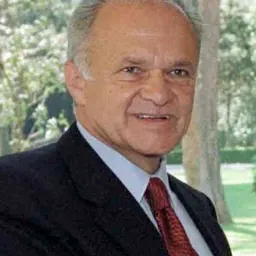

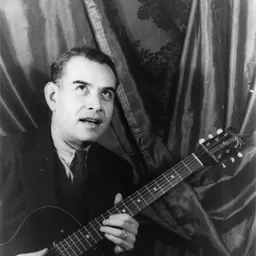


Related people
Same field, nearest in time

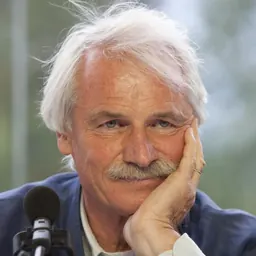


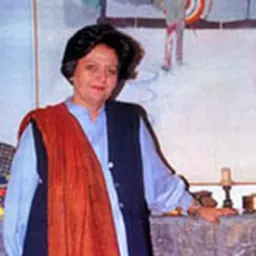
Contemporaries
People whose lives overlapped Demián Flores's



Frequently asked questions
Who is Demián Flores?
Mexican artist (born 1971)
When was Demián Flores born?
Demián Flores was born in 1971 in Juchitán de Zaragoza.
What is Demián Flores's occupation?
Demián Flores is a painter, graphic artist and artist.
What nationality is Demián Flores?
Demián Flores is Mexican.
Sources & further reading
Cite this page
APA: Biography.guide. (2026). Demián Flores. https://biography.guide/demian-flores/
MLA: "Demián Flores." Biography.guide, https://biography.guide/demian-flores/.
Chicago: "Demián Flores." Biography.guide. https://biography.guide/demian-flores/.
Data last updated: 2026-09-26 · Spot an error? Report a correction.
Page generated 2026-09-27 05:14 UTC