
About Deepak Dhar
Born 1951. Deepak Dhar is an Indian theoretical physicist, known for Statistical physics and Stochastic processes.
Deepak Dhar (born 30 October 1951) is an Indian theoretical physicist known for his research on statistical physics and stochastic processes. In 2022, he became the first Indian to be awarded the Boltzmann Medal, the highest recognition in statistical physics awarded once every three years by IUPAP, for exceptional contributions to the subject. In 2026, he was awarded the ICTP Dirac Medal for his contributions to statistical mechanics.
Dhar has been awarded the Padma Bhushan in 2023. Dhar is a winner of the TWAS prize and also an elected fellow of The World Academy of Sciences. The Council of Scientific and Industrial Research, the apex agency of the Government of India for scientific research, awarded Dhar the Shanti Swarup Bhatnagar Prize for Science and Technology, one of the highest Indian science awards, for his contributions to physical sciences in 1991. . He is an elected fellow of all three major Indian science academies – Indian Academy of Sciences, Indian National Science Academy and National Academy of Sciences, India. Currently, he is INSA Distinguished Professor at the International Centre for Theoretical Sciences (ICTS-TIFR), Bengaluru.
Biography
Deepak was born on 30 October 1951 at Pratapgarh, in the north Indian state of Uttar Pradesh to Murli Dhar and Rama Gupta. Dhar graduated in science from the University of Allahabad in 1970 before earning a master's degree in physics from the Indian Institute of Technology, Kanpur in 1972. Moving to the US, he enrolled for his doctoral studies under the guidance of Jon Mathews at California Institute of Technology, and after securing a PhD in 1978, returned to India to start his career as a research fellow at Tata Institute of Fundamental Research (TIFR) the same year. After two years of research, Dhar became a full-time fellow in 1980 and served in that position until 1986 when he was promoted as a reader. Before his superannuation from regular service, Dhar held various positions at TIFR, such as that of an associate professor (1991) and professor grades from G to J (1995–2008). In between, he had a one-year sabbatical at the University of Paris as a visiting scientist during 1984–85) and a month-long stint at Isaac Newton Institute in May 2006 as a Rothschild Professor. Post-retirement, Dhar served as a distinguished professor at the Indian Institute of Science Education and Research, Pune. He is currently serving as a faculty at the International Centre for Theoretical Sciences (ICTS-TIFR), Bengaluru.
Legacy
Focusing his studies on statistical physics and stochastic processes, Dhar has worked on the statistical mechanics and kinetics of random lattices and his work is reported to have widened our understanding of the disciplines. He is credited with the introduction of spectral dimension concept in the studies of fractals and contributed to developing a methodology for determining their critical phenomena using real-space renormalization group techniques which was the first time the mathematical apparatus was used for calculations on nontrivial critical exponents on fractals. and developed a new model which came to be known as Dhar-Ramaswamy model. Working on directed-site animals-enumeration problem using Bethe ansatz method, he proposed the evolution operator which has since been subjected to studies by other researchers as Dhar directed-site animals-enumeration problem. Dhar also demonstrated the predominance of slow flipping of isolated unfrustrated clusters in auto-correlation functions and proposed models of metastable glassy states in stochastic evolution. and the online article repository of Indian Academy of Sciences has listed 113 of them.
Dhar is an associate editor of Journal of Statistical Physics, a Springer publication since 2005 where he sat in the editorial board on two previous terms (1993–96 and 1999–2002). He is an editorial board member of the Indian Journal of Pure and Applied Physics (IJPAP) of the National Institute of Science Communication and Information Resources (NISCAIR), a former editorial adviser to Physica A, an Elsevier science journal, and has been associated with journals such as Journal of Statistical Mechanics: Theory and Experiment, Physical Review E and Pramana as an editorial board member. He was a member of the Commission on Statistical Physics of the International Union of Pure and Applied Physics from 1992 to 1995 Dhar has also delivered invited speeches and the special lecture on The Curious Relationship Between Physics and Mathematics at the University of Mumbai on 19 October 2016 was one among them.
Awards and honors During his doctoral days at Caltech, Dhar held two institutional fellowships; E. P. Anthony fellowship (1972–73) and R. P. Feynman fellowship (1974–76). The Council of Scientific and Industrial Research awarded him the Shanti Swarup Bhatnagar Prize, one of the highest Indian science awards in 1991. Two years later, International Centre for Theoretical Physics selected him for the 1993 J. Robert Schrieffer Prize. and he received the TWAS Prize of The World Academy of Sciences in 2002.
Dhar was elected as a fellow by the Indian Academy of Sciences in 1990 where he is a sitting council member. He became an elected fellow of the Indian National Science Academy on 1995 and the National Academy of Sciences, India elected him as a fellow in 1999. Dhar received the elected fellowship of the World Academy of Sciences in 2006 and was selected for the J. C. Bose National fellowship of the Science and Engineering Research Board in 2007, with the tenure running until 2017. It is bestowed upon a scientist with exceptional contributions in the field of statistical physics, every three year. Dhar shares his prize with John Hopfield.
In 2026, Deepak Dhar won the prestigious Dirac Medal awarded by ICTP. He shares the prize alonwith other three scientists "for their pioneering contributions to equilibrium statistical mechanics and for extending its concepts and methods into non-equilibrium statistical mechanics, optimization problems, theoretical neuroscience, and, finally, artificial intelligence".
Selected bibliography
Don’t just read it —
keep it.
Full-length biographies made to live with: read them, listen on the way to work, watch them tonight.
- E-book
- Audio
- Video
Instant download · yours to keep · every purchase keeps this site free
Important facts
People in Deepak Dhar's life
Named in this biography and alive at the same time
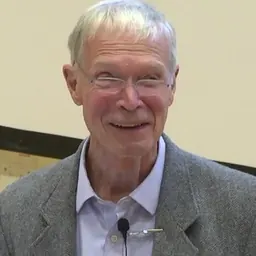


Related people
Same field, nearest in time
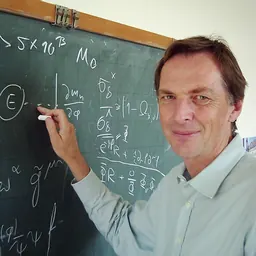

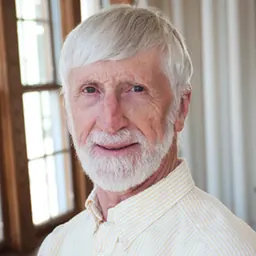


Contemporaries
People whose lives overlapped Deepak Dhar's
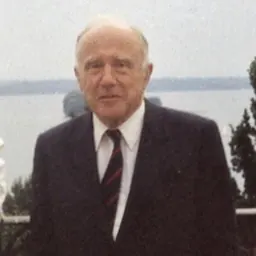

Frequently asked questions
Who is Deepak Dhar?
Indian theoretical physicist
When was Deepak Dhar born?
Deepak Dhar was born on 30 October 1951 in Pratapgarh, Uttar Pradesh.
What is Deepak Dhar's occupation?
Deepak Dhar is a theoretical physicist.
What is Deepak Dhar known for?
Deepak Dhar is known for Statistical physics and Stochastic processes.
What nationality is Deepak Dhar?
Deepak Dhar is Indian.
Sources & further reading
Cite this page
APA: Biography.guide. (2026). Deepak Dhar. https://biography.guide/deepak-dhar/
MLA: "Deepak Dhar." Biography.guide, https://biography.guide/deepak-dhar/.
Chicago: "Deepak Dhar." Biography.guide. https://biography.guide/deepak-dhar/.
Data last updated: 2026-09-20 · Spot an error? Report a correction.
Page generated 2026-09-27 05:09 UTC