
About Dee Brown
Lived 1908 – 2002 (aged 94). Dee Brown was an American librarian, historian, novelist, autobiographer, writer and author.
Dorris Alexander "Dee" Brown (February 29, 1908 – December 12, 2002) was an American novelist, historian, and librarian. His most famous work, Bury My Heart at Wounded Knee, details the history of the United States' westward colonization of the continent between 1860 and 1890 from the point of view of Native Americans.
Personal life
Born on Leap Year Day 1908 in Alberta, Louisiana, a sawmill town, Brown grew up in Ouachita County, Arkansas, which experienced an oil boom when he was thirteen years old. Brown's mother later relocated to Little Rock so he and his brother and two sisters could attend a better high school. He spent much time in the public library reading the three-volume History of the Expedition under the Command of Captains Lewis and Clark which saw him develop an interest in the American West. He also discovered the works of Sherwood Anderson and John Dos Passos, and later William Faulkner and Joseph Conrad. He cited these authors as those most influential on his own work.
While attending home games by the baseball team the Little Rock Travelers, he became acquainted with Moses Yellowhorse, a pitcher. His lifelong friendship with Yellowhorse shaped viewpoint on the American West and its history, as well as his writing.
He worked as a printer and reporter in Harrison, Arkansas, and decided to continue his education at Arkansas State Teachers College in Conway, Arkansas. His mentor, the history professor Dean D. McBrien, helped give him the idea to become a writer. They traveled west along with other students on two occasions in a Model T Ford. He lived at 1717 R Street NW, in the Dupont Circle neighborhood.
Brown's first novel was a satire of New Deal bureaucracy, but it was not published, owing to the bombing of Pearl Harbor. The publisher suggested more "patriotic" reading material.
From 1948 to 1972, he was an agriculture librarian at the University of Illinois at Urbana–Champaign, where he had gained a master's degree in library science, became a professor, and raised a son, Mitchell, and daughter, Linda, with his wife Sally.
During 1973, Brown and his wife retired in Little Rock, Arkansas, where he devoted his time to writing. His later works include Creek Mary's Blood, a novel telling of several generations of a family descended from one Creek woman, and Hear That Lonesome Whistle Blow, which is set during the construction of the western railroads. His last book-length work, The Way To Bright Star, is a picaresque novel set during the American Civil War. His remains are interred in Urbana, Illinois,
Works Histories Fighting Indians of the West (1948) with Martin F. Schmitt Trail Driving Days (1952) with Martin F. Schmitt Grierson's Raid (1954) Settlers' West (1955) with Martin F. Schmitt The Gentle Tamers: Women of the Old Wild West (1958) The Bold Cavaliers: Morgan's Second Kentucky Cavalry Raiders (1959). Republished as Morgan's Raiders (1995) The Fetterman Massacre (1962) The Galvanized Yankees (1963). Republished (1986) Showdown at Little Big Horn (1964) The Year of the Century: 1876 (1966) Bury My Heart at Wounded Knee (1970) Fort Phil Kearny: An American Saga (1971). First published 1962. Republished as The Fetterman Massacre (1974) Andrew Jackson and the Battle of New Orleans (1972) The Westerners (1974) Hear That Lonesome Whistle Blow (1977) Wondrous Times on the Frontier (1991) The American West (1994). Collected excerpts from earlier books co-authored by Schmitt Great Documents in American Indian History (1995)
Novels Wave High The Banner (1942) Yellowhorse (1956) Cavalry Scout (1958) They Went Thataway (1960). Republished as Pardon My Pandemonium (1984) The Girl from Fort Wicked (1964) Action at Beecher Island (1967) Creek Mary’s Blood (1980) Killdeer Mountain (1983) Conspiracy of Knaves (1986) The Way To Bright Star (1998)
Other Tales of the Warrior Ants (1973). For young people American Spa: Hot Springs, Arkansas (1982). Illustrated history Dee Brown's Folktales of the Native American: Retold for Our Times (1993). Originally published as Teepee Tales (1979) When the Century Was Young (1993). Memoir Images of the Old West (1996)
Don’t just read it —
keep it.
Full-length biographies made to live with: read them, listen on the way to work, watch them tonight.
- E-book
- Audio
- Video
Instant download · yours to keep · every purchase keeps this site free
Important facts
People in Dee Brown's life
Named in this biography and alive at the same time


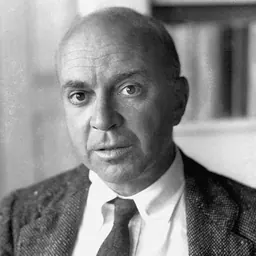
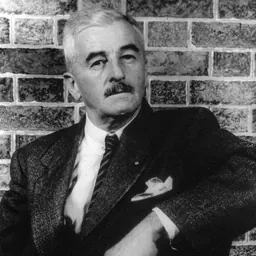
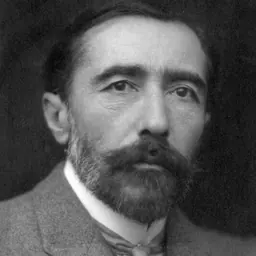


Related people
Same field, nearest in time


Contemporaries
People whose lives overlapped Dee Brown's





Frequently asked questions
Who was Dee Brown?
American writer and historian (1908–2002)
When was Dee Brown born?
Dee Brown was born on 28 February 1908 in Roy.
When did Dee Brown die?
Dee Brown died on 12 December 2002 in Little Rock.
What was Dee Brown's occupation?
Dee Brown was a librarian, historian, novelist, autobiographer, writer and author.
What nationality was Dee Brown?
Dee Brown was American.
Sources & further reading
Cite this page
APA: Biography.guide. (2026). Dee Brown. https://biography.guide/dee-brown-librarian/
MLA: "Dee Brown." Biography.guide, https://biography.guide/dee-brown-librarian/.
Chicago: "Dee Brown." Biography.guide. https://biography.guide/dee-brown-librarian/.
Data last updated: 2026-09-20 · Spot an error? Report a correction.
Page generated 2026-09-27 05:08 UTC