
About Dean Conant Worcester
Lived 1866 – 1924 (aged 57). Dean Conant Worcester was an American photographer, diplomat, zoologist, ornithologist and colonial administrator.
Dean Conant Worcester, D.Sc., FRGS (October 1, 1866 – May 2, 1924) was an American zoologist, public official, and writer on the Philippines. He was born at Thetford, Vermont, and educated at the University of Michigan (A.B., 1889). Worcester's involvement with the Philippines began in 1887 when he joined a scientific expedition to the region as a junior member. This experience laid the groundwork for his controversial career in the early American colonial government, which commenced in 1899. He held firm beliefs in the colonial mission and vehemently opposed Philippine independence. Worcester's influence extended as he served as the Secretary of the Interior of the Philippine Islands until 1913. Afterward, he shifted his focus to business endeavors, particularly in coconut farming and processing, cattle raising, and maritime shipping lines. He died in the Philippines, leaving behind a legacy of both public service and entrepreneurial success.
Early life and education Joseph B. Steere (bottom row center) and his students including Worcester (top, 2nd from left) prior to their 1887 Philippine expedition
Dean Conant Worcester was born on October 1, 1866 in Thetford, Vermont to Ezra Carter Worcester (1816–1887) and Ellen Hunt (Conant) Worcester (1826–1902), the youngest of nine children. He attended public schools in Vermont. He attended high school in Newton, Massachusetts.
Worcester entered the University of Michigan in October 1884, and he was part of the 1887–1888 zoological expedition to the Philippines organized by Joseph Beal Steere in which they collected over 300 zoological specimens, of which 53 were deemed new to science. He graduated with a bachelor's degree in zoology in 1889.
Public service in the Insular Government of the Philippine Islands
When the Spanish–American War broke out in 1898, Worcester was very quick to capitalize on his first-hand knowledge of the Philippines by engaging in public lectures and establishing himself as a leading authority on the country with the October 1898 publication of his Philippine Islands and their People.
On January 20, 1899, Worcester was appointed by President William McKinley as a member of the Schurman Commission (First Philippine Commission) to make recommendations on how the US should proceed after the sovereignty of the Philippines was ceded by Spain to the US with the Treaty of Paris (1898). He was again appointed on 16 March 1900 by McKinley as the only member from the Schurman Commission to serve on the successor Taft Commission (Second Philippine Commission) where he served until 1913. As a member of the Philippine Commission, he simultaneously served in the highly influential role of Secretary of the Interior for the Insular Government. In this capacity he oversaw the founding of a number of agencies, including the Bureau of Agriculture, Bureau of Science, Bureau of Government Laboratories, and the Bureau of Health. In 1907, he founded the Philippine Medical School and in 1908 laid the cornerstone of the Philippine General Hospital, which opened in 1910 and has become the primary teaching hospital for the University of the Philippines College of Medicine and a hospital for the poor.
Worcester had a keen interest in public health, but his response to a major 1902–1904 outbreak of cholera in Manila and other Philippine cities was highly criticized. The epidemic was particularly severe in the district of Farola in Manila (near present-day San Nicolas) that was home to many of the city's poorest. Worcester ordered the burning of hundreds of houses and forced quarantine of many frightened and homeless Filipinos. In the monograph, he said that he went too far by ordering the burning of the houses in the Farola district.
Aves de Rapiña Page 4 of the Year 8, Number 49 issue of the newspaper containing the infamous editorial "Aves de Rapiña"
On October 30, 1908, El Renacimiento, a daily newspaper in Spanish, published an editorial written by Fidel A. Reyes (1878–1967), its city editor, titled "Aves de Rapiña" ("Birds of Prey"), which denounced an American official for using his office to exploit the resources of the country for his personal gains. The article dealt with corruption in the colonial government. Worcester was alleged to have used his anthropological research to seek out gold in Benguet and exploit untapped natural resources in Mindoro and Mindanao. He was also alleged to have profited from the illegal sale of diseased cattle meat and from the sale of overpriced land concessions on government property.
According to historian Ambeth Ocampo, Worcester objected to "insinuation(s) that he was like a rapacious eagle that plundered his fellow men. He was offended by the line that said he had: 'the characteristics of the vulture, the owl and the vampire.'" and to the Supreme Court of the United States, which sustained the decision of the Philippine tribunals.
Governor-General Francis Burton Harrison pardoned Ocampo and Kalaw in 1914 after Worcester left public office in September 1913. By 1914, this publication had become a standard reference for investors interested in coconut products, and the passage of the Payne–Aldrich Tariff Act (1909) and the opening of the Panama Canal (1914) made for a favorable economic climate for importation of Philippine products, including coconut oil, to the industrial centers of the East Coast of the United States. Beginning in 1908, in his capacity as Secretary of Interior, Worcester acquired large tracts of lands in Bukidnon for the use by large-scale agribusinesses. After resignation from public service, he became more involved in the operations of the American-Philippine Company (AMPHILCO) and its three subsidiaries in which he was an investor: the Insular Transportation Company, the Bukidnon Plantation Company, and the Visayan Refining Company. Considerable American investments were being made in these companies. At issue according to Kalaw was that Worcester had published in 1914 The Philippines Past and Present in which he again used the power of his photography to depict "primitive" Filipinos juxtaposed with photos of the modern infrastructure brought by the Americans, particularly during his own tenure as Secretary of the Interior. However, the protests against Worcester subsided in late 1916 once the Jones Act was passed into law and the coconut oil exports were beginning to substantially fuel the local economy in Cebu.
In 1914, Worcester also had become involved in the cattle ranching operations at the Diklum Ranch (another subsidiary of AMPHILCO), a 10,000 hectare tract of grasslands on the Bukidnon Plateau in Manolo Fortich, Bukidnon, near the port city of Cagayan de Oro. but Worcester had taken what had been learned from experiments undertaken by the Bureau of Agriculture to crossbreed cattle from different parts of the world, including the zebu from India for better performance and disease resistance in a tropics. Later in the early 1920s, he promoted the introduction of the newly developed Santa Gertrudis breed from South Texas into the Philippines as well. Worcester also had close relations with Dr. William Hutchins Boynton (1881–1959) the chief veterinary pathologist with the Bureau of Agriculture who by 1918 had developed an early vaccine for rinderpest, a devastating disease of cattle. In addition to the corporate Diklum Ranch, Worcester also managed his own ranch located in Barangay Lurugan, Valencia, which was then managed by his son Frederick after his death.
Selected publications His publications include, besides various academic papers: The Philippine Islands and Their People (1898) The Non-Christian Tribes of Northern Luzon (1906) The Philippines Past and Present (two volumes, 1913; new edition, 1914)
Don’t just read it —
keep it.
Full-length biographies made to live with: read them, listen on the way to work, watch them tonight.
- E-book
- Audio
- Video
Instant download · yours to keep · every purchase keeps this site free
Important facts
People in Dean Conant Worcester's life
Named in this biography and alive at the same time
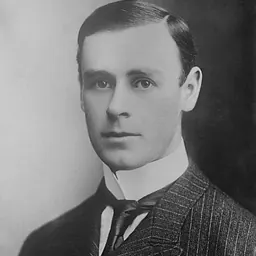
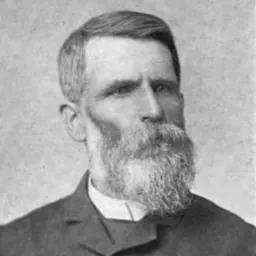
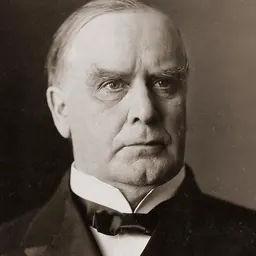
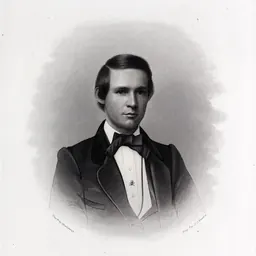

Related people
Same field, nearest in time




Contemporaries
People whose lives overlapped Dean Conant Worcester's



Frequently asked questions
Who was Dean Conant Worcester?
U.S. zoologist and ornithologist (1866–1924)
When was Dean Conant Worcester born?
Dean Conant Worcester was born on 1 October 1866 in Thetford.
When did Dean Conant Worcester die?
Dean Conant Worcester died on 2 May 1924 in Manila.
What was Dean Conant Worcester's occupation?
Dean Conant Worcester was a photographer, diplomat, zoologist, ornithologist and colonial administrator.
What nationality was Dean Conant Worcester?
Dean Conant Worcester was American.
Sources & further reading
· Wikipedia: Dean Conant Worcester
· DBpedia: Dean Conant Worcester
Cite this page
APA: Biography.guide. (2026). Dean Conant Worcester. https://biography.guide/dean-conant-worcester/
MLA: "Dean Conant Worcester." Biography.guide, https://biography.guide/dean-conant-worcester/.
Chicago: "Dean Conant Worcester." Biography.guide. https://biography.guide/dean-conant-worcester/.
Data last updated: 2026-09-20 · Spot an error? Report a correction.
Page generated 2026-09-27 05:24 UTC