
About David Taylor
Born 1943. David Taylor is a British snooker player.
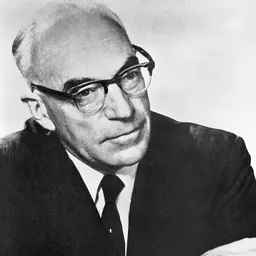
David Taylor (born 29 July 1943) is an English former professional snooker player. He won the English Amateur Championship 11–6 against Chris Ross in 1968 and the 1968 World Amateur Snooker Championship 8–7 against Max Williams later that year. Those wins encouraged him to turn professional. He was nicknamed "The Silver Fox" because of his prematurely grey hair.
Taylor reached three major professional finals, the 1978 UK Championship, the 1981 Yamaha Organs Trophy and the 1982 Jameson International, but lost them all. Together with his team-mates Steve Davis and John Spencer, he won the 1981 World Team Classic, representing England. His best performance at the World Snooker Championship was at the 1980 event, when he reached the semi-finals. He was also a losing quarter-finalist in three editions. Taylor was a member of the elite top 16 of the world rankings for ten consecutive years until the 1985–86 snooker season, reaching a high of number 7 in the 1981–82 season.
Early life and career David Taylor was born on 29 July 1943 in Bowdon, Greater Manchester, and grew up in Manchester. He started playing snooker aged 14. After being banned from fencing at a local youth club for dangerous behaviour, looking for an alternative pastime, he played on the club's smaller-scale billiard tables before moving on to use full-size tables. After leaving school, he took up a career as a hairdresser; he said in a 1984 interview that "the theory behind that move was there'd be plenty of girls."
In his first world championship match, at the 1970 event, he finished the first day of his match against Bernard Bennett 3–4 behind, but progressed to the quarter-finals by securing a winning margin at 11–8. A match report in Billiards and Snooker magazine was critical of the standard of play by both players, and in particular about Taylor "carelessly" missing s. Facing John Pulman, Tayor was on level terms at 12–12, but Pulman won 31–20. In 1971 he lost 2–5 against reigning world champion John Spencer for the Stratford Professional title.
In 1978 Taylor and fellow professional players John Virgo and Jim Meadowcroft were featured discussing their careers in the television programme This England. Taylor was part of the commentary team when Steve Davis made the first televised maximum break at the 1982 Lada Classic, which he later described as “a magic night”. In the 1990s he featured several times on the snooker-themed game show Big Break.
Professional finals and later career Taylor reached three major professional finals, but lost them all. His first major final was the 1978 UK Championship, where, after progressing past Maurice Parkin, he eliminated defending champion Patsy Fagan 9–7. He then defeated both Virgo and Alex Higgins, but lost ten of the last twelve s in the final against Doug Mountjoy and Mountjoy won 15–9. He lost 6–9 to Davis in the 1981 Yamaha Organs Trophy final after winning four consecutive frames from 2–8 behind. Earlier in the tournament he had topped the round-robin group that also included Ray Reardon, Mountjoy, and Graham Miles, then defeated Kirk Stevens 5–3 in the semi-finals. After the tournament he commented that he felt like he had been a professional player "in name only until 1977" but could now go on to win a title. In 1978 he made three consecutive of 130, 140, and 139 at Butlin's Minehead, an achievement that was recognised in the Guinness Book of Records. By 1980 he was known as "The Silver Fox" because of his prematurely grey hair, a nickname coined by commentator Ted Lowe.
He was a member of the England team that won the 1981 World Team Classic, alongside Davis and Spencer. In the group match against Australia, Taylor lost against Morgan and Ian Anderson, and against Northern Ireland he lost against Higgins but defeated Tommy Murphy. England won both group matches by four matches to three, and progressed. In the semi-finals, he defeated Bill Werbeniuk 2–1 but then lost to Stevens by the same margin, and England won by four matches to two. Although Taylor lost both of his matches in the final, 1–2 against Terry Griffiths and 0–2 to Mountjoy, England took the title when Davis won the tiebreak match against Reardon, leaving the score at four matches to three. Taylor was 3–5 behind Knowles after the first , after the pair had been level at 2–2. Knowles compiled a break of 114, the highest of the tournament, to win the ninth frame, before Taylor claimed the next two frames to leave Knowles one ahead at 6–5. Breaks of 63 and 43 in the next two frames saw Knowles restore a three-frame advantage. Taylor made a break of 74 to win the 14th frame, but Knowles secured his first major title by claiming the 15th frame with a break of 76. In the quarter-finals Taylor beat the then world champion, Steve Davis, 5–3.
Taylor was a member of the elite Top 16 world rankings for ten consecutive years until the 1985–86 snooker season, reaching a high of number 7 in the 1981–82 season. His best performance in the World Championship was at the 1980 event, when he lost to Cliff Thorburn 7–16 in the semi-final after beating the six-time world champion Reardon 13–11 in the quarter-final. In January 1998 he was co-opted as a board member of the WPBSA, but was voted out in the December elections that year.
Taylor played at the 2000 World Seniors Masters and defeated Miles in the single-frame format competition before losing to Willie Thorne in the semi-finals. He entered the 2010 World Snooker Championship qualifying rounds, aged 66 and playing in first competitive match for 13 years, but lost 1–5 to Paul Wykes.
When discussing his 1978–79 quarter-final match with Taylor, Virgo wrote that "Taylor, in practice, was one of the best players I'd ever seen, second perhaps only to [Alex] Higgins." Thorburn commented that Taylor did not seem able to bring his ability in practice into tournament play, and that he probably overthought during matches.
Taylor entered the property business using money from a winning bet on John Spencer to win the world championship. Soon after he made his last appearance in the televised stages of the world championship in 1987, Taylor and his wife decided to purchase a guest house in Little Bollington near Altrincham in Cheshire. He had the table used for the 1987 Masters installed at the premises for his use.
Performance Table LegendLQ lost in the qualifying draw#R lost in the early rounds of the tournament(WR = Wildcard round, RR = Round robin)QF lost in the quarter-finalsSF lost in the semi-finalsF lost in the finalA did not participate in the tournamentNI was not invitedWD withdrew from the tournamentNH means an event was not held.
Career finals Ranking finals: 1 +Ranking finals contested by David TaylorOutcomeNo.YearChampionshipOpponent in the finalScoreRunner-up 1. 1982 International Open 6–9
Non-ranking finals: 4 (1 title) Legend UK Championship (0–1) Other (1–2) OutcomeNo.YearChampionshipOpponent in the finalScoreRunner-up 1. 1971 Stratford Professional 2–5 Runner-up 2. 1978 UK Championship 9–15Runner-up 3. 1981 Yamaha Organs Trophy 6–9Winner 1. 1988 WPBSA Invitational – Event 3 9–1
Team finals: 1 (1 title) OutcomeNo.YearChampionshipTeamOpponents in the finalScoreWinner 1. 1981 World Team Classic (with Steve Davis and John Spencer) (Ray Reardon, Terry Griffiths and Doug Mountjoy)4–3
Amateur finals: 2 (2 titles) OutcomeNo.YearChampionshipscope="col"Opponent in the finalScoreWinner 1. 1968 English Amateur Championship 11–6Winner 2. 1968 World Amateur Championship 8–7
Don’t just read it —
keep it.
Full-length biographies made to live with: read them, listen on the way to work, watch them tonight.
- E-book
- Audio
- Video
Instant download · yours to keep · every purchase keeps this site free
Important facts
People in David Taylor's life
Named in this biography and alive at the same time

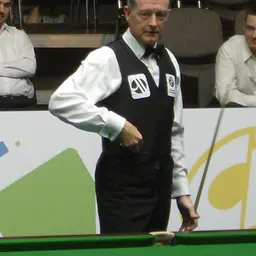
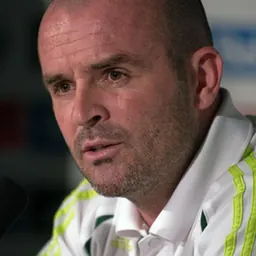




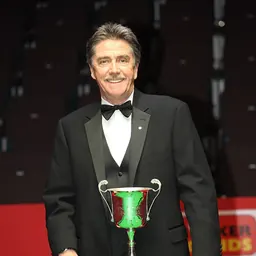
Related people
Same field, nearest in time

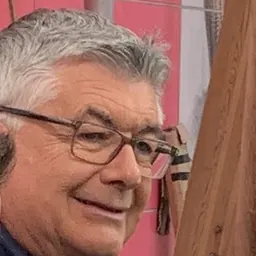
Contemporaries
People whose lives overlapped David Taylor's



Frequently asked questions
Who is David Taylor?
English snooker player
When was David Taylor born?
David Taylor was born on 29 July 1943 in Bowdon.
What is David Taylor's occupation?
David Taylor is a snooker player.
What nationality is David Taylor?
David Taylor is British.
Sources & further reading
· DBpedia: David Taylor (snooker player)
Cite this page
APA: Biography.guide. (2026). David Taylor. https://biography.guide/david-taylor-snooker-player/
MLA: "David Taylor." Biography.guide, https://biography.guide/david-taylor-snooker-player/.
Chicago: "David Taylor." Biography.guide. https://biography.guide/david-taylor-snooker-player/.
Data last updated: 2026-09-20 · Spot an error? Report a correction.
Page generated 2026-09-27 05:20 UTC